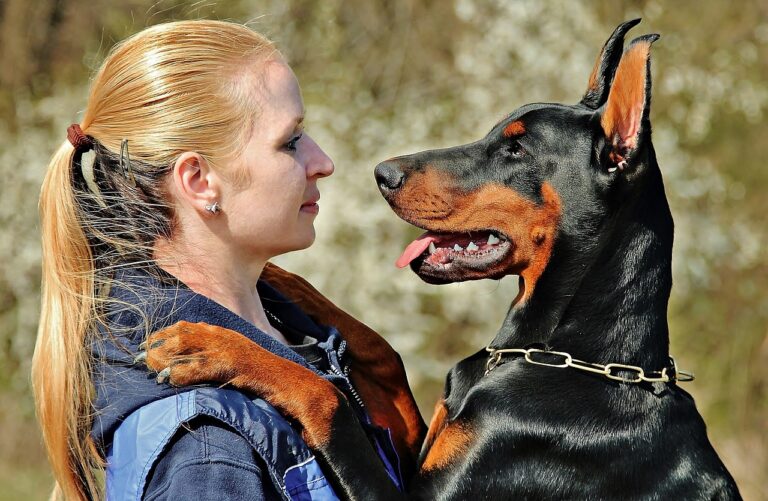
Do Dogs Understand Time? Why They Know When You’re Coming Home
Every morning, sharp at 6, my cuddly GSD comes to nudge me out of bed with his nose, as if to say, “Wake up, mommy, it’s time for my walk.” His dinner time is 8 pm, and if his dinner is delayed by a few minutes, he’s there by my side, making those puppy eyes, reminding me it’s dinner time. He plonks himself by the door when it’s time for my husband to return home. All of this has often made me wonder, do dogs understand time the way we do or are they sensing something else?
So, I decided to dig deeper into how dogs sense time and what science says about the canine perception of time. Based on my research, I’ve put together this guide on dog memory and routine, comparing human vs. dog time perception, and sharing tips for dog owners on schedules, separation anxiety, and more. By the end, you’ll understand why your furry baby always seems to know when it’s dinnertime or when you’re due back. Hint: it’s more about habit and senses than reading a clock.
How Humans Perceive Time vs. Dogs
As humans, we live by clocks and calendars. Hours, minutes, and specific times of day rule our routines. We can tell time using watches and we remember exact dates. Dogs, on the other hand, don’t know 8 A.M. from 8 P.M. in the way we do. They don’t count down minutes or understand Monday vs. Friday. Instead, a dog experiences time through internal rhythms and cues.
“While dogs have a sense of time, they don’t experience time the same way humans do.”
—Beth Brown, certified dog behavior consultant
The canine sense of time isn’t based on a clock tick but rooted in their biology and daily experiences. Dogs have an internal circadian rhythm, a 24-hour biological clock that tells them when to wake up, sleep, and eat. Your dog doesn’t know it’s 10:30 AM, but their body might feel it’s “morning” because the sun is up and they’ve completed their usual nap. They also form associations and memories around routines.
For example, if every day you come home when the sky starts getting dim or after the neighborhood gets quiet, your pup links those environmental changes with your return. Your dog knows that after the long stretch of darkness, breakfast comes, or that after a few episodes of your evening TV show, it’s nightly walk time. So, even though it may not seem like it, human vs. dog time perception differs.
TL;DR: We think in hours and schedules, whereas dogs rely on their internal clock and routine-based memory to anticipate what’s next.
Scientific Research on Dogs and Time
So, do dogs understand time in a measurable way? Scientific research has started to shed light on how our canine companions sense the passage of time. One notable study in Applied Animal Behaviour Science recorded dogs’ behavior after different lengths of owner absence. The researchers found that dogs greeted their owners much more enthusiastically after being alone for 2 hours compared to just 30 minutes.
The dogs were more active and attentive following the longer separation, suggesting they could tell a short absence from a longer one. Interestingly, the study noted no significant difference in the dogs’ greeting when separated from their owners for 2 hours and 4 hours. This implies that a half-hour vs. multi-hour gap feels different to dogs, but beyond a certain point, long is long in a dog’s mind. In other words, dogs don’t count the hours precisely, but they do perceive a longer duration has passed.
Memory likely plays a role in a dog’s perception of time. Dogs have excellent associative memory. They remember that certain events or cues predict others. For example, jingling keys might mean you’re about to leave, or the sound of the garage door means you’re home. They also have emotional memory, forming attachments and expectations.
Some research even suggests dogs may have a type of episodic memory, which is the ability to recall specific events or actions. However, their memory doesn’t work exactly like a human’s. A dog isn’t sitting there counting the minutes you’re away, but through repeated experience they know approximately how long certain events last.
Their bodies and observations tell them when an interval has passed. Hormone cycles, like rising cortisol in anticipation of waking or an empty stomach by late afternoon, provide internal timestamps. Their circadian rhythm aligns with day-night cycles, syncing them somewhat to our schedule.
TL;DR: While dogs have time awareness, it’s a subtle, sensory-driven process rather than an intellectual one.
How Dogs Know When You’re Coming Home
Every dog parent swears their pup has a sixth sense about routine and there’s truth to that. Dogs seem to know when you’re home soon, often waiting by the door right on schedule. They’re not checking a watch. They’re responding to a mix of daily patterns and sensory cues. Here’s how dogs predict your return:
Daily Routines and Predictability
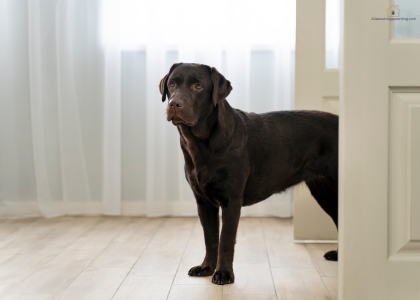
Dogs are creatures of habit. Like I mentioned, if I dare feed the dogs even 15 minutes late, he shows up by my side, guilt-tripping me, “You forgot my dinner!” The power of routine for dogs cannot be overstated. Because you and the rest of the household tend to do the same things at around the same times each day, dogs form a strong internal schedule around these routines. They learn, for instance, that every weekday around noon the mail carrier comes, or that evenings mean the family gathers in the kitchen. Or if you always arrive home from work at around 5:30 p.m., your dog’s internal day timer will cue them to start watching the door at that time. It’s not magic. It’s dog habits shaped by consistency. By keeping a consistent schedule for feeding, walks, and play, you’re effectively training your dog’s sense of time. In turn, they anticipate events like clockwork.
Environmental Cues
Dogs also gauge time by picking up on environmental cues. Their world is full of signals that don’t register to us as timing devices. For example, the amount of daylight and the position of the sun affect your dog’s internal rhythm. The house and its daily sounds are a big giveaway. If every day around 6 p.m. the downstairs neighbors start cooking dinner or there’s traffic noise as people return from work, your pup uses those clues to make sense of where in the day’s cycle they are.
A classic example is the sound of your car engine or a specific footstep pattern that your dog recognizes from far away. Many owners report that their dog gets alert and runs to the door seconds or minutes before they even open the door.
Dogs also respond to social cues. If one family member usually comes home first and another later, the dog might learn each person’s typical time and react accordingly. Any environmental change that consistently precedes your arrival becomes a cue: maybe the house is silent all day, but at 5 p.m. the thermostat clicks on and the heater noise starts, and your dog has learned that this click means mom will walk in soon. They are incredibly observant! These dogs’ external signals basically serve as their timekeepers.
Power of Smell
Perhaps the most fascinating way dogs sense time is through their incredible sense of smell. I’ll admit, this one blew my mind when I first learned about it, but it makes perfect sense given a dog’s nose. Dogs smell time, according to canine cognition researcher Dr. Alexandra Horowitz.
What does that mean? Scents in your home change in concentration as time passes. When you leave the house in the morning, your personal scent lingers in the air and on the furniture. As the hours go by, that scent fades gradually, especially if no one else is home. Your dog’s nose can detect the weakening of your odor. It’s like a natural clock: the fainter your smell, the longer you’ve been away.
By the time that scent has dwindled to a certain level, your clever pup might deduce that you’ve been gone “long enough” and should be home soon.
Smells around the house shift with the day’s heat and air currents. Dr. Horowitz explains, “In the afternoon warm air carrying scent rises and later cools and falls, creating a sort of scent trail that indicates time’s progression.” A dog might learn that when the living room no longer smells like your morning coffee and the sun patch on the floor has moved, it’s roughly the time you usually return.
They may even smell the approach of someone before that person arrives, sensing a familiar odor on the breeze before the car pulls up. So, when we talk about dogs knowing when you’re coming home, it’s not that they know the time but that their nose has been keeping track in your absence.
Do Dogs Miss You When You’re Gone?
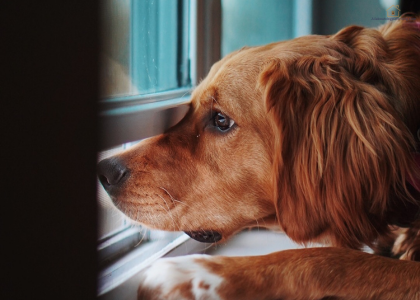
We know dogs love their humans, but do they actually miss you in the way we miss them? Based on both owner experiences and research, the answer seems to be yes. However, how a dog reacts to your absence can vary widely. Many dogs are pretty calm when left alone for a reasonable period. They’ll nap, chew a toy, and generally be OK because they trust that you’ll return.
However, some dogs experience true separation anxiety and distress when apart from their humans. As someone who’s dealt with a dog prone to anxiety, I can tell you the struggle is real for the pup. Signs of a dog missing you or being upset by your absence include,
- Whining
- Pacing
- Barking
- Door-scratching after you leave
In more severe cases, a dog might tremble, pant excessively, refuse to eat, or resort to destructive behaviors like chewing furniture or having accidents inside due to stress. These are classic symptoms of separation-related distress.
Studies estimate that a significant number of dogs truly feel the absence of their owners to a distressing degree. That tells us that for a lot of our canine companions, being away from their humans is emotionally hard. Even dogs without clinical anxiety clearly show excitement and happiness when you return, which can be interpreted as them missing you to some extent.
Myths About Dogs and Time
There are a few common misconceptions about dogs and time. Let’s clear those up:
Myth 1: “Dogs know the clock”
Some people joke that their dog can practically read a watch because the pup begs for dinner at exactly the right time or waits by the window right when the kids’ school bus is due. In reality, dogs don’t intellectually know what time it is, and they definitely don’t understand the concept of hours and minutes on a clock. They aren’t counting down to 5:00 PM.
What’s really happening is explained by all the factors we’ve discussed: routine, cues like hunger or light levels, and learned behavior. Your dog appears to know it’s 5 PM because for weeks, months, years you have consistently done a thing at 5 PM, so they anticipate it based on prior experience.
Myth 2: “Dogs can’t tell a short absence from a long one”
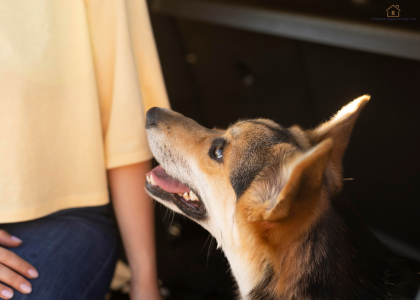
On the flip side, some assume that since dogs have a different sense of time, it’s all the same to them whether you leave for five minutes or five hours. This is a misconception. Dogs do notice the difference in duration, even if they don’t know the exact length of time. We’ve already seen that research suggests dogs were more excited and attentive after a 2-hour separation than a 30-minute one. Many owners, myself included, observe that being gone all day yields a zoomier, more overjoyed greeting than being gone briefly.
Another myth is that if you leave a dog for a week, they “forget” you because dogs supposedly have no long-term memory. Absolutely false! Dogs remember their beloved humans even after much longer absences. They might not know it’s been 7 days, but they know it’s been a while and will show huge affection when reunited.
Helping Dogs Cope With Alone Time
Even though dogs can adapt to our schedules, being alone isn’t always easy for them, especially if they’re very attached. As a dog mom, I want my pups to be happy and calm even when I have to leave the house. Fortunately, there are steps we can take to help our dogs handle alone time better and reduce any anxiety. Here are some strategies that have worked for me over the years:
- Creating a Consistent Routine
One of the best ways to help a dog feel secure when alone is to establish a consistent daily routine. Dogs do best when life is somewhat predictable. Try to feed your dog, walk them, and offer potty breaks at the same time each day. A regular schedule for meals, walks, and playtime helps your dog establish a routine and feel more secure.
A dog’s daily routine builds trust. Your pup learns that you always come back around the same time, and they always get to go out and play eventually. This predictability can greatly calm a dog when they’re home alone because they’re not fretting about when things will happen. If possible, anchor certain activities to cues. For example, a morning walk after your shower, or a treat when you grab your keys to leave. These habits signal to your dog that all is normal and they know what to expect, even when by themselves.
- Find Ways to Enrich Your Dog’s Alone Time
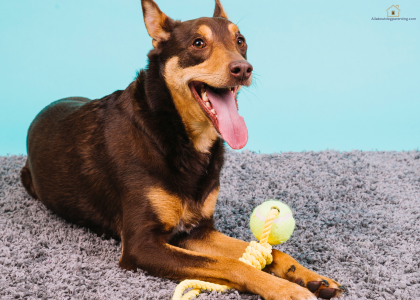
Mental stimulation can work wonders in keeping a dog relaxed during alone time. Instead of your dog staring at the door waiting for hours, give them something fun to do! This can mean providing toys, games, and activities that occupy your dog’s body and mind. For instance, I like to leave out treat-filled puzzle toys or a Kong smeared with a little peanut butter for my dogs when I head out because I’ve learned that a busy dog is a less anxious dog.
In addition to toys, you can also consider leaving on some gentle music or dog-friendly TV. The background noise can be comforting and reduce the feeling of isolation. These little comforts can break up the monotony of the day for your dog.
- Addressing Separation Anxiety
If your dog shows signs of true separation anxiety, like extreme panic when you leave, it’s important to address it gradually and gently. One effective approach is desensitization, where you teach your dog, step by step, that being alone is safe and temporary. Start with very short departures.
For example, leave your dog alone for just a few minutes while you step outside, then come back. Slowly increase these intervals over days and weeks. With patience and repetition, your dog learns that you will come back every time, so they become more comfortable with being on their own for longer periods. During this training, it’s crucial to remain calm and keep the vibe nonchalant both when leaving and returning. I know it’s hard. Those puppy-dog eyes tug at your heart strings. But making a huge fuss can actually feed their anxiety.
You might also explore calming aids if needed. Some dogs benefit from pheromone diffusers or a snug calming wrap, like a ThunderShirt, that swaddles them gently. Natural supplements or veterinarian-prescribed medications can help in severe cases. If you’re dealing with persistent anxiety, I highly recommend consulting a professional trainer or behaviorist.
FAQs About Dogs and Time
- Do dogs know how long you’ve been gone?
Dogs don’t know the exact number of hours you’re away, but they do register the passage of time in their own way. They can tell the difference between a short absence and a long one through changes in routine and scent. Your dog might not think, “My human has been gone for 3 hours,” but they will sense that a longer time has passed since you left. The enthusiastic wigglebutt greeting after five hours apart versus a quick tail wag after five minutes shows that dogs do notice duration.
- Can dogs tell the difference between 1 hour and 5 hours?
To a certain extent, yes, they can tell short vs. long duration. One hour versus five hours are both “fairly long” from a dog’s perspective, but five hours will lead to more pronounced changes such as hunger, fuller bladder, more fading of your scent. Research suggests dogs become noticeably more excited and attentive after longer absences. That implies your dog knows that five hours feels much longer than a brief one-hour wait. However, beyond a few hours, the nuance might blur for them.
- Why do dogs wait by the door at the right time?
Dogs often wait by the door around the time you usually return because they’ve learned your daily pattern and possibly picked up on cues signaling your approach. This is classic dogs sense time home behavior. Thanks to their internal routine, a dog might start listening for you at, say, 5:00 p.m. if that’s your normal arrival time. Environmental cues like the sky getting dim or neighborhood sounds at that hour can trigger them to go to the door. And of course, if they actually hear your car or footsteps approaching, they’ll rush to the door on cue. They appear to have an almost psychic ability to know when you’re coming home, but it’s really timing, training, and keen senses at work.
- Do dogs have an internal clock?
Yes, dogs absolutely have an internal clock. It’s just not the same kind we humans have. A dog’s internal clock is governed by their circadian rhythm and routine. Their body knows roughly when it’s time to wake up, eat, or sleep based on light cycles and habitual timing. While it’s not precise to the minute, it’s enough to give dogs a reliable sense of “now it’s morning” or “time for my afternoon nap.” Over time, dogs’ internal clocks often sync with their owners’ patterns, which is the outcome of a beautiful adaptation from centuries of domestication alongside humans.
Takeaway
Dogs don’t understand time in the strict human way but our furry friends most certainly sense time through biology, routine, and the world around them. Your dog knows when it’s dinner because their body and daily pattern say so. They seem to predict your homecoming not by checking the clock, but by noticing cues that tell them “it’s about that time.”
Like I’ve explained, dogs’ sense of time is a combination of circadian rhythms, associative memory, and superpowered senses like smell. So next time you see your pup waiting patiently by the door or nudging you because it’s walk-o’clock, remember: it’s not just out of habit, but something deeper. In their own way, dogs know time is passing and more importantly, they know that the best time of day is when they’re finally reunited with you. Cherish that canine internal clock, because it’s one of the many ways your dog says, “You’re my whole world, and I can’t wait to have you by my side again.”