What to Expect During Your Dog’s Annual Check-Up in Sydney
Your dog can’t tell you how they’re feeling, but an annual vet check-up can. Think of it as a chance to make sure your furry baby is truly healthy under the hood, detect any budding health issues early on and nip them in the bud, and give your pet the gift of health and longevity. That’s why dog annual check-up in Sydney is a core part of the pet parenting lifestyle.
To make the most of it, you need to know what to expect from these vet check-ups for your dog, what kind of questions to ask, and what aspects of their health to focus on. Let’s walk you through what happens during a routine dog health check in Australia. You’ll learn about the head-to-tail physical exam, vaccination updates, dental and parasite checks, bloodwork screening, and even the typical Sydney vet visit cost.
We’ll also cover preparation tips and what to ask the vet. Best of all, you’ll see how these preventive veterinary care visits catch problems early, save on future vet bills, and keep your best friend happy and wagging well into their senior years.
Why Annual Check-Ups Are Essential for Every Dog
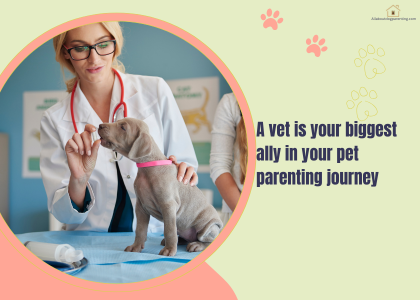
As a fellow dog parent, I’ve learned that keeping up with annual vet visits is non-negotiable. Vets emphasize early detection of health problems, catching things like ear infections, arthritis, or heart murmurs long before they become emergencies. “Preventative veterinary care is one of the most significant reasons for annual check-ups,” notes an Australian pet welfare guide. By spotting small issues such as a slight limp or a new lump early, your vet can treat them quickly and more cheaply.
Dog wellness exams in Sydney also cover vaccinations, weight, and dental checks. Now, the vet visit frequency in Australia depends on your pet’s age. Puppies need more frequent trips to the vet because of their vaccination schedule, healthy adult dogs can get by on just one visit a year, and seniors need at least two wellness checks a year provided they’re not grappling with any underlying medical issues.
As Dr. Harry Cooper, Sydney’s beloved TV vet, reminds us, “Pets age fast. By the time a 10-year-old dog has had nine birthdays, they’re more like a 60-year-old human! You really need to be having a regular visit to your vet. Twice a year, every six months.”
Sticking to a consistent schedule of vet wellness check-ups means long-term savings. A routine exam might be $80–$100 in Sydney, but preventing a serious disease or catching it early saves big money and grief down the road. Plus, regular vet visits give your dog a more relaxed view of the clinic, making serious check-ups less stressful later on. That peace-of-mind is priceless.
Preparing for Your Dog’s Annual Vet Visit
Preparing for a vet visit takes a bit of planning. Here is a simple vet appointment checklist that may help you make the most of these appointments:
- Bring the paperwork: Have your dog’s vaccination history, medication list, and any recent test results handy. If you’ve moved or switched vets, ask your old vet to send records. This forms your annual vet exam checklist for the visit
- Make a list: Write down diet details, behavior changes, or questions like new limp, dry cough, or an itchy patch so you don’t forget to mention anything.
- Keep calm: To make the visit as smooth sailing as possible, make sure both you and your pet are calm. Quiet confidence from you goes a long way in soothing your dog’s nerves. I find a light walk or play 30 minutes beforehand helps burn off energy and puts my pet at ease. Some vets prefer pets come before eating or drinking, so ask when you book.
- Timing matters: Morning appointments often mean a rested pet and shorter waits. But if your dog is a slow starter, a late morning slot might be best. If your dog is anxious, mention it when you book. Some clinics let you come in early to sniff around
- Practice runs: If your dog worries about carriers or car rides, do some at-home training. Carried treat rewards or short rides without a destination can ease travel anxiety. You can also plan a couple of “happy visits” to the vet to help build a positive association for your pup. This means just popping into the clinic to say hi and get a treat. This way, your dog learns vet visits can be fun, not necessary involve poking and prodding
With these steps, you’ll both enter the clinic ready for a productive preventive veterinary care visit.
The Physical Examination—What Vets Check

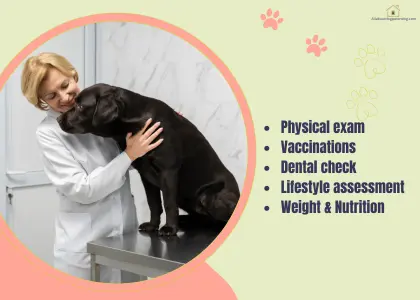
Once you’re in the exam room, the vet, often with a nurse, will do a thorough dog physical examination from “nose to tail.” Expect them to:
- Check vital signs: They’ll take your dog’s temperature and weigh them. Tracking weight is key. Even a pound off a 30 kg dog can reduce stress on joints
- Head-to-tail scan: Vets often start by observing your dog from a distance with a distant glance, watching them move, sit, and greet them. Vet health assessment will also entail palpating the limbs, abdomen and lymph nodes, listening to your dog’s heart and lungs with a stethoscope. This can reveal murmurs, lung crackles, or abdominal masses
- Eyes, ears, nose and mouth: Expect eyes and pupils to be checked for clarity and response. Ears will be pried open to look for infection or mites. The vet will lift your dog’s lips to inspect the gums, teeth and throat. They’ll note any tartar buildup or bad breath hinting at gum disease
- Skin, coat and body: The vet will run hands through the fur to find lumps, bumps or thinning patches. The dog check-up procedure also involves an assessment of the skin condition, focusing on whether it is dry, oily, or has any rashes as well as presence of any ticks or fleas. They may then look more closely at any “hot spots” or suspicious skin lesions
- Muscles and joints: A vet will manipulate each joint and muscle, checking range of motion and pain. Early arthritis or hip dysplasia might show up as a subtle stiffness at this stage
- Abdomen and palpation: The vet will gently press your dog’s belly to feel organs like the liver, kidneys, bladder, and spleen. An unusually large or hard-feeling organ could mean disease
All this seems like a lot of poking, but it’s standard dog check-up procedure. It gives your vet the pretty complete picture of how your dog’s body is doing on the inside. You’ll often see vets use an annual vet exam checklist to ensure they don’t miss any step. Feel free to ask if you’re curious about any part of the exam.
Vaccinations, Parasite Control & Preventive Treatments
One major focus of the visit is updating vaccinations and parasite preventatives. In Australia, core dog vaccines usually come in combinations named C3, C4 or C5. A C3 vaccine covers the big three viruses: distemper, hepatitis and parvovirus. A C5 vaccine includes those plus protection against kennel cough pathogens.
As part of the vaccination updates for dogs in Sydney, your vet will review your dog’s vaccine history and lifestyle to decide if you need a booster. For example, a backyard-only pet might skip leptospirosis, while city dogs or dogs that frequent Sydney’s boardings often get that too.
Parasite prevention in Australia is another must for pets. Fleas and intestinal worms are year-round problems. In Sydney’s coastal climate, paralysis ticks lurk in the bush. Your vet will recommend a full prevention plan. This may include,
- Monthly heartworm medications. Despite Sydney’s low prevalence, even stray mosquitoes can cause infection
- Year-round flea treatments in the form of pills or spot-ons
- Regular worm tablets
Many dog owners in Sydney use combination products or even an annual heartworm injection to simplify the routine. Vets often suggest spreading parasite prevention and dog booster shots throughout the year. For instance, a typical Sydney schedule might be C3/C5 booster in spring, tick and flea treatment monthly through summer, a yearly dewormer, and a heartworm injection or tablet annually in autumn. The annual check-up is the perfect time to stock up on these treatments and ask about preventive veterinary care packages some clinics offer.
Dental and Oral Health Assessment
Don’t forget dental check dogs. Poor dental health can undermine your dog’s whole body. As part of the standard canine dental care in Sydney, expect your vet to look for:
- Tartar
- Gum redness or infections
- Loose or broken teeth
- Gingivitis
- Any foul odors that could signal deeper infections
If significant tartar or disease is present, a professional dog teeth cleaning is often recommended. This involves anesthesia, scaling to remove plaque under the gum line, and polishing – all to prevent infections that can spread to the heart or kidneys.
Alongside, your vet will advise you on at-home dental care. This may be brushing with canine toothpaste, or using dental chews/rinses. I always tell my readers: get your dog used to having their teeth rubbed gently when they’re a puppy or at least start gradually in adulthood. It goes a long way in ensuring their oral health.
Nutrition, Weight & Lifestyle Evaluation

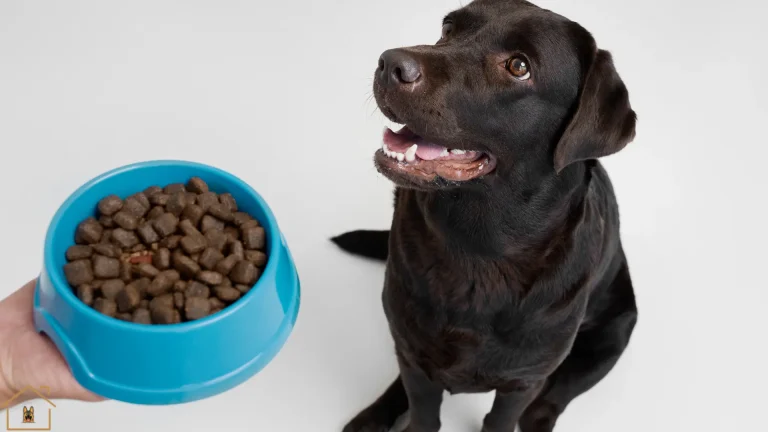
A big part of the annual exam is dog nutrition check-up, focusing on diet, weight, and exercise. Vets will determine a body condition score to see if your dog is underweight, ideal, or overweight. Your vet will also ask about your dog’s food type and quantity, treats, and daily routine. They’ll factor breed and age: a German Shepherd puppy eats very differently from a 12-year-old Chihuahua.
If weight loss or gain is needed, expect specific advice on weight management for dogs: a gradual diet plan, feeding schedule tweaks, or special veterinary diet foods. They’ll also talk about lifestyle. Do you have a backyard where your dog runs all day or is your dog mostly indoors? How much exercise and play do they get? If there are behavior or energy issues, now’s the time to bring them up. Sometimes a dietary change or more walks can help a lazy dog lose belly fat and perk up. Or a senior pup might benefit from joint supplements or prescription diets to maintain mobility.
In short, nutrition and lifestyle evaluation turns your check-up into a holistic wellness plan. By the end, you’ll have a realistic diet/weight goal, a healthy diet for your pet, and a plan for exercise that fits your life.
Bloodwork and Diagnostic Screening
Many vets now recommend annual, or biannual for older dogs, blood and urine screening. Even if your dog looks fine, baseline tests catch sneaky diseases. During your check-up, you can ask for a dog blood test in Sydney to check organ function. These tests can flag kidney disease, early diabetes, liver issues, thyroid problems, or anemia well before symptoms appear.
Often a fresh urine sample is tested on the spot to check kidneys, bladder, and hydration. Other tests included in the diagnostic screening for pets can depend on lifestyle. Stool samples might be checked for worms, especially if your dog scoffs snails or hunts rodents. If your dog is due for heartworm prevention, some vets also test for microfilariae, which are tiny worms in the blood.
Advanced diagnostics like X-rays or ultrasound are not routinely a part of preventive vet testing, but your vet might recommend them if something catches their eye. For example, a dog with mild coughing or a chest abnormality on auscultation might get a chest x-ray. Pets with a faint murmur might see a cardiologist. Vets nowadays can often do these in-house at large Sydney hospitals.
Discussing Behaviour and Lifestyle Changes
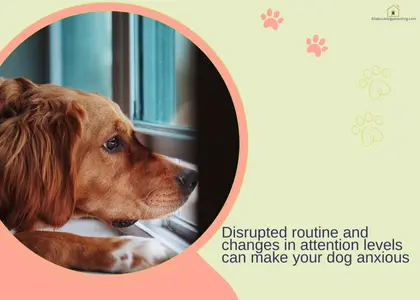
During the visit, don’t hesitate to bring up any worries about your dog’s mood or habits. Dogs often hide issues in plain sight, and a change in behavior can be a subtle health clue. Vets will usually ask if your dog seems more anxious, aggressive, or lethargic. But if you have been noticing any other concerning patterns, don’t hesitate to ask for a dog behaviour check-up and consultation.
Your vet might offer training or enrichment tips for stress management for your pet. Maybe more daily playtime, puzzle feeders, or safe chew toys to reduce boredom. If anxiety seems severe, they may suggest a short course of medication or supplements to calm nervous dogs. For mild lethargy in seniors, they may adjust diet or suggest gentle exercise like short strolls.
Remember, veterinarians are also pet behavior advisors. Our dogs’ environments can change how they act. So, a frank lifestyle assessment of dogs at their annual check-up can help you understand where certain unusual or unprecedented behaviors may be stemming from.
Cost of an Annual Dog Check-Up in Sydney

Let’s talk numbers, which I know can make any pet parent gulp. A Sydney vet visit cost varies by clinic, location and services needed. A basic wellness exam typically runs around $80–$120. That covers talking history, performing a physical exam, and basic advice.
Then there are add-ons. Vaccines in Australia usually cost about $80–$100 per year for a dog. So if your dog needs a booster or a combo vaccine, expect roughly that ballpark per year. Parasite prevention (might add another $200–$300 spread over the year, but often you buy them monthly.
Dental cleanings can range widely. A routine scale-and-polish under anesthetic might be $400–$800, depending on whether any extractions are needed. Blood tests or X-rays are extra too. A full blood panel might be $150–$250, and X-rays can be a few hundred dollars each.
If you’re looking for affordable dog check-up options, explore clinics that offer preventive care plans or package pricing. Another great way to manage the cost is to look for pet insurance coverage in Australia that covers routine care. Some do up to a limit.
From the looks of it, it can seem like Sydney vet visit costs add up quickly. However, if you crunch the numbers, you’ll find that regular check-ups save money long-term. By keeping vaccines current and catching infections early, you avoid the much bigger bills of emergency surgery or chronic disease down the line. Think of it as an investment: $300-$500 a year now could mean dodging a $5,000 hospital stay in the future.
Final Takeaway
Your dog’s annual check-up is more than a box-ticking chore. It’s a lifesaver. By making these vet visits routine, you catch sneaky health issues early and help your pup live its happiest, healthiest life. I’ve covered everything you need to know to get started, right from the head-to-tail exam to key lab tests, vaccine boosters, parasite prevention for Sydney environment, dental checks, diet reviews, and even likely price tags. So mark your calendar, set an alarm, and please give your dog its annual wellness exam. It’s truly the best gift you can give a pet who can’t tell you what hurts.