Puppy Feeding Schedule by Age: How Much, How Often, What to Change
Feeding a growing puppy can feel like a moving target. Puppies grow unbelievably fast, doubling or tripling in weight in just a few months, so their meal routine needs to keep pace. In this guide I’ll break down the puppy feeding schedule by age, so you’re not left trying to read labels and make sense of how much and how often to feed your growing puppy. We’ll cover everything from meal frequency and portion sizes to and when to make changes and things like body condition and stool quality. This puppy feeding schedule is structured by age ranges (2–3 months, 4–5 months, and so on), so you can jump to what applies to your pup today.
Puppy Feeding Schedule — Quick Overview
- 2–3 months: 3–4 meals per day
- 4–5 months: 3 meals per day
- 6–12 months: 2 meals per day
- Portion size increases as meal frequency decreases
- Large-breed puppies: Often stay on puppy food longer and may need an extra meal or two for a few more months
How Puppy Feeding Needs Change Over Time
Puppies have huge nutritional needs early on. Their bodies grow at lightning speed, so they need a lot of calories, spread over small meals throughout the day. If you’re wondering how often to feed a puppy, vets recommend feeding puppies under six months at least three to four times a day, gradually tapering to two times a day as adolescence nears. Their metabolism is very fast initially but slows down as growth tapers.
Breed size makes a big difference. Small breeds often reach near-adult size by 10–12 months, while large and giant breeds may continue growing, and require puppy food, until 12–24 months. One common mistake is overfeeding during these growth stages. So, it’s equally important to figure out how much to feed a puppy. Rapid weight gain can strain developing joints and organs.
Feeding Schedule at 2–3 Months
How Often to Feed a Puppy
At this very young age, puppies need 3–4 small meals a day, spaced evenly. For example, you might feed at morning, midday, early evening, and add an optional late snack. These frequent meals help fuel their rapid metabolism. For my German Shepherd puppies, I scheduled meals as breakfast, lunch, dinner, and a small snack before bedtime. Stick to regular times each day. Predictability helps digestion and even house-training.
How Much to Feed a Puppy
Portions should be based on your puppy’s weight and growth. A good starting point is the puppy feeding chart provided by your vet. The amount of food given depends on body weight and body condition score, so use that as a baseline. Measure each meal, either in cups or by weight, rather than free-feeding. Weigh your puppy weekly or biweekly. If they’re gaining too fast, cut portions back slightly.
What to Watch For
At this stage, keep a close eye out for signs of too much food, such as rapid weight gain. If your pup is ballooning in a week, that’s a red flag. Check their body often. You should easily feel ribs under a slight layer of muscle, but they shouldn’t be protruding. Also note loose or frequent stools. In young pups, large or rich meals can trigger diarrhea. Another key sign to watch out for is lethargy. Overfed puppies can become unusually quiet or tired.
What to Change Next
Once your puppy nears 4 months, you can scale down to three meals a day. Transition gradually over a week. For example, skip one snack meal, so they adjust smoothly. This ensures you don’t abruptly remove too much food. Just slowly split the same total daily ration into 3 portions.
Feeding Schedule at 4–5 Months
How Often to Feed a Puppy
At about four months old, most puppies shift to 3 meals per day—morning, midday, and evening. This is still frequent but one meal less than before. Your puppy will still burn a lot of calories, so three meals keeps energy steady. Keep the meals evenly spaced, roughly every 6–8 hours, and avoid eating very late at night.
How Much to Feed a Puppy
Since your pup is bigger now, you can reduce the puppy meal frequency to three a day and slightly increase each meal’s portion. Check with your vet or refer to the food label to assess how much you should be feeding based on their new weight range. Another good metric to assess portion size is your puppy’s size and body shape. If they feel too thin, up the portion a tad. If they’re getting pudgy, downsize. A good rule is that meals should slowly grow with your puppy, but never so much that you can’t feel the ribs under light fingers.
What to Watch For
Around 4–5 months, puppies may have fluctuating appetites. Growth spurts can suddenly make them very hungry one week and oddly picky the next. This is normal. Still, watch weight. If they sprint up a growth curve, they might need extra food temporarily. Conversely, if they slow or refuse food, make sure nothing else is wrong. Avoid piling on extras or snackable treats between meals, or you’ll see that potbelly start to creep back.
What to Change Next
By the end of this stage, you can gradually move to 2 meals a day for small and medium breeds, feeding them in the morning and evening only. The AKC notes that after 6 months, puppies transition to twice daily meals. For large breeds, however, you might hold off a little longer, and keep them on the three meals frequency until around 9–12 months.
Feeding Schedule at 6–7 Months
How Often to Feed a Puppy
By 6–7 months old, most puppies eat 2 meals per day, typically one in the morning and one in the evening. At this point their tummy is big enough to go longer between meals and they are usually starting to calm down activity-wise. If you have a large-breed puppy, you could keep 3 meals for a little longer, but generally two is the new norm. This also mirrors adult dogs’ routines, which makes transitioning easier later.
How Much to Feed a Puppy
When adjusting the puppy feeding schedule by age, it’s important to increase the portion size correspondingly. However, growth is slowing at this stage, so don’t overshoot calories. To assess whether their calorie intake is appropriate, watch their energy. If your puppy remains energetic and maintains a lean waist, you’re probably doing fine. Very active adolescents may need more calories, while more sedentary ones may need a slight cut. And remember treats count too.
What to Watch For
This is the age when mistakes can show up. Watch out for gradual weight gain. Puppies grow slower now, so if your active pup suddenly becomes a couch potato, it may be time to re-assess how much to feed them. And don’t forget to factor in the treats when calculating your pet’s daily caloric intake. Ideally, treats should stay under 10% of daily calories. Also keep an eye on joint health in large breeds. Rapid gains or excessive weight stresses growing bones. Lastly, be aware of spay/neuter changes. After surgery many puppies need a bit fewer calories, so adjust portions if you see weight creeping up.
What to Change Next
As your puppy nears 8–9 months, it’s time to evaluate the switch to adult food. Small and medium breeds often shift to adult formulas around 12 months. Large or giant breeds, however, may stay on puppy food well into their second year. Ask your vet if your puppy is ready for adult nutrition. Meanwhile, you’ll keep feeding 2 meals per day.
Feeding Schedule at 8–9 Months
How Often to Feed a Puppy
At 8–9 months, puppy meal frequency settles at 2 meals a day—morning and evening. Their feeding frequency doesn’t usually change from here on. By now, mealtimes are routine and easily fit your daily rhythm.
How Much to Feed
By this point, portion sizes tend to stabilize. You’ll usually be feeding the same amount each day as a couple of months prior. Keep observing your dog’s body. If weight is good and energy is balanced, stick with current portions. If your pup seems to be stalling in growth or losing weight, add a touch of food. If they’re filling out too fast, cut back slightly. Continue to use the puppy feeding chart by current weight as a guideline, but always fine-tune by body condition and energy.
What to Watch For
Growth is slowing at 8–9 months, so appetite can dip. It’s normal for some pups to eat less now that their growth plates are closing. However, make sure they’re not suddenly lethargic or refusing all food. That could be a sign of illness. Also keep checking stools: they should remain firm (see below). Any soft, frequent stools mean portion or diet change.
What to Change Next
This is the final stretch before adulthood. Between 9–12 months, plan your dog’s first taste of adult maintenance food. Many vets recommend switching after 12 months for most dogs, but breed size plays a role in the decision. Small breeds tend to be ready by 10–12 months, while large/giant breeds can go as late as 18–24 months. Discuss with your vet the right timing for your pup. When you make the transition, do it slowly over about a week.
Feeding Schedule at 10–12 Months
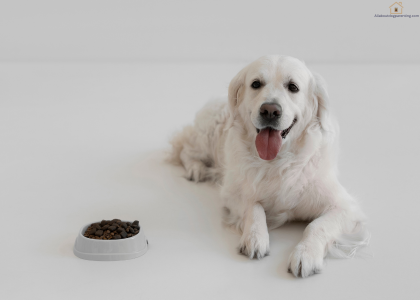
How Often to Feed a Puppy
Most healthy dogs at 10–12 months still eat 2 meals per day. This matches the adult dog feeding pattern, so continuing it is straightforward.
How Much to Feed
Portion sizes should now be aligned with your dog’s target adult weight. Check your puppy’s current weight against growth charts or ask your vet for their expected adult size. Feed puppy food until your pet reaches around 80% of their adult size, which for small breeds is often by 10-12 months and for large breeds by 15-24 months. If your dog is nearing their adult build, move to the adult feeding guidelines. Divide the total daily calories for their ideal adult weight into two meals.
What to Watch For
At 10–12 months, watch that activity and portion are in balance. Puppies tend to become less hyperactive by now. If you’re still feeding as if they were little bundles of energy, weight will creep up. Keep an eye on the same signals: ribs should remain palpable, and the waist should be visible from above. Also consider breed differences. A small breed, like a Chihuahua, may already be at full size and slight weight, while a Great Dane may still be a lanky teen. If you have a large-breed puppy, don’t rush cutting back on calories. Adjust portions gradually if you notice growth has tapered off..
What to Change
Now’s the time to make the adult switch. For most medium/small dogs, transitioning to adult dog food around 12 months is appropriate. For very large or giant breeds, it’s advisable to wait until 18–24 months. The key is to match calories to adult life. Once fully grown, you’ll continue feeding twice daily but at a fixed adult maintenance level rather than puppy formula.
How to Know If You’re Feeding the Right Amount
It can be tricky to judge portions as you adjust the puppy feeding schedule by age, but there are some simple checks.
- Body condition: You should be able to easily feel your puppy’s ribs with your fingertips, under a slight layer of muscle and fat, but ribs should not be prominently sticking out. If you can’t feel them at all, you’re probably feeding too much. If they’re very obvious, feed more
- Steady growth: In the first few months, a healthy puppy should gain a small amount of weight every day. If weight plateaus or falls off unexpectedly, something’s off
- Energy levels: A properly fed puppy will be playful and alert between meals, not sluggish
- Stool quality: Ideal puppy poop is medium-brown, firm and log-shaped. Soft, loose stool or constant straining signals a feeding issue. If your pup’s stool is always loose, you may need smaller meals or a different formula
Common Feeding Mistakes by Age
No matter the age, some pitfalls should be avoided:
- Free-feeding: Leaving food out all day may sound convenient, but it often leads to overeating and obesity. Puppies get into bad habits and can pack on pounds
- Switching foods too quickly: A sudden change in diet can cause diarrhea or vomiting. Always make a gradual transition over about a week
- Ignoring treat calories: Remember treats have calories too. Keep treats under ~10% of daily calories. Using treats for training is fine, just adjust meal portions accordingly
- Feeding adult food too early: Not feeding puppy food can leave them short on key nutrients. Adult food lacks the extra protein, fat and calcium growing pups need. Switch to adult formula only when they’re near fully grown
- Overfeeding large-breed puppies: Large breeds need controlled growth. Overloading a Great Dane or Mastiff puppy risks joint issues. Stick to large-breed puppy guidelines and don’t add adult food’s extra calories too soon
How to Transition Between Foods Safely
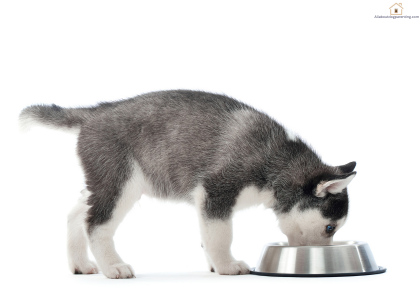
Whenever you change your pup’s diet, whether switching brands or moving from puppy to adult food, do it gradually. A standard approach is a 7–10 day transition. Start by mixing 25% new food with 75% old food, then gradually shift the ratio until you’re at 100% new. Mix thoroughly so the pup eats it uniformly.
Watch your puppy’s digestion during this phase. Occasional mild gas is normal, but if you see vomiting or very loose stools, slow down the transition. It’s also smart to change just one variable at a time. For example, only change food type, not quantity or schedule at the same time.
When to Consult a Vet About Feeding
You know your puppy best, but sometimes, professional advice is warranted. Contact your vet if you see any of these signs:
- Rapid weight gain or loss. Sudden or extreme changes suggest a balance issue
- Persistent diarrhea or vomiting. If digestive upset lasts more than a day or worsens, there could be an underlying problem
- Complete loss of appetite or refusal to eat. A healthy puppy should want to eat. Skipping meals consistently is a red flag
- Failure to grow. If a young puppy isn’t gaining weight steadily or seems stunted, seek help
- Breed-specific concerns. For example, large/giant breeds have special calcium needs. If you’re unsure about growth or diet for your specific breed, your vet or a veterinary nutritionist can give tailored advice
A good rule of thumb: when in doubt, it’s better to ask.
Conclusion
Even though no two puppies are exactly alike, a structured puppy feeding schedule by age can be helpful in keeping growth and nutrition on track. The general pattern to follow is: lots of small meals early on, tapering to fewer larger meals later. As they grow, you’ll naturally decrease meal frequency, from 3–4 meals down to 2, while slightly increasing each portion to match their increasing size.
Throughout puppyhood, consistent monitoring of weight and body condition is essential. Make changes gradually, heed any warning signs, and avoid common mistakes like overfeeding or switching foods abruptly, to keep your puppy on track. Remember to review comprehensive care guides for each growth stage, keep track of your pup’s development, and don’t hesitate to consult your vet if something doesn’t feel right.
FAQs
- Can I feed my puppy twice a day at 3 months?
Not usually. Very young puppies need more frequent meals. Experts advise 3–4 meals daily till 3–4 months of age. Feeding only twice a day that early can leave them hungry and at risk for low blood sugar. Stick to a higher frequency until at least 4–5 months old. - How do I calculate portion size?
Start with your puppy’s weight and the feeding chart on the food package. That gives a rough daily total. Then divide by the number of meals. Weigh your puppy weekly, and if they’re getting too chubby or too lean, tweak the amount accordingly. You can also use online calculators or puppy feeding charts or ask your vet for a body condition score to fine-tune feeding amounts. - When should I switch to adult dog food?
Timing depends on breed size. Most small and medium dogs are ready around 10–12 months, once they’re about 80% grown. For large and giant breeds, you may have to wait longer, typically 18–24 months. Always transition gradually over a week or more. Don’t switch too early, or your puppy may miss critical nutrients. Don’t switch too late, or you’ll be overfeeding extra protein/calcium. - Do large breeds follow a different schedule?
Yes, large and giant breed puppies grow more slowly, so they need puppy diets longer and often an extra meal or two in early months. For example, a Great Dane at 6 months might still do well on 3–4 meals instead of dropping to 2. Keep an eye on growth plates and weight. Many experts recommend keeping large-breed pups on 3 meals until 9–12 months and on puppy food until 18+ months. Always follow large-breed-specific guidelines to protect their bones and joints.