Puppy Feeding Schedule by Age: How Often, When, and Sample Daily Routines
Overview:
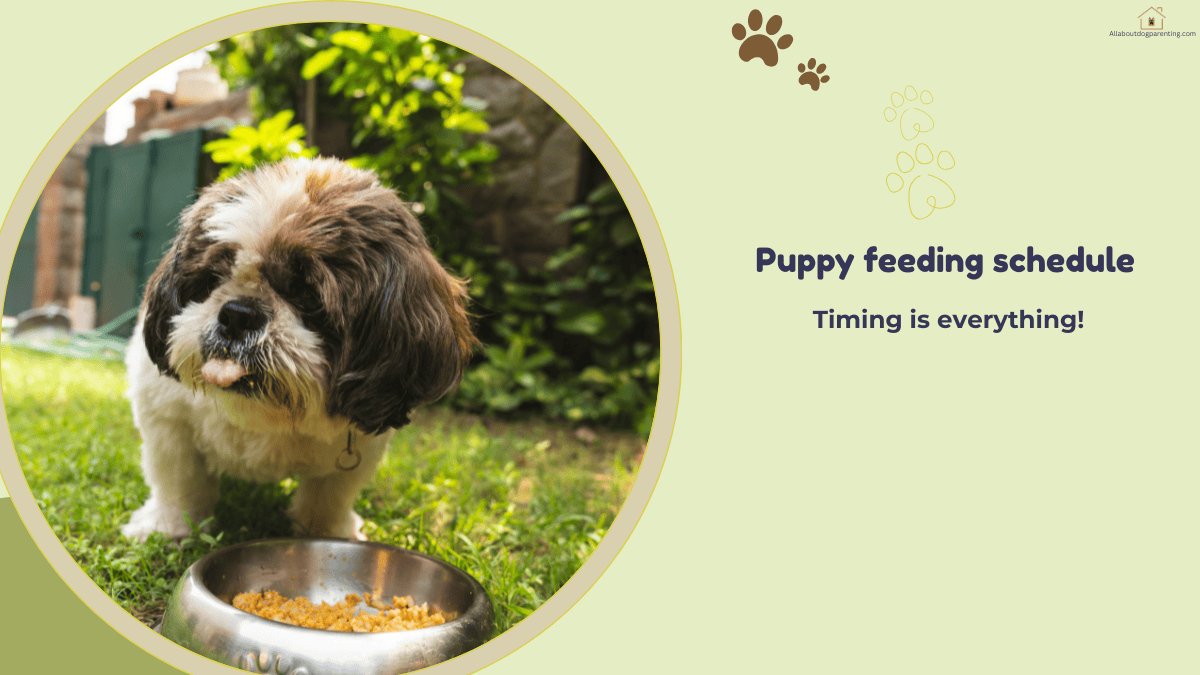
Feed puppies 4 times daily from 6–12 weeks, 3 times from 3–6 months, and twice daily from 6 months onward. Keep meal times consistent and space them evenly across waking hours. Consistency matters more than exact clock times.
A reliable puppy feeding schedule is one of the first things that makes those chaotic early weeks of your pet parenting journey feel manageable. Once your puppy eats on a predictable schedule, you can predict almost everything else about their day too: when they’ll need to go outside, when they’ll nap, and when they’ll be at their most trainable.
This article, part of our Complete Guide to Puppy Nutrition, focuses specifically on helping new pet parents get the timing right. From how often to feed a puppy at each age, what a real daily routine looks like with actual clock times, and how to know when your puppy is ready to drop a meal, we’ve got you covered. For exact portion sizes and calorie calculations, see our puppy feeding chart by age and weight.
Puppy Feeding Schedule at a Glance
The number of meals your puppy needs to thrive depends on their age and typically follows a downward trajectory as they age. So, you have 4 meals at 6–12 weeks, 3 meals at 3–6 months, and 2 meals from 6 months through adulthood. Each reduction happens when your puppy naturally shows less interest in one of their meals. Let’s take a look at how often to feed a puppy at different stages:
| Puppy’s Age | Meals Per Day | Spacing Between Meals | When to Move to Next Stage |
| 6–12 weeks | 4 meals | Every 4–5 hours | When your puppy leaves food at midday meal regularly |
| 3–6 months | 3 meals | Every 5–6 hours | When your puppy leaves food at midday meal regularly |
| 6–12 months | 2 meals | Every 10–12 hours | This is the adult pattern. Maintain it |
| 12+ months | 2 meals | Every 10–12 hours | Continue for life |
This table tells you the pattern. The sections below give you the actual daily routines, with real clock times, for each stage.
Puppy Feeding Times by Age—Sample Schedules
Puppy meal times need to evolve as your pet grows. Here is what puppy feeding times by age should look like:
6–12 Week Old Puppy (4 Meals Per Day)
A typical 8-week-old puppy eats at 7 am, 11 am, 3 pm, and 7 pm. Space meals evenly across waking hours and take your puppy outside to potty 15–20 minutes after each meal. Remove uneaten food after 15 minutes.
This is the most demanding stage of the puppy feeding schedule, and it’s also the most important to get right. Four evenly spaced meals keep blood sugar stable, support rapid growth, and, most critically, create a predictable potty pattern that makes house training possible. Here’s what a full day actually looks like:
| Time | Activity |
| 6:30 am | Wake up. Immediately take your puppy outside to potty |
| 7:00 am | Meal 1, measured portion, pick up bowl after 15 mins |
| 7:20 am | Take puppy outside to potty (they will almost certainly need to go) |
| 7:30–9:00 am | Supervised play, very short training (5 minutes maximum), exploration |
| 9:00–11:00 am | Nap. Puppies this age sleep 18–20 hours per day |
| 11:00 am | Meal 2. Feed, wait 15–20 minutes, potty break outside |
| 11:30 am–2:30 pm | Play, socialisation, another nap |
| 3:00 pm | Meal 3. Feed, potty break |
| 3:30–6:30 pm | Play, training, exploration, nap |
| 7:00 pm | Meal 4 (last meal of the day). Feed, potty break |
| 7:30–9:00 pm | Calm play, winding down |
| 9:00 pm | Final potty break outside |
| 9:30 pm | Crate or bed for the night |
| ~2:00 am | One middle-of-the-night potty break likely needed |
When I brought my German Shepherd home at 8 weeks, I stuck to the 6 am first meal schedule he was on at the breeder’s. The problem was that it meant a potty break at 6:20 am, another at 8 am, and I was already behind on everything else before the day had started. After a week’s struggle, I decided to push the first meal by an hour, and suddenly the whole schedule clicked into place within two days. My takeaway? Match the puppy feeding schedule to your lifestyle. The spacing matters more than the specific clock times.
Key points for this age:
• Moisten dry kibble with a little warm water for very young puppies to make it easier to eat
• Pick up uneaten food after 15 minutes, always. Don’t free-feed
• Expect potty accidents. At this age, puppies can only hold their bladder for about 2–3 hours. The feeding schedule is your potty training partner, not a magic fix
3–6 Month Old Puppy (3 Meals Per Day)
At 3–6 months, most puppies eat at roughly 7am, 12:30pm, and 6pm. This schedule aligns naturally with human meal times and is the easiest routine most owners find sustainable.
Three meals per day is when puppy meal times start to feel manageable rather than relentless. The day has a clear structure, the gaps between meals are long enough that you can get things done, and most puppies this age can sleep through the night reliably. Here’s what the full daily routine looks like:
| Time | Activity |
| 6:30 am | Wake up, immediate potty break outside |
| 7:00 am | Meal 1. Feed, wait 20 minutes, potty break |
| 7:30 am–12:00 pm | Play, training sessions (10–15 minutes), naps, walk (15–20 minutes) |
| 12:30 pm | Meal 2. Feed, potty break |
| 1:00–5:30 pm | Afternoon walk, play, training, naps |
| 6:00 pm | Meal 3 (last meal). Feed, potty break |
| 6:30–9:00 pm | Evening walk, calm play, winding down |
| 9:30 pm | Final potty break outside |
| 10:00 pm | Bed. Most puppies this age sleep through the night |
One thing I started doing with my GSD during this phase: short training sessions right before breakfast and dinner, never after. He was a completely different dog when there was food on the line versus after he’d already eaten. Food motivation is highest when the meal is still coming. Use that window. Even five minutes of sit, down, and recall practice before putting the bowl down builds enormous value over weeks.
Key points for this age:
• The midday meal is the one that eventually gets dropped. Watch for signs your puppy is ready (more on this below)
• Training sessions are most effective immediately before meals when food motivation is highest
• Puppies this age can hold their bladder for 3–4 hours, which means the midday meal still needs a midday potty break. Factor that into your day
6–12 Month Old Puppy (2 Meals Per Day)
From 6 months onward, most puppies eat twice daily—morning and evening, roughly 12 hours apart. A typical puppy feeding schedule at this stage is 7:30 am and 6:30 pm, and this becomes the adult pattern most dogs follow for life.
| Time | Activity |
| 6:30 am | Wake up, potty break, morning walk (20–30 minutes) |
| 7:30 am | Meal 1. Feed, potty break after |
| 8:00 am–5:30 pm | Your normal day. Puppies this age can hold their bladder 4–6 hours. Midday walk or potty break if possible. |
| 6:00 pm | Evening walk (20–30 minutes) |
| 6:30 pm | Meal 2. Feed, potty break |
| 7:00–9:30 pm | Play, training, winding down |
| 10:00 pm | Final potty break, bed |
The 12-hour gap between meals is entirely normal for dogs and is how most dogs eat for the rest of their lives. Some puppies naturally shift to this pattern at 5 months, others take until 7 months. Follow your puppy’s cues rather than a rigid age cutoff.
Key points for this age:
• Get this two-meal schedule right now because it’s the one that carries into adulthood
• If your puppy seems restless mid-afternoon, a small treat or brief training session is fine. Just account for those calories within the 10% daily treat budget
• Large breed puppies should continue on large-breed puppy food at this age, even as the meal schedule moves to adult frequency
How to Know When Your Puppy Is Ready to Drop a Meal
This is the question nobody gives a straight answer to. “Around three months” and “around six months” are useful starting points, but your puppy’s behaviour is the real indicator. Your puppy is ready to reduce meals when they consistently leave food in the bowl at one feeding, seem genuinely uninterested at a specific mealtime, or their energy remains stable despite approaching one meal with indifference. Drop the meal they show the least enthusiasm for.
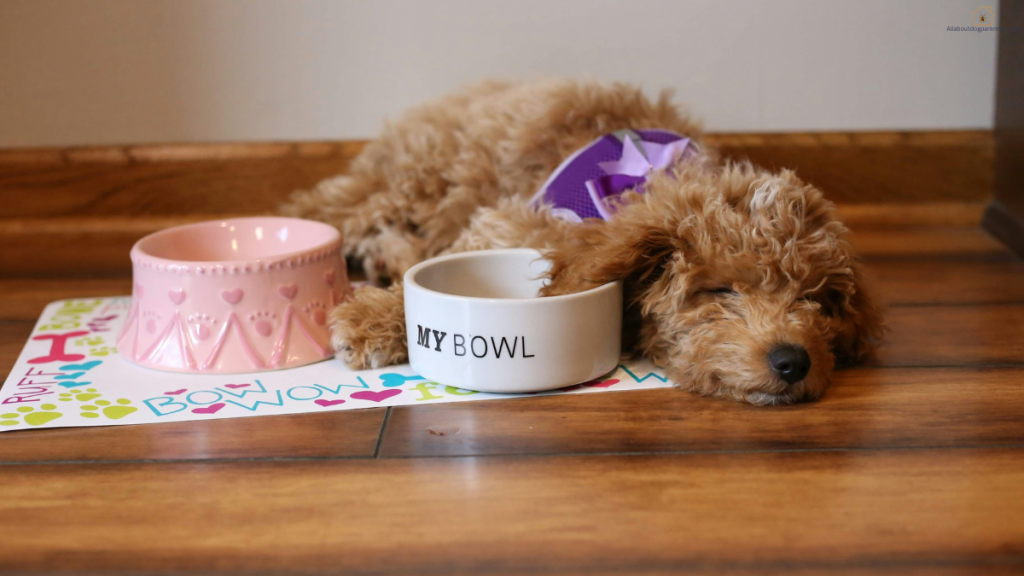
Signs it’s time to go from 4 meals to 3 (typically 12–16 weeks)
- Puppy walks away from the third or fourth meal consistently. If you notice this pattern for over a week, it’s your cue to adjust your pup’s meal times
- Puppy eats slowly and picks at food rather than finishing with their usual enthusiasm
- Weight is tracking normally, and body condition looks healthy. You can feel the ribs easily with light pressure
Signs it’s time to go from 3 meals to 2 (typically 5–7 months)
- Puppy regularly skips or barely touches the midday meal
- Energy levels stay steady throughout the afternoon without the midday feed
- Growth rate is naturally slowing. They’re filling out rather than rapidly gaining height
How to make the transition
Don’t cut a meal abruptly. Redistribute the calories over 5–7 days. If you’re feeding 1 cup × 3 meals (3 cups daily), shift gradually: 1.25 cups × 2 meals plus a half cup at midday for a few days, then 1.5 cups × 2 meals. The total daily calories stay consistent while the meal count reduces.
My GSD dropped his midday meal at about five and a half months. He’d eat his breakfast in thirty seconds flat, demolish dinner the same way, but at lunch he’d wander over, sniff the bowl, eat half of it, and walk away. After about a week of that pattern I started the redistribution, and within a week, he was on two meals without any digestive disruption.
Feeding Schedule for Working Owners: The Midday Problem
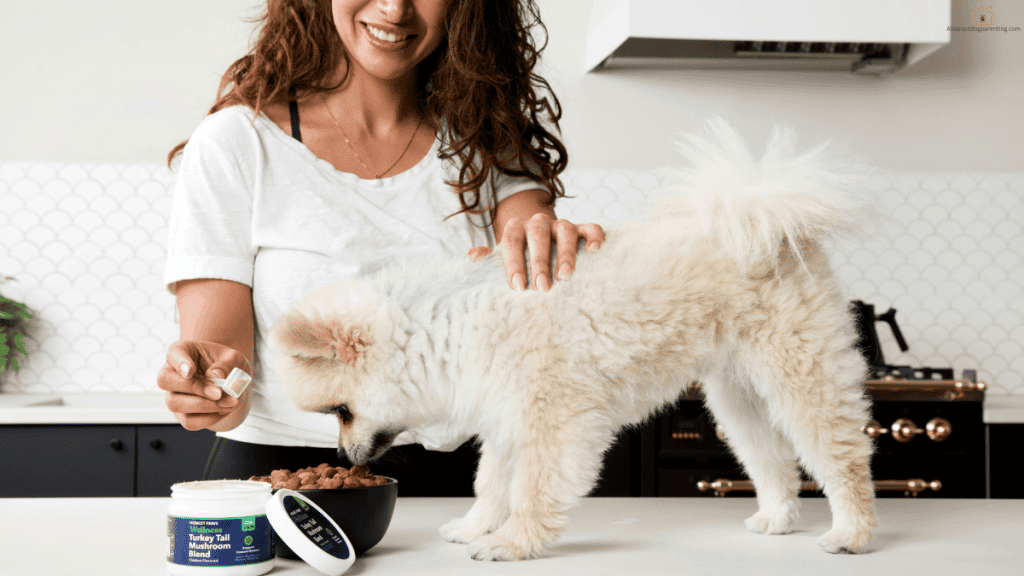
The “feed three times a day” advice consistently glosses over a core problem: what if you can’t be home for the midday meal? Well, there are workarounds. You can adjust timings to fit your schedule, using a timed automatic feeder, arranging a dog walker, or transitioning to two meals slightly earlier if your puppy is showing readiness signs. Here are the practical options:
Option 1: Adjust your timing
Feed at 5:30 am, then 10:30 am just before you leave for work, then 6:30 pm when you return. Front-loading the gap between meals 1 and 2 creates a longer but manageable stretch in the middle of the day. At 5–6 months, most puppies can tolerate a 7-hour gap between midday and evening meals.
Option 2: Use a timed automatic feeder
Portion-controlled automatic feeders dispense dry kibble reliably and solve the midday feeding problem for working owners. They don’t work for wet food and don’t let you monitor your puppy’s appetite at that meal, so treat them as a practical backup rather than a permanent solution.
Option 3: Arrange a dog walker or daycare
If you’re using a midday walker, provide pre-portioned meals in labelled containers. Most good dog walkers are willing to handle a feeding. Puppy daycare typically includes a midday meal as standard.
Option 4: Transition to two meals earlier
If your puppy is 5 months or older and showing signs of readiness, discuss moving to two meals with your vet. Some puppies make this transition comfortably at 5 months. The schedule should serve the puppy’s actual development, not a one-size-fits-all age guideline.
5 Feeding Schedule Mistakes That Cause Problems
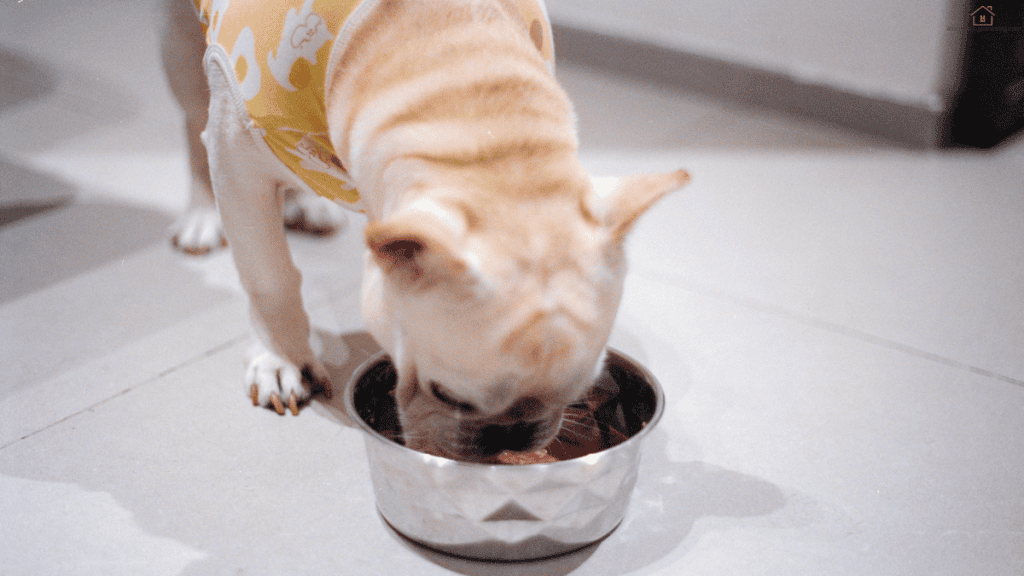
The most common scheduling mistakes are inconsistent puppy meal times, free-feeding, feeding too close to bedtime, failing to connect feeding to potty breaks, and allowing too many treats between meals, which suppresses mealtime appetite.
1. Inconsistent meal times
Shifting meals by more than 30 minutes from day to day disrupts digestion and makes potty training unpredictable. Pick times you can sustain, commit to them, and apply them on weekends too. Puppies don’t know it’s Saturday
2. Free-feeding
Leaving food out all day makes it impossible to monitor intake and destroys any house training schedule. Measured portions, fixed times, bowl picked up after 15 minutes, every meal, every day.
3. Feeding too close to bedtime
If the last meal goes down at 9 pm and you expect your puppy to sleep through until 6 am, you’re going to have overnight accidents. The last meal should be at least 2–3 hours before bedtime, followed by a potty trip immediately before the crate or bed.
4. Not linking feeding to potty breaks
A puppy’s gastrocolic reflex, which is the biological mechanism that triggers bowel movement after eating, is fast and reliable. When to feed a puppy and when to take them outside are not separate questions. Every meal is followed by a potty trip 15–20 minutes later. Always.
5. Over-treating between meals
A single bully stick can contain 200–700 calories, depending on size. A handful of training treats across a session adds up. If your puppy arrives at mealtime uninterested or eats slowly, excessive snacking between meals is usually why. Keep treats to a maximum of 10% of daily calories and account for them.
The Feeding-Potty Connection: Why Your Schedule Is Your House Training Plan
Puppies need to eliminate 15–30 minutes after eating. A consistent puppy feeding schedule creates a predictable potty schedule, which is the single most effective house training tool available. Fix the feeding schedule, and you often fix the accident problem at the same time.
The biology is straightforward. Food entering the stomach triggers the gastrocolic reflex, stimulating movement in the colon and creating the urge to eliminate. In puppies, this happens within 15–30 minutes of eating, consistently and reliably. This is why free-feeding makes house training so difficult. With no pattern to meals, there’s no pattern to elimination, and you’re always guessing. Map the three-meal feeding schedule to a potty schedule, and it looks like this:
| Feeding Time | Potty Break |
| 7:20 am | 12:30 pm (Meal 2) |
| 12:50 pm | 6:00 pm (Meal 3) |
| 6:20 pm | 6:20pm |
| Plus: first thing in the morning, last thing at night, and after every nap |
Fixing the meal timings has always been my first act after bringing home a puppy and it always made house training such a breeze because I could predict almost to the minute when my pup needed to go outside. Never skip it.
FAQ
1. Should I feed my puppy at the same time every day?
Yes, consistent meal times regulate your puppy’s digestion, create a predictable potty schedule, and reduce general anxiety around food. Aim for the same times daily within a 30-minute window. This applies on weekends too. Your puppy’s digestive system doesn’t take a break on weekends.
2. Can I use an automatic feeder for my puppy?
Timed automatic feeders work well for dry kibble and are a genuine solution to the midday feeding problem for working owners. The drawback is that they prevent you from monitoring your puppy’s appetite at that meal. Changes in eating enthusiasm are one of the earliest signals of illness. Use them as a practical backup, not a permanent primary feeding method.
3. What if my puppy doesn’t eat at the scheduled time?
Leave the food down for 15 minutes, then pick it up. Don’t offer again until the next scheduled meal. Healthy puppies will not starve themselves across one missed meal. This approach teaches them to eat when food is available, which prevents picky eating habits from developing. If your puppy skips two or more consecutive meals, contact your vet.
4. Should I feed my puppy before or after a walk?
After the walk, or wait at least 30 minutes after eating before any vigorous exercise. Eating immediately before physical activity causes digestive discomfort, and in large breeds, it may increase the risk of bloat, aka gastric dilatation-volvulus, which is life-threatening. Feed after activity, not before.
5. My puppy seems hungry between meals. Should I add a meal?
Not necessarily. Puppies are naturally food-motivated and will often act hungry even when well-fed. Check body condition first. Run your hands along the ribcage. If you can feel ribs easily with light pressure, your puppy is getting enough. If they’re genuinely lean alongside the hunger signals, increase portion sizes at existing meals rather than adding another feeding time.
The Bottom Line
A consistent puppy feeding schedule does more work than most owners realize. Apart from ensuring that your pup’s nutrition remains consistently on track, it also structures the entire day, makes potty training predictable, supports better sleep, and reduces anxiety for both puppy and owner. Four meals to three to two: the pattern is simple. The implementation just requires picking times that work for your actual life and holding to them.
The daily routines above are starting points. Adjust the clock times to fit your schedule, match the portion sizes to your specific food using the puppy feeding chart, and let your puppy’s own cues tell you when it’s time to drop a meal. The schedule gets easier every week, and by six months, twice a day for life feels like nothing at all.