Puppy Milestones by Age (0–12 Months): What to Expect as Your Puppy Grows
The first few weeks after bringing home a puppy can feel like trying to reach a goal post that is constantly shifting. One week your pup is a sleepy, wobbly little thing you could cradle in one arm. The next, they’re tearing through the house, chewing your shoes, and apparently deaf to their own name. I’ve been through this with every GSD I’ve raised, and every time, the speed at which they grow has caught me off guard.
What helps, or what has always helped me, is knowing what’s coming. That’s why knowing puppy milestones by age is so crucial. These aren’t just a developmental checklist, but can prove to be a practical guide to understanding why your puppy is doing what they’re doing, and what they actually need from you at each stage. That context makes all the difference between panicking over normal behaviour and being prepared for it.
Puppy Milestones by Age — Quick Overview
| Age | Key Milestones |
| 0–2 weeks | Dependent on mother, eyes and ears closed |
| 3–4 weeks | Eyes open, first steps, senses awakening |
| 5–8 weeks | Socialization begins, bite inhibition, human bonding |
| 2–3 months | Rapid learning, name recognition, basic training begins |
| 3–4 months | Teething starts, chewing increases |
| 4–6 months | Growth spurts, coordination improves, high energy |
| 6–9 months | Adolescence, boundary testing, selective listening |
| 9–12 months | Approaching adult size, focus improves, temperament stabilizing |
Understanding Puppy Development
Before getting into the puppy development timeline, it helps to know that growth happens across four interconnected areas: physical development, behavioral changes, social skills, and cognitive learning. These don’t operate as neat, separate boxes. Instead, they overlap and influence each other constantly. A puppy going through a growth spurt may suddenly seem clumsier and less focused. A puppy in the socialization window will be learning emotional regulation at the same time, as their senses are coming fully online. Understanding this gives you a far more useful lens than just tracking when they hit a certain weight.
The Puppy Development Timeline: Stage by Stage
With that in mind, let’s look at the puppy milestones by age:
Newborn Stage (0–2 Weeks)
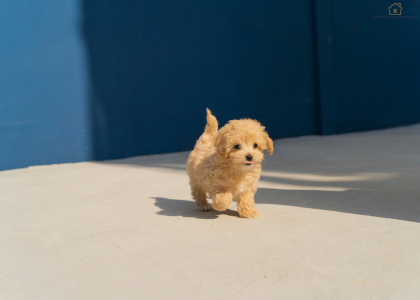
Newborn puppies are, for all practical purposes, entirely helpless. Their eyes and ears are sealed shut, and they cannot regulate their own body temperature, which is why you’ll see a litter piled together against their mother. Their survival depends on it. At this stage, the puppy’s world is limited to warmth, smell, and the instinct to feed. Movement is mostly a slow crawl toward their mother’s body.
Studies have shown that gentle, careful handling by humans during the neonatal period can accelerate nervous system maturation and support better motor and problem-solving development later in life. What happened in those first two weeks already shaped your puppy in ways you can’t see.
Early Development Stage (3–4 Weeks)
This is where the transformation begins in earnest. Eyes start opening, though vision is still blurry, and ears begin to function. The puppy starts responding to sounds for the first time, and those first stumbling attempts at walking begin. Tails start wagging. There’s a recognizable alertness that wasn’t there before.
Curiosity kicks in around this time, and puppies begin engaging with their littermates beyond just jostling for feeding position. This is early social interaction, and it matters. The lessons learned here about reading other dogs’ body language form the foundation for how your puppy will relate to other dogs for the rest of their life.
Socialization Stage (5–8 Weeks)
This is arguably the most important window in your puppy’s entire first year. The research on this is clear and goes back decades. Scott and Fuller’s landmark work, published in 1965 in Genetics and the Social Behavior of the Dog, identified the socialization period running from 3 to 12 weeks as the critical window for the formation of primary social relationships and attachments. More recent peer-reviewed research has confirmed that positive early experiences during these sensitive periods are crucial to raising well-adjusted adult dogs.
What does that mean practically? Between 5 and 8 weeks, your puppy is learning bite inhibition from their littermates. They discover through play that biting too hard ends the fun. They’re learning to read other dogs. They’re beginning to recognize and trust humans.
If your puppy comes home during this window, prioritise positive exposure to people, sounds, surfaces, and gentle new experiences above almost everything else. What gets imprinted here doesn’t easily get rewritten later.
Learning Stage (2–3 Months)
By two months, a puppy’s brain is firing on all cylinders in terms of learning capacity. This is when they start reliably responding to their name, when basic commands begin to stick, and when the seeds of house training can realistically be planted. My GSDs at this age were like little sponges, exhaustingly curious, into everything, but genuinely absorbing whatever I showed them.
High curiosity is the defining trait of this stage. Your puppy is mapping their environment and testing cause and effect constantly. Short, positive training sessions now build habits that carry forward for years. If you haven’t started basic training yet, this is the window to begin. Check out our guide on what puppies need at different ages for a fuller picture of what to prioritize and when.
Teething Stage (3–4 Months)
Around three months, those needle-sharp baby teeth start loosening and falling out, and adult teeth begin pushing through. Chewing becomes incessant at this stage. It’s your puppy’s way of managing gum discomfort and exploring their world. Don’t be alarmed if you notice mild drooling or red, slightly swollen gums.
What you can do: redirect consistently. Have appropriate chew toys accessible at all times. Frozen rubber toys can soothe sore gums without causing damage. Don’t scold a puppy for chewing. It’s a physiological drive they can’t quite control. Give them something acceptable and move on.
Rapid Growth Stage (4–6 Months)
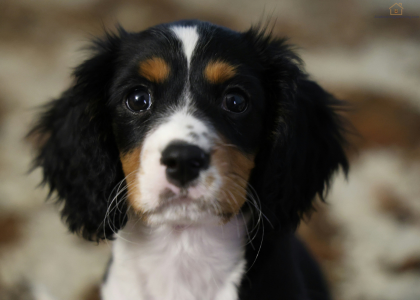
This is when puppy milestones by age become most visible, almost week by week. Growth spurts hit hard during this phase, particularly in larger breeds. My GSDs have practically changed shape overnight. Coordination can temporarily dip during these spurts. A puppy that was moving fairly smoothly suddenly looks like they’ve misplaced their legs. That’s normal. Bones are lengthening faster than muscle development can keep pace with.
Energy levels climb during this stage, sometimes dramatically. Understanding safe activity levels during these months matters more than most people realise. Over-exercising a puppy whose growth plates haven’t closed can cause lasting joint damage. High-impact activities, long runs, and repetitive jumping are still off the table. For a deeper look at exactly how fast this growth happens, and what it means for care decisions, our guide on puppy growth rates breaks it down month by month.
Adolescent Stage (6–9 Months)
If there is one phase that catches new owners completely off guard, it’s this one. Dogs at this stage start testing boundaries, and many will try to assert themselves in the pack. They may challenge their humans and other pets in the household. You may find yourself dealing with selective hearing, suddenly “forgetting” commands. This is not stubbornness but a hormonal shift.
At around 6 months, a puppy begins experiencing sexual maturity. Female dogs may experience their first heat cycle, and male dogs begin lifting their legs to urinate. Discuss spay and neuter timing with your vet around this point.
Consistency is the only thing that works during adolescence. Don’t reduce training because it feels like it isn’t working. This is exactly when maintaining structure matters most. Keep sessions short, keep your expectations realistic, and don’t take their selective listening personally.
Maturing Stage (9–12 Months)
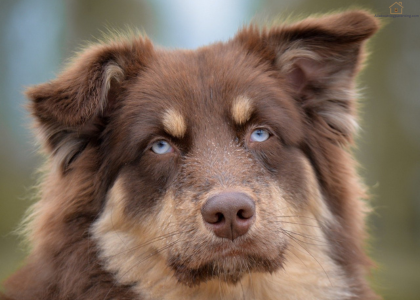
The storm begins to pass. Focus improves, impulsive behavior settles, and the dog your puppy is going to be starts becoming more visible. Physical growth is winding down for smaller and medium breeds, though for large and giant breeds like GSDs, growth can continue until 18 months or beyond, which is why care decisions around diet and exercise still need to factor in that they aren’t fully adult yet.
Most dogs reach their emotional maturity between 12 and 18 months, developing the temperament and personality they’ll carry into adulthood. At 9 to 12 months, you’re close to that point but not quite there. Keep training consistent, continue socializing, and resist the temptation to treat them as fully grown when their brain is still finishing its development.
Factors That Affect Puppy Development
Not every puppy follows the same timeline, and that’s worth knowing upfront. Breed size is the biggest variable. Small breeds reach maturity months before large and giant breeds. Genetics play a role too. Some dogs are naturally more cautious, some more bold, and temperament has a heritable component. Nutrition during these months has a direct impact on physical development, particularly bone density and muscle growth. And the social environment, meaning how many positive experiences a puppy has, how much stimulation they receive, how consistently they’re trained, shapes behavioral development in ways that last a lifetime.
Signs Your Puppy Is Developing Normally
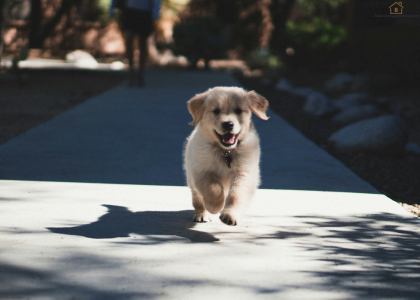
Here’s what healthy puppy development looks like across the board:
- Steady, consistent weight gain week over week
- Age-appropriate curiosity and playfulness
- Willingness to engage with people and their environment
- Learning new behaviors, even slowly
- Good appetite and normal energy levels for their age
- Progressive improvement in coordination
If you notice your puppy is not moving normally, not eating well, losing weight, or seems withdrawn and unusually lethargic, don’t wait on it. As veterinarian Harmony Diers of the Texas A&M Dog Aging Project emphasizes, acting quickly when something seems off can prevent developmental delays from compounding.
Common Mistakes Puppy Parents Make
As you go through the different puppy growth milestones, make sure you steer clear of these common mistakes that can set the stage of health issues or behavioural problems for life:
- Expecting too much too early: A 10-week-old puppy cannot hold their bladder for more than two hours, cannot focus for more than a few minutes, and cannot process complex commands. Set age-appropriate expectations
- Skipping the socialization window: The 3–12 week period is time-sensitive in a way that nothing else in puppyhood is. Missing it has consequences that are genuinely hard to reverse. Fearfulness, reactivity, and social anxiety in adult dogs are often traced directly back to inadequate early socialization
- Over-exercising during growth phases: This one tends to come from the right instinct of tiring out an energetic puppy but the method is wrong. High-impact exercise before growth plates close puts real stress on developing joints
- Ignoring behavioral development in favor of obedience training alone: Teaching “sit” and “stay” is useful, but it’s not the same as helping your puppy develop emotional regulation, bite inhibition, and confidence in novel situations. Both matter.
Mental Stimulation Through Every Stage
A physically tired puppy and a mentally tired puppy are equally calm and the mental route is often safer for developing joints. Puzzle feeders, sniff mats, scent games, and short training sessions all engage the brain without the physical toll. Hide-and-seek with toys works well from around 3 months. As the puppy gets older, structured play like fetch with clear start and stop signals, basic agility work at low heights adds an element of focus and impulse control that pure physical exercise doesn’t build.
The Bottom Line
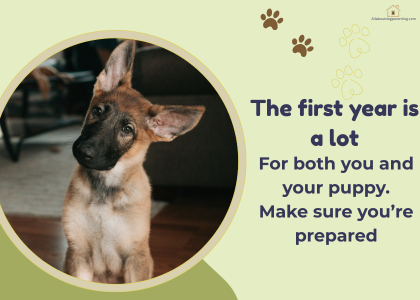
The first year is a lot, physically, behaviorally, and emotionally for both puppy and owner. Knowing the puppy development milestones month by month doesn’t make each stage easier exactly, but it makes them make sense. You understand why your 8-week-old is fearless about everything and why your 7-month-old has apparently forgotten their own name. Context is everything.
Support each stage for what it actually is, not what you wish it were, and you’ll raise a dog who’s confident, well-adjusted, and genuinely a pleasure to be around. That’s the goal, and it’s entirely achievable, just not overnight.
FAQ
- At what age do puppies change the most?
The 3–12 week window is the most transformative in terms of behavioral and social development. But rapid physical change peaks between 4–6 months, when growth spurts are most pronounced. Both phases demand the most from owners in terms of attention and appropriate support.
- When do puppies start showing personality?
Individual personality begins emerging clearly around 7–8 weeks, which is why this age is considered ideal for going to a new home. By 12 weeks, temperament traits like confidence or caution are becoming consistent and observable.
- When do puppies stop growing?
It depends heavily on breed size. Small breeds may be fully grown by 9–12 months. Medium breeds typically finish growing around 12–15 months. Large and giant breeds can continue growing until 18–24 months.
- How can I support healthy puppy development?
Prioritize socialization early, keep training sessions short and positive, feed a high-quality puppy-appropriate diet, and match exercise to their age and breed. Regular vet checkups during the first year catch developmental issues before they compound.
- Is it normal for my puppy to seem to forget training during adolescence? Completely normal, and almost universal. Hormonal shifts between 6–9 months affect focus and impulse control. Maintain consistency rather than increasing pressure, and the skills will resurface as they mature.