The Complete Puppy Nutrition Guide: What to Feed, How Much, and When
Overview:
Puppy nutrition sets the tone for your pet’s long-term health, growth, and longevity. Puppies need a complete, balanced puppy-specific food fed 3–4 times daily until 6 months, then twice daily. Choose food labelled “complete and balanced” by AAFCO standards, matched to your puppy’s breed size: small, medium, large, or giant.
Figuring out puppy nutrition can feel genuinely overwhelming. Forty brands, conflicting advice, and a puppy at home that needs to eat something today. What this puppy nutrition guide cuts through all of that.
What you feed your puppy in the first 12–18 months shapes their bone density, joint health, immune function, and adult body composition in ways that later nutrition can’t fully undo. I’ve raised German Shepherds for over 15 years, and getting the feeding basics right is the single most controllable factor in a puppy’s long-term health.
This guide covers what to feed, how much, how often, what to avoid, and how nutritional needs shift as your puppy grows, grounded in AAFCO guidelines, veterinary research, and real experience.
What You’ll Find in This Guide
Whether you’re working out what to feed a puppy on day one or second-guessing portions at month six, start here. Each section gives you the short version and ends with a link to the full article when you need more.
- → What Nutrients Puppies Actually Need
- → How Much to Feed a Puppy (by Age & Breed Size)
- → The Right Feeding Schedule at Every Stage
- → Choosing Between Dry, Wet, Raw, Fresh & Grain-Free Food
- → How to Read a Puppy Food Label
- → Foods Toxic to Puppies (Complete List)
- → Best Puppy Foods by Need (Large Breed, Sensitive Stomach, Allergies, Budget)
- → Does Puppy Nutrition Differ by Breed?
- → When and How to Switch to Adult Food
- → Monitoring Weight and Body Condition
- → Free Tools: Puppy Food Calculator + Printable Feeding Chart
Why Puppy Nutrition Matters More Than You Think
The food you choose in your puppy’s first 12–18 months directly shapes their bone density, immune strength, cognitive development, and adult body composition. Poor nutrition during this window can cause problems that aren’t always reversible.
Puppies have roughly twice the calorie requirements of adult dogs relative to body weight. Their bodies are building everything, from bones to organs, muscle, and the immune system, at a pace that simply doesn’t exist at any other point in their lives. Get the nutrition right, and you’re giving them a structural foundation they’ll rely on for a decade or more. Get it wrong, and some of that damage is permanent.
Growth timelines matter here. Small breeds typically reach maturity by 7–9 months. Large breeds like German Shepherds and Labradors take 12–18 months. Giant breeds like Great Danes, Mastiffs, and Saint Bernards may continue growing until 24 months. What this means practically is that a GSD puppy needs to stay on puppy food long after a Chihuahua has moved on to adult nutrition, and the specific formulation of that food matters enormously during every month of that window.
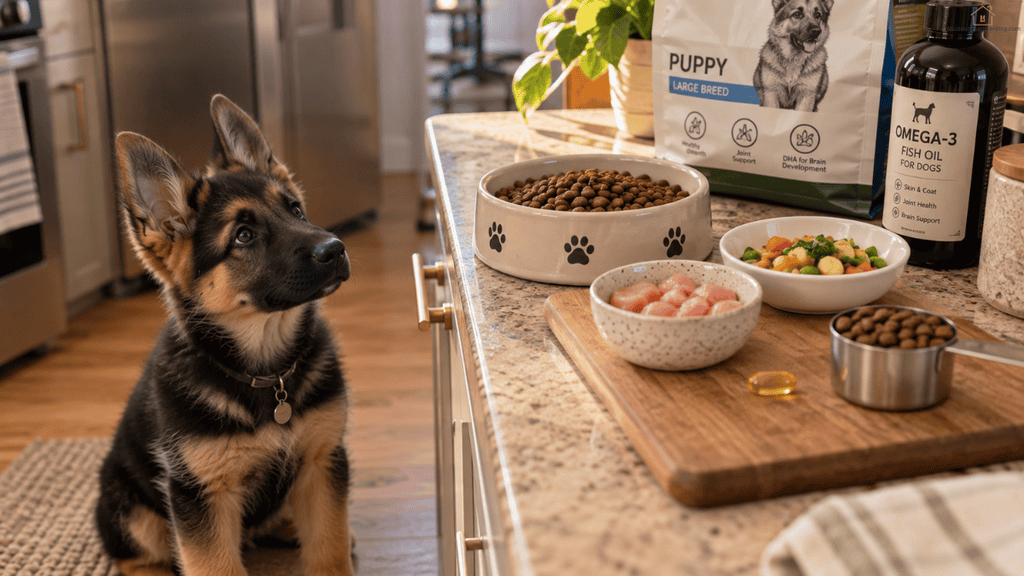
The calcium-phosphorus balance is the nutritional issue I came to understand most viscerally raising German Shepherds. According to VCA Animal Hospitals, large-breed puppies require a calcium-to-phosphorus ratio of 1.1:1 to 1.4:1, and calcium content must stay within a strictly controlled range. Too much calcium, be it through over-supplementation or feeding food not formulated for large breeds, directly increases the risk of developmental orthopedic diseases, including hip dysplasia, osteochondrosis, and elbow dysplasia. My vet was clear from day one with my first GSD: no supplements, no table food, no calcium additions of any kind. Just the right food in the right amount.
When I finally found a large-breed puppy food that my vet approved and settled into a proper feeding routine, the difference in my dog’s coat quality and energy levels was noticeable within weeks. There’s a temptation, especially with a breed like the GSD, to feed for size, to try to build a big, impressive dog fast. That instinct is exactly backwards. Slower, controlled growth produces healthier joints. Feed appropriately, not aspirationally.
Wondering if that growing body needs anything beyond what’s in the bowl? Our puppy supplements guide has the answer.
What Should You Feed Your Puppy?
The most common choice is a commercially prepared puppy food labelled “complete and balanced” for growth. Dry kibble is the most practical and affordable option, though wet food, fresh food, and combination feeding all work if they meet AAFCO nutritional standards.
The phrase “complete and balanced” on a label isn’t marketing language. It has a specific regulatory meaning. According to the FDA, a food can only make this claim if it meets the nutrient profiles established by the Association of American Feed Control Officials (AAFCO), or has been validated through AAFCO feeding trials. These profiles set minimum, and in some cases maximum, levels for protein, fat, vitamins, and minerals based on life stage. If a label doesn’t include an AAFCO nutritional adequacy statement, the food shouldn’t be your puppy’s primary nutrition source.
Here is a quick look at what different food types do and don’t offer a growing puppy:
Dry kibble
This is what most puppies eat, and for good reason. It’s the most affordable per serving, easy to measure and store, and provides some mechanical dental benefits. For large breeds, look specifically for a food that states it is formulated to support “growth of large-size dogs (70 lbs or more as an adult)”. This requirement was added by AAFCO in 2016 precisely because large-breed puppies have different calcium and energy needs than smaller breeds.
Wet or canned food
This tends to be more palatable, higher in protein, and useful for picky eaters or puppies that need encouragement to eat. The downsides: significantly more expensive per serving, no dental benefit, and messier to manage. Many owners use it as a topper on kibble rather than a complete diet.
Fresh and refrigerated food
A growing market, and quality has improved considerably. These foods tend to use whole, minimally processed ingredients, but they come at a significant premium and require refrigeration.
Raw food
Raw food remains the most contentious option. Most major veterinary nutrition bodies, including the American Veterinary Medical Association and the British Veterinary Association, advise against raw diets for growing puppies due to infection risks from Salmonella and E. coli, and the genuine difficulty of achieving a correct nutrient balance. If you’re committed to raw feeding, do so only with guidance from a board-certified veterinary nutritionist, not an online forum.
Homemade diets
I’m a huge fan of homemade diets, as these give you complete control over ingredients, but make sure you work with a professional, at least in the beginning, to achieve the right nutrient balance. Without it, you risk deficits that can compromise your pet’s long-term health. A 2021 study in the Journal of Nutritional Science found that the vast majority of homemade dog food recipes available online were deficient in at least one essential nutrient. If you want to go this route, a consultation with a board-certified veterinary nutritionist is not optional.
Food Type Comparison
| Food Type | Est. Cost/Month | Pros | Cons | Best For |
| Dry Kibble | $30–60 | Affordable, easy to store, dental benefits | Less palatable for some pups | Most puppies |
| Wet Food | $60–120 | High protein, very palatable | Expensive, messy, no dental benefit | Picky eaters |
| Fresh Food | $100–200+ | Whole ingredients, minimal processing | Expensive, requires refrigeration | Premium budgets |
| Raw | $80–150 | Whole food approach | Infection risk, hard to balance | Only with a vet nutritionist’s recommendation |
| Homemade | Varies | Full control over ingredients | Very hard to balance | Only with a vet nutritionist’s recommendation |
Still torn? Take a closer look at each option with our detailed guides to make an informed choice: Wet vs Dry Puppy Food, Raw Food for Puppies, and Fresh Dog Food for Puppies.
How Much Should You Feed Your Puppy?
Portion size depends on your puppy’s age, expected adult weight, and the specific food’s calorie density. As a general guide, puppies need approximately 55 calories per kilogram of body weight daily during peak growth, decreasing as they approach adult size.
The label on your puppy’s food gives you a starting point, not a prescription. Labels are calculated for average puppies at average activity levels. But even then, it can be hard to make sense of them. If the back of the bag still reads like a chemistry paper, check our guide on How to Read Puppy Food Labels.
This, however, is only a starting point. Your puppy is an individual with a specific metabolism, activity level, and growth rate. The label tells you where to begin. Your puppy’s body condition tells you where to adjust. Check your puppy’s numbers against the Puppy Weight Chart by Age.

The body condition score (BCS) method is the most practical way to assess whether you’re feeding the right amount. Running your hands along your puppy’s ribcage should allow you to feel each rib without pressing hard, but the ribs shouldn’t be visible through the skin. Viewed from above, there should be a visible waist tuck behind the ribcage. From the side, there should be a slight abdominal tuck, with the belly rising toward the hindquarters rather than hanging flat. A BCS of 4–5 on a 9-point scale is the target. Your vet checks this at every appointment and can adjust your guidance accordingly.
Treats should account for no more than 10% of your puppy’s daily calorie intake. Training treats especially should be tiny. Ideally, pea-sized or smaller. This sounds minimal, but if you’re doing several training sessions a day, those treats add up fast and can meaningfully throw off a puppy’s daily calorie balance.
Puppy Feeding Chart by Breed Size
Note:
Amounts are for dry kibble at approximately 350–400 kcal/cup. Actual amounts vary by food calorie density. Always check your specific food’s label and adjust based on your puppy’s body condition.
| Age | Toy/Small (<10kg adult) | Medium (10–25kg) | Large (25–40kg) | Giant (40kg+) |
| 6–12 weeks | ¼–½ cup × 4/day | ½–¾ cup × 4/day | ¾–1 cup × 4/day | 1–1.5 cups × 4/day |
| 3–6 months | ⅓–⅔ cup × 3/day | ⅔–1 cup × 3/day | 1–1.5 cups × 3/day | 1.5–2 cups × 3/day |
| 6–12 months | ⅓–½ cup × 2/day | ¾–1.25 cups × 2/day | 1.5–2 cups × 2/day | 2–3 cups × 2/day |
| 12–18 months | Switch to adult food | Switch to adult food | Continue puppy food | Continue puppy food |
With my GSDs, I weighed their food rather than measuring by cup. A digital kitchen scale is the most useful feeding tool you can own. At around six months, when my current boy was going through a noticeable growth spurt, his appetite spiked, and he started leaving some food behind at other times. I took that as his signal and adjusted portions slightly, and confirmed the change with my vet at his next appointment. The ribs remained easily palpable throughout, which gave me confidence that the adjustments were reasonable.
For a detailed breakdown with charts by age and breed size, see How Much to Feed a Puppy.
Free Puppy Nutrition Tools
Overview:
Two free tools do the maths for you. The calculator turns your puppy’s weight, age, breed size and food into a daily calorie target and cup amount. The printable chart puts portions and a feeding log on your fridge.
The feeding chart on the back of my GSD boy’s first bag gave me a range so wide it was almost useless, and I spent that first week guessing where in it he belonged. Most people I know with new puppies hit the same wall. These two tools exist so you don’t have to guess. They build your puppy diet around your own puppy’s weight, age and food, which no bag chart can do.
Puppy Food Calculator
Use the free Puppy Food Calculator to get daily calorie needs and exact cup amounts personalised to your puppy’s weight, age, breed, and food. Enter the kcal per cup printed on your bag, and re-run it every two weeks through the growth months. A portion that was right at ten weeks will leave a sixteen-week-old hungry.
Printable Puppy Feeding Chart
Download the free printable Puppy Feeding Chart: portions by age for all breed sizes, a daily schedule, and a 12-week tracking log. Ours lives on the fridge door with the weigh-in dates pencilled in, which is the only reason anyone else in my house knows whether the dog has had his lunch.
Puppy Feeding Schedule: How Often Should You Feed?
Feed puppies 4 times daily from weaning to 12 weeks, 3 times daily from 3–6 months, and twice daily from 6 months onward. Consistent meal timing supports digestion and helps with potty training.
The practical reason for frequent meals in young puppies is their stomach size. Young puppies have small stomachs and can only take in so much at once. Spreading meals through the day keeps energy and blood sugar stable, and for toy breeds in particular, prevents hypoglycemia, which is a real risk if meals are skipped or spaced too far apart.
Example of puppy feeding schedules:
- 8-week-old puppy: 7 am / 11 am / 3 pm / 7 pm
- 4-month-old: 7 am / 12:30 pm / 6 pm
- 6 months and beyond: 7:30 am / 6 pm
Free-feeding, that is leaving food out all day and letting the puppy graze, must be avoided. It makes portion control impossible, contributes to overeating and obesity risk, and, critically, destroys your potty training schedule. Puppies typically need to eliminate 15–30 minutes after eating. When you know when they ate, you know when to take them out. When food is available all day, every elimination becomes a guess.
The feeding schedule also connects directly to training. A puppy that eats at set times is hungry at set times, which means treats have more value during training windows. This might seem like a small thing, but motivational value matters enormously when you’re working with an eight-week-old who has a three-minute attention span.
My routine with my current GSD has always been early morning and early evening meals, timed to fit around exercise. Puppies should eat about 30 minutes before or after strenuous activity, not immediately before, as eating and vigorous exercise together in large breeds increases the risk of bloat (gastric dilatation-volvulus), a life-threatening condition.
Clock times for every stage, from four meals at eight weeks down to two a day, are laid out in our Puppy Feeding Schedule by Age guide.
Does Puppy Nutrition Differ by Breed?
Overview:
Yes, and adult size drives most of it. Large and giant breeds need controlled calcium and slower growth. Toy breeds need calorie-dense food and frequent meals to keep blood sugar steady. Some breeds add quirks of their own.
Size matters more than breed name. A Labrador and a German Shepherd have far more in common at the food bowl than a German Shepherd and a Pomeranian do, so the first question in any puppy feeding guide should be how big your dog will be as an adult.
For large and giant breeds, the worry is calcium and growth speed. Young large-breed puppies are poor at limiting how much dietary calcium they absorb, and a diet that pushes fast growth loads joints before they’re ready for it. That’s why AAFCO caps calcium at 1.8% on a dry-matter basis for foods labelled for the growth of large-size dogs. After 15 years of raising German Shepherds, the one line I never skip on a bag is the one that says “including growth of large size dogs.” Keeping these puppies lean pays off for years. In Purina’s lifetime study of Labradors, dogs fed 25% less than their littermates lived a median 1.8 years longer, with arthritis showing up later.
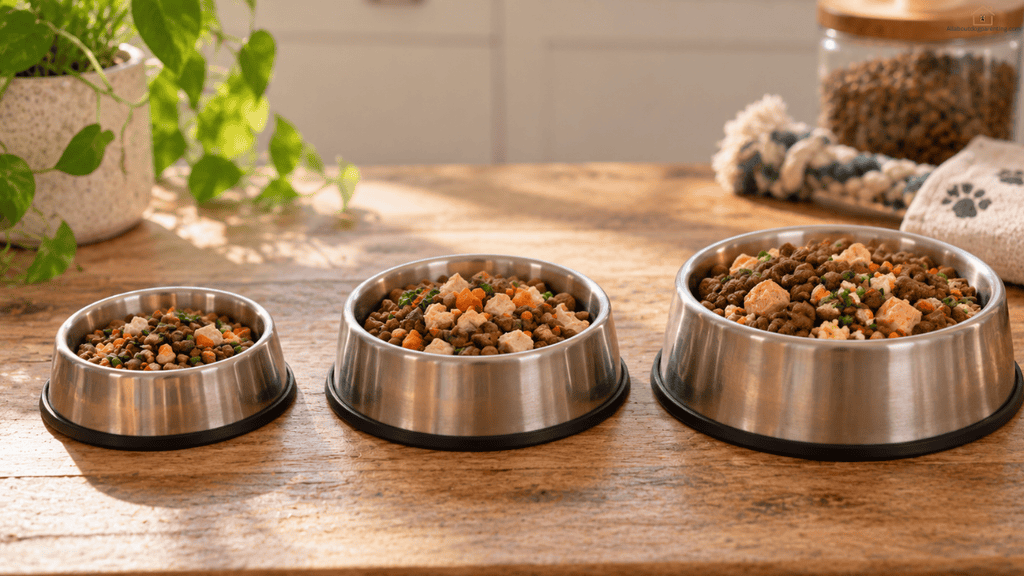
Toy breeds sit at the other end. A tiny Yorkie or Chihuahua puppy carries almost no fat or stored glucose, so one skipped meal can drop blood sugar far enough to cause trembling, wobbliness or seizures. The AKC describes this as puppy or toy breed hypoglycemia, and it’s most common in very small puppies under twelve weeks. These puppies need a calorie-dense small-breed formula and small, frequent meals until your vet is happy with their weight.
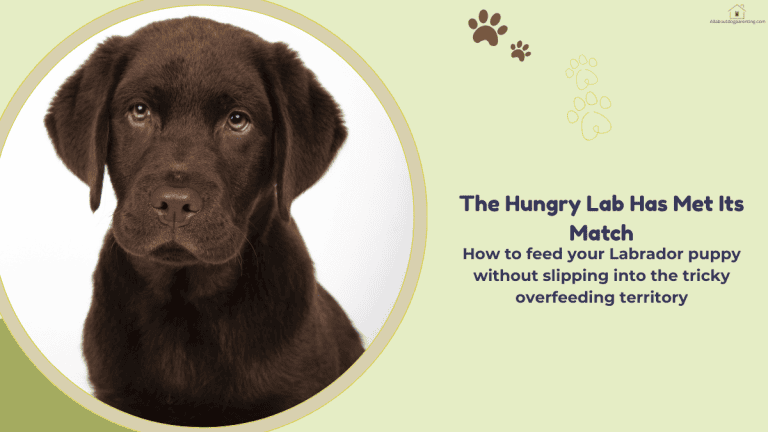
Then come the quirks that size alone doesn’t explain. Around a quarter of Labradors carry a POMC gene mutation that dulls the feeling of fullness, which is why a Lab can act starved ten minutes after dinner. French Bulldogs, with their flat faces, tend to swallow air as they eat and often manage better with small kibble and a slow feeder. Goldendoodles are really three different dogs, and a mini and a standard need entirely different feeding plans.
| Adult size | Main nutrition concern | What to look for |
|---|---|---|
| Toy and small (under 10 kg) | Low blood sugar, fast metabolism | Calorie-dense small-breed formula, 3 to 4 meals a day |
| Medium (10 to 25 kg) | Standard growth curve | Complete and balanced puppy food for growth |
| Large (25 to 40 kg) | Joint development | Large-breed formula, calcium no higher than 1.8% dry matter |
| Giant (40 kg and up) | Longest growth window | Large-breed formula, lean body condition, puppy food for longer |
Special Nutritional Needs by Breed Size
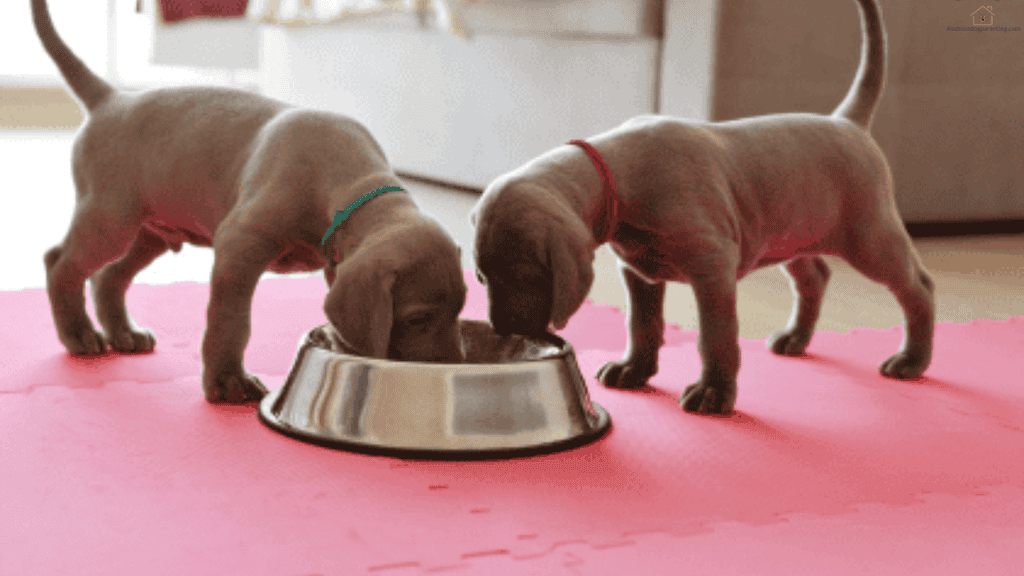
Large and giant breed puppies need specially formulated food with controlled calcium and phosphorus levels to prevent skeletal problems. Small breed puppies need calorie-dense food to fuel their faster metabolisms. Getting this wrong can cause permanent developmental damage.
Small Breeds (Chihuahua, Yorkie, Pomeranian)
Small breed puppies have fast metabolisms and need calorie-dense food proportional to their size. Skipping meals or underfeeding a very small puppy creates a real hypoglycaemia (low blood sugar) risk that can cause weakness, tremors, or seizures. Small-breed puppy formulas also tend to feature smaller kibble sizes better suited to small mouths and jaws. Most small breeds are fully grown by 9–12 months, so the transition to adult food comes earlier than for larger dogs.
Medium Breeds (Beagle, Cocker Spaniel, Border Collie)
Medium breeds are the most nutritionally straightforward category. Standard puppy food formulated for growth works well, without the specific large-breed constraints around calcium. Growth typically wraps up between 12 and 15 months, and medium breeds have the most flexibility in food choice, provided the AAFCO statement is present.
Large Breeds (German Shepherd, Labrador, Golden Retriever)
This is where feeding decisions carry the most consequence and where the most owners go wrong. Research published in PMC is unambiguous: excess calcium in large-breed puppies directly increases the risk of developmental orthopedic diseases, including hip dysplasia, osteochondrosis, and elbow dysplasia. The recommended dietary calcium range for large-breed puppies is 0.8%–1.2% on a dry matter basis. Until six months of age, the small intestine passively absorbs up to 70% of dietary calcium, meaning excess intake cannot be regulated out. What goes in gets absorbed.
This is why adding calcium supplements to a large-breed puppy’s diet, even well-intentioned ones like dairy, bone meal, or over-the-counter mineral supplements, is contraindicated. A properly formulated large-breed puppy food already contains everything they need in the right proportions. Adding anything on top disrupts that balance.
Equally important: energy density matters. Large-breed puppy foods are intentionally less calorie-dense than standard puppy food to prevent the rapid weight gain that drives skeletal stress. As veterinary nutritionist Dana Hutchinson, DVM, DACVN, notes, “For large-breed puppies, overnutrition or rapid growth, with weight more than height, along with excess calcium and genetics are the primary risk factors for DOD.”
German Shepherds specifically are predisposed to hip and elbow dysplasia. My vet’s guidance from the beginning was clear: breed-appropriate large-breed puppy food, measured portions, no supplementation, and body condition checked monthly. It’s an approach I’ve followed with every GSD I’ve raised.
Giant Breeds (Great Dane, Mastiff, Saint Bernard)
Giant breeds require the most patience and the longest commitment to puppy-specific nutrition. These dogs may continue growing until 24 months, and their skeletal vulnerability during that extended window is significant. Energy density is even more critical to control than in large breeds. The Canine Arthritis Resource and Education (CARE) organization is explicit: do not supplement with calcium or vitamin D, use food specifically formulated for large/giant breed growth, and monitor body condition regularly rather than feeding to appetite.
For giant breeds specifically, generic puppy growth charts don’t apply, as noted by WALTHAM Petcare Science Institute, whose growth charts don’t extend to dogs over 40kg because giant breed growth is too variable for a single standard curve. Work with your vet to establish a breed-specific growth benchmark.
For breed-specific feeding amounts and product recommendations, see our breed-specific guides:
- German Shepherd Puppy Feeding Guide
- Labrador Puppy Feeding Guide
- Golden Retriever Puppy Nutrition
- French Bulldog Puppy Feeding Guide
- Goldendoodle Puppy Feeding Guide
Finding the Right Food for Your Puppy’s Specific Needs
Overview:
Start with your puppy’s adult size, then narrow by health or budget. Each guide below compares vetted picks on protein, calcium and calories, so you can weigh one bag against another on the same terms.
Most puppies thrive on a mainstream growth formula that’s AAFCO complete and balanced and made by a company with veterinary nutritionists on staff. So the best puppy food for yours comes down to which problem you’re solving first. A large-breed puppy with loose stools needs a different shortlist from a Maltese who turns her nose up at kibble. For my boy, the large-breed list was the only one I needed until a bout of soft stools at five months sent me to the sensitive-stomach picks as well. Once you know what to feed a puppy in general terms, these guides get you to a specific bag:
- Best Puppy Food for Large Breeds: Calcium-controlled picks for German Shepherds, Labs and bigger
- Best Puppy Food for Small Breeds: Calorie-dense formulas with kibble sized for tiny mouths
- Best Puppy Food for Sensitive Stomachs: Gentle, limited-ingredient options for loose stools and gas
- Best Puppy Food for Allergies: Novel and hydrolysed proteins for itchy skin and ear trouble
- Best Puppy Treats for Training: Low-calorie rewards that won’t blow the daily calorie budget
- Best Affordable Puppy Food: Complete, vet-backed options that cost less per day
Treats count as part of the puppy diet, by the way. Keep them under 10% of daily calories and the rest of this guide’s maths still holds.
When to Switch from Puppy Food to Adult Food
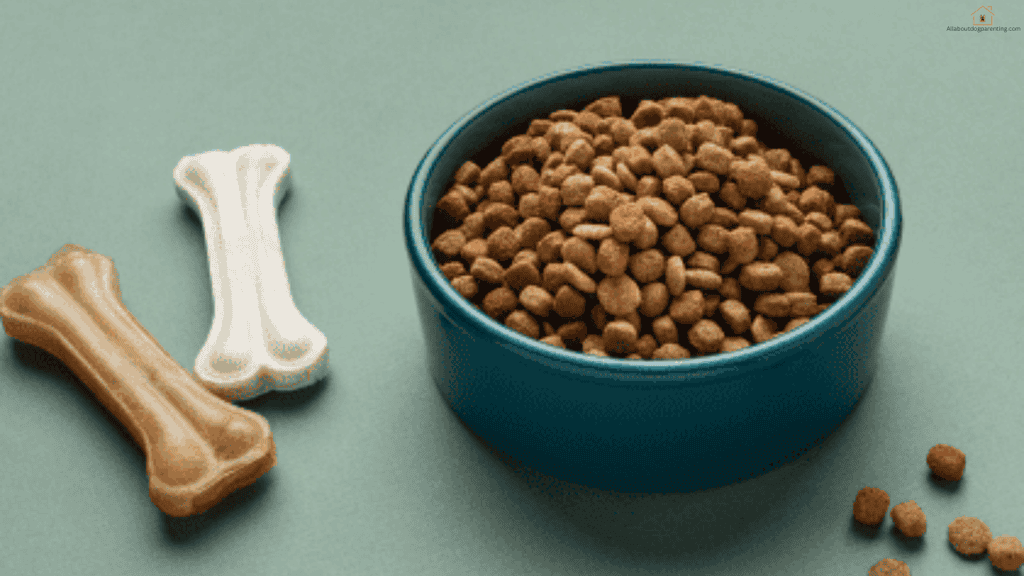
Switch to adult food when your puppy reaches about 80% of their expected adult weight, typically 7–9 months for small breeds, 12–15 months for large breeds, and up to 24 months for giant breeds. Transition gradually over 7–10 days.
Signs your puppy is approaching the transition point:
Growth is visibly slowing
They’re approaching expected adult weight
Their body condition has stabilized
Your vet can confirm readiness. Don’t rush this. Switching too early creates nutritional gaps during the tail end of growth. Switching too late can result in excess calories and weight gain as the puppy’s energy needs decrease.
The 7–10 day transition method:
- Days 1–3: 75% current food / 25% new food
- Days 4–6: 50% / 50%
- Days 7–9: 25% old / 75% new
- Day 10 onward: 100% new food
Abrupt transitions cause digestive upset. The gradual approach gives the gut microbiome time to adjust to a different ingredient profile. If you see digestive disturbance even with a slow transition, slow down further and give each stage an extra few days.
Our When to Switch from Puppy Food to Adult Food guide covers timing by breed size, and the 10-Day Transition Plan walks you through the switch day by day.
Foods That Are Toxic or Dangerous for Puppies
Chocolate, grapes, raisins, onions, garlic, xylitol, macadamia nuts, and alcohol are all toxic to puppies. Even small amounts can cause severe reactions. If your puppy eats any of these, contact your vet or the ASPCA Animal Poison Control Center at (888) 426-4435 immediately.
Toxic Foods Quick Reference
| Food | Toxicity Level | What Happens |
| Dark chocolate/cocoa powder | 🔴 Severe | Vomiting, tremors, heart arrhythmia, seizures, death |
| Grapes & raisins | 🔴 Severe | Acute kidney failure; even small amounts dangerous |
| Xylitol (artificial sweetener) | 🔴 Severe | Hypoglycaemia, seizures, liver failure |
| Onions & garlic (any form) | 🔴 High | Red blood cell damage, anaemia |
| Macadamia nuts | 🟡 Moderate | Weakness, tremors, hyperthermia |
| Alcohol | 🔴 Severe | CNS depression, coma, death |
| Raw yeast dough | 🟡 Moderate | Bloat, alcohol toxicity |
| Milk chocolate | 🟡 Moderate | Less severe than dark but still dangerous |
| Avocado | 🟡 Moderate | GI upset in dogs |
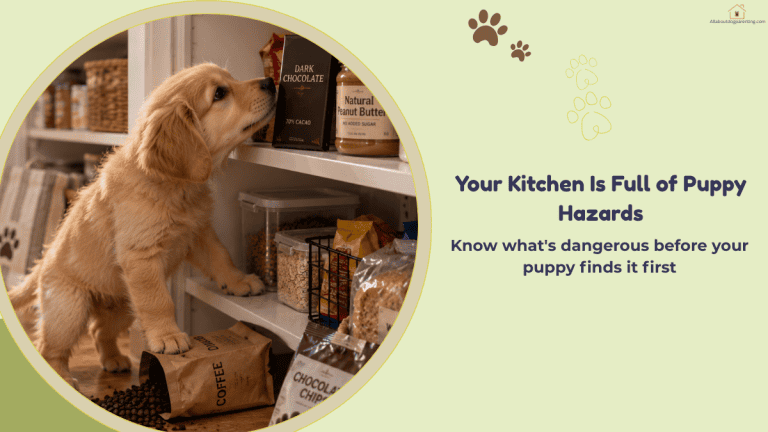
Hidden dangers to watch for: Xylitol is found in some brands of peanut butter. Always check the ingredient list before giving peanut butter to your puppy. Onion powder is present in some commercial baby foods and gravies. Raisins hide in trail mixes, cookies, and granola bars that get left within reach.
According to ASPCA poison control data, human food accounts for over 16% of all pet poisoning exposures, with xylitol, grapes, onions, and garlic among the most commonly involved. Chocolate alone made up nearly 14% of all 2024 cases.
If your puppy ingests something toxic, note the time, the approximate quantity consumed, and the food involved. Call your vet or the ASPCA Poison Control line immediately. Do not attempt to induce vomiting without veterinary guidance. For some toxins, this can cause additional harm.
The full list, with what to do if your puppy eats something dangerous, is in Foods Toxic to Puppies. For the safe side of the kitchen, read Can Puppies Eat Human Food?
5 Common Puppy Feeding Mistakes
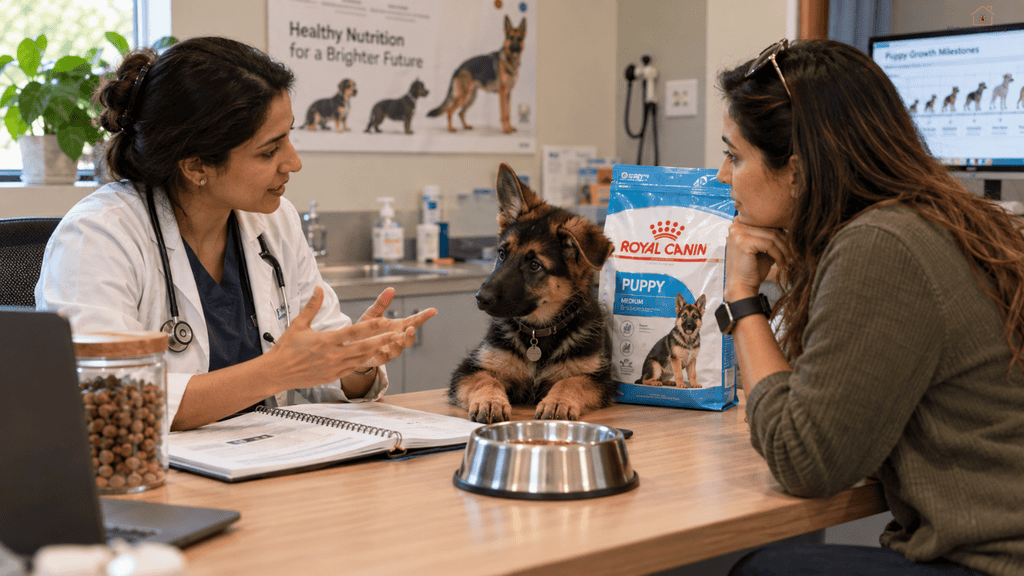
The most common mistakes are overfeeding, switching foods too quickly, giving too many treats, feeding adult food instead of puppy food, and supplementing without vet guidance. Each can cause digestive problems, developmental issues, or obesity.
1. Overfeeding
The instinct to feed a puppy until they’re satisfied is understandable. They always seem hungry. But excess calories during growth, particularly in large and giant breeds, drive rapid growth that stresses developing bones and joints. A lean growing puppy is healthier than a well-padded one. The body condition score, not the food bowl, is your guide.
2. Switching foods abruptly
Any change in diet should happen over 7–10 days. An abrupt switch almost always causes loose stools and GI upset because the gut microbiome doesn’t get the time it needs to adapt to a new food. If you receive your puppy from a breeder, ask what food they’re on and continue that for at least two weeks before making any changes.
3. Too many treats
Training treats should be tiny. A pea-sized piece of chicken or cheese works as effectively as a large treat. Dogs respond to the frequency of reward, not the size. Treats should stay under 10% of daily calorie intake, and that number is smaller than most owners realise. A 10kg puppy eating 500 calories daily has a treat budget of 50 calories. Most commercial treats contain 15–30 calories each.
4. Feeding adult food too early
Adult food contains lower protein and different calcium-phosphorus ratios than puppy food. Switching to adult food too soon removes the specific nutritional profile they need during the remainder of their growth phase. It’s not a neutral decision.
5. Supplementing without vet advice
Calcium, vitamin D, omega-3s, and joint supplements are frequently added with good intentions and can cause real harm. Excess calcium in a large-breed puppy diet is a documented risk factor for developmental orthopedic disease. If you’re using a complete and balanced puppy food, supplementation is not only unnecessary but actively risks upsetting a carefully calibrated nutritional balance.
How Much Does Feeding a Puppy Actually Cost?
Expect to spend $40–80 per month on quality puppy food for a medium breed, $60–120 for a large breed, and $30–50 for a small breed. Premium and fresh food options can cost $150–300+ monthly.
This is the section no other puppy nutrition guide covers, which is odd given that feeding cost is one of the first questions new owners have.
Monthly Cost Estimates by Breed Size and Food Type
| Breed Size | Dry Kibble | Wet Food | Fresh Food |
| Toy/Small | $25–45 | $50–80 | $80–120 |
| Medium | $40–80 | $80–130 | $120–200 |
| Large | $60–120 | $120–200 | $180–300 |
| Giant | $80–150 | $150–250 | $200–350+ |
Where you buy matters. Large bags of quality kibble from warehouse clubs like Costco or Sam’s Club can reduce monthly costs by 20–30% compared to pet store retail. Online subscriptions through brands or retailers often offer additional discounts. The catch: buying large quantities means committing to a food for a while, so confirm your puppy tolerates it well before buying in bulk.
I feed my GSD home-cooked food, using recipes approved by a canine nutritionist, and end up spending upward of $200 on his meals. This is not the cheapest option, but I firmly believe it’s better to invest in the right nutrition than spend on medication.
However, that’s not necessarily the route you need to take. The practical advice: spend what you can comfortably sustain, within the range of foods that carry an appropriate AAFCO statement and are formulated for your puppy’s breed size. Feeding a $200/month fresh diet for six months and then switching to $60/month kibble because the budget doesn’t hold is more disruptive than starting with the affordable option and staying consistent.
FAQs
1. Can I feed my puppy human food?
Only in very small amounts, and only foods confirmed safe for dogs. Most human foods are either nutritionally unbalanced for a growing puppy or potentially toxic. Stick to puppy-formulated food for meals and use dog-safe foods like plain cooked chicken, carrot, and cucumber as occasional training treats in very small quantities.
2. How do I know if my puppy’s food is good quality?
Look for an AAFCO statement confirming the food is “complete and balanced for growth” or “all life stages, including growth of large-size dogs” if you have a large breed. Check that a named protein source—chicken, beef, salmon, lamb—is the first ingredient, not a generic “meat meal.” Reputable brands employ board-certified veterinary nutritionists. Avoid foods where the AAFCO statement is absent or reads “for intermittent or supplemental feeding only.”
3. Should I add supplements to my puppy’s food?
Not unless your vet specifically recommends them for a documented deficiency. A properly formulated puppy food already provides the nutrients your puppy needs in balanced proportions. Over-supplementing, especially with calcium or vitamin D, can cause serious developmental problems in large-breed puppies, as documented extensively in the veterinary literature.
4. My puppy won’t eat. What should I do?
Skipping one meal is generally not a concern. If your puppy refuses food for more than 24 hours, or if food refusal is accompanied by lethargy, vomiting, or diarrhoea, contact your vet. Common causes in otherwise healthy puppies include stress from a new environment, teething discomfort at three to six months, and the pickiness that tends to emerge when owners add variety or treats to encourage eating, which inadvertently trains the puppy to hold out for better options.
5. Is grain-free food better for puppies?
Not necessarily, and possibly worse. The FDA has investigated a potential link between grain-free diets and dilated cardiomyopathy (DCM) in dogs, with the investigation ongoing. Unless your puppy has a confirmed grain allergy, which is genuinely rare, grain-inclusive food is what most veterinary nutritionists recommend as the default. Grain-free formulations often substitute legumes like peas and lentils for grains, and it’s these substitutions, not the absence of grain per se, that may be associated with cardiac risk in some dogs.
The Bottom Line
Puppy nutrition is the single most controllable factor in your puppy’s long-term health. You can’t change their genetics, but you can determine whether those genetics express themselves in the healthiest possible way. The right food, in the right amount, at the right frequency, for the right duration. It’s genuinely as simple as that.
Use an AAFCO-approved puppy food matched to your breed size. Feed measured portions on a consistent schedule. Monitor body condition, not just the scale. Avoid supplements unless your vet recommends them. And keep the transition to adult food appropriately timed. The investment in getting this right early pays back across the entire lifespan of your dog.