
Homemade Puppy Food: Complete Recipes, Nutrition Guide, and How to Do It Right
Overview:
Homemade puppy food gives you full control over your puppy’s nutrition, with real ingredients, no ultra-processing, and complete transparency. The key is including the right supplements, especially calcium and omega-3, and following balanced recipes designed for growing puppies.
I have raised my German Shepherds on home-cooked food. Every bowl they consume is assembled from ingredients I chose and cooked myself. No “meat meal,” no artificial preservatives, no ingredients I couldn’t pronounce. When I read commercial kibble labels and see the gap between what’s listed and what I actually put in my dog’s bowl, there’s no contest in my mind. Over the years, I have perfected a range of homemade puppy food recipes that have stood my furry babies in good stead over the years.
Yes, cooking for your puppy takes more time than scooping kibble. But once you have an efficient system in place, it becomes part of your routine, not an added burden. In this guide, part of our Complete Guide to Puppy Nutrition, I share that system with you: the nutritional framework, four complete recipes with exact amounts, the supplement trio that makes homemade food genuinely balanced, and a batch-cook workflow that makes the whole thing sustainable.
Why Homemade Puppy Food Is Worth the Effort
Overview:
When you make your puppy’s food, you know exactly what’s in every bowl. Homemade puppy food recipes use real meat, real vegetables, no preservatives, no mystery ingredients. While kibble is convenient, it’s heavily processed at extreme temperatures, packed with synthetic additives, and designed for shelf life rather than optimal nutrition.
The case for homemade puppy food comes down to five things that commercial food simply can’t match.
1. Ingredient transparency
You choose every ingredient. When you serve homemade food, you can name every single thing in the bowl. Chicken breast, brown rice, carrots, chicken liver, ground eggshell. That’s it. No “animal by-products,” no stabilisers, no palatability enhancers.
2. Minimal processing
Gently cooking at home preserves more natural nutrients than industrial extrusion at 150 degrees Celsius and above. Heat-sensitive vitamins, enzymes, and amino acids survive better in home-cooked food. This is why dogs fed fresh food show greater gut microbiome diversity and improved digestive markers compared to those on heavily processed diets.
3. Customisation
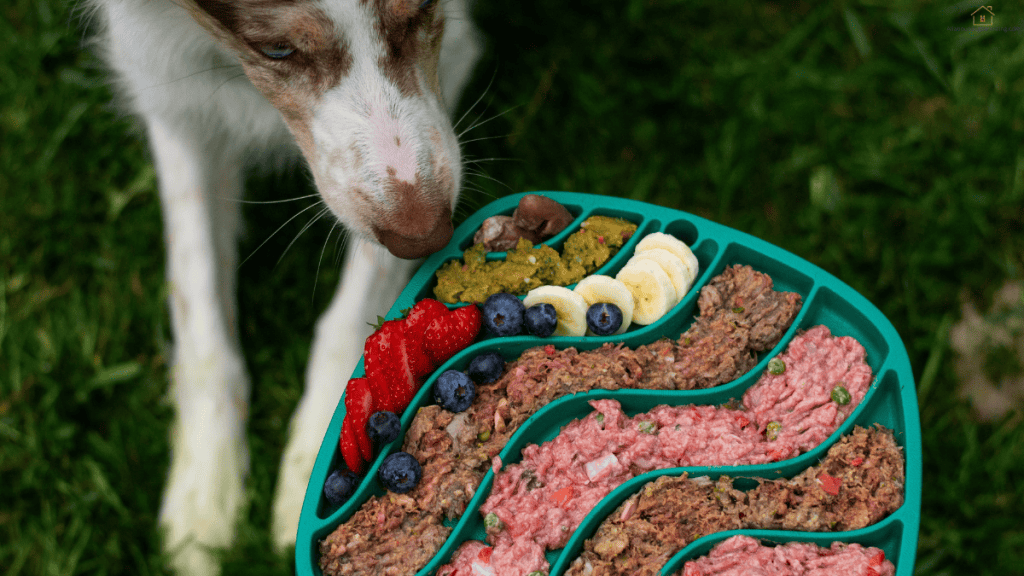
A GSD with a sensitive stomach gets different ingredients from a Frenchie with skin allergies. Commercial food is one-size-fits-all. Homemade puppy food is bespoke, calibrated to your puppy’s breed, size, and specific needs.
4. A growing body of evidence
Research into fresh food and the gut microbiome is building. Dogs fed whole-food diets consistently show better digestive markers in comparative studies. This isn’t fringe thinking anymore.
5. The emotional connection
There’s something genuine about preparing food for your puppy with your own hands. It’s an act of care that deepens the bond. I’ve always believed that knowing what goes into my dog’s food matters, and home cooking makes that possible in a way no bag of kibble does.
What Growing Puppies Need Nutritionally (The Non-Negotiables)
Overview:
Growing puppies need higher protein at 25 to 30% of the diet, moderate fat at 12 to 18%, precise calcium and phosphorus, especially for large breeds, DHA for brain development, and a full spectrum of vitamins and minerals. These are the numbers your homemade puppy food recipes need to hit.
The difference between homemade food that nourishes and homemade food that falls short comes down to understanding these requirements before you start cooking.
| Nutrient | Why Puppies Need It | Target Range | How to Provide in Homemade Food |
| Protein | Muscle, organ, and tissue growth | 25 to 30% of diet | Chicken, turkey, beef, fish, eggs |
| Fat | Energy, brain development, coat health | 12 to 18% of diet | Animal fat, fish oil, egg yolks |
| Calcium | Bone and teeth development | 1.2 to 1.8% dry matter for large breeds | Ground eggshell, bone meal, calcium carbonate. Dosing must be precise |
| Phosphorus | Works with calcium for skeletal development | 1.0 to 1.6%, in correct ratio to calcium | Naturally present in meat, fish, eggs |
| DHA (omega-3) | Brain development, vision, cognitive function | 0.05 to 0.1% | Fish oil supplement. Most critical addition |
| Vitamin E | Antioxidant, immune function | Per NRC guidelines | Small amounts in eggs, leafy greens; supplement recommended |
| Zinc | Immune function, skin and coat health | Per NRC guidelines | Red meat, pumpkin seeds; supplement often needed |
| Iodine | Thyroid function | Per NRC guidelines | Small amounts in fish; kelp supplement or iodised salt |
| B vitamins | Energy metabolism, nervous system | Per NRC guidelines | Organ meats — liver is the richest source |
The calcium conversation
This is the nutrient that requires the most attention in homemade puppy food, and it’s also the one that’s simpler to handle than most people expect. Meat alone doesn’t provide enough calcium for growing bones. You must supplement. Ground eggshell is the simplest home source: half a teaspoon of finely ground eggshell per pound of meat provides approximately the right ratio. For large-breed puppies, where calcium precision matters most, this is the one area where a veterinary nutritionist consultation pays for itself most clearly.

Getting calcium right was the part that made me most nervous when I started exploring homemade feeding for my GSD. The solution turned out to be simpler than expected: a measured calcium supplement added to each meal. Once I had the dosing figured out, the rest was just cooking.
Complete Homemade Puppy Food Recipes
Overview:
Lorem ipsum dolor sit amet, consectetur adipiscing elit. Aenean diam dolor, accumsan sed rutrum vel, dapibus et leo.
Overview: These four homemade puppy food recipes are designed to provide balanced nutrition for growing puppies. Each includes a protein source, carbohydrate, vegetables, healthy fat, and supplementation guidance. Rotate between recipes weekly for nutritional variety.
The holy grail of cooking for a puppy is variety. Rotating between 3 to 4 recipes weekly ensures your puppy gets different amino acid profiles from different proteins and different micronutrients from different vegetables. I rotate between these recipes and have never had a puppy with a dull coat or flagging energy on a home-cooked diet.
Recipe 1: Chicken, Brown Rice and Vegetable Bowl
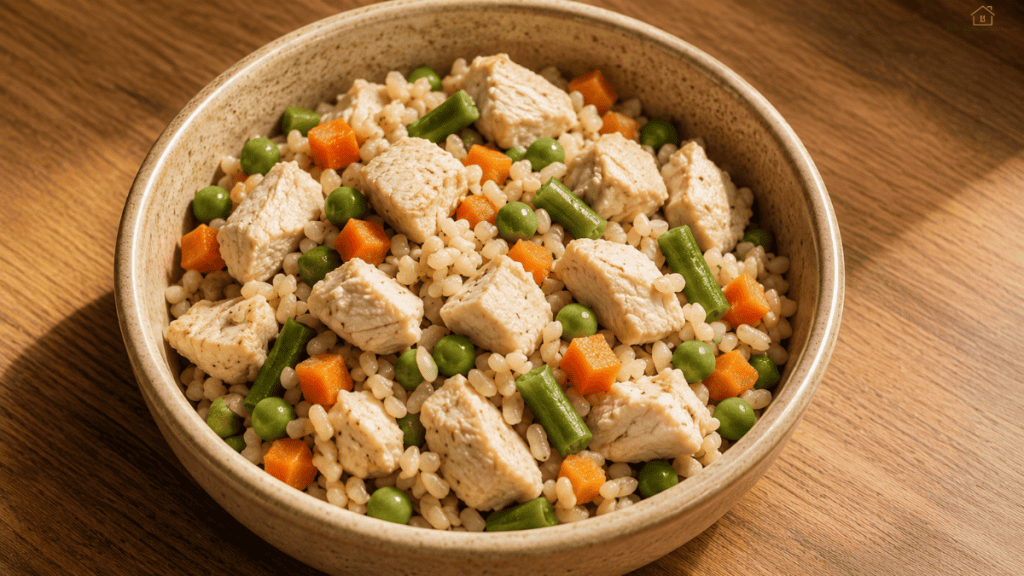
Best for: All puppies. The most versatile, easiest-to-prepare recipe in the rotation.
| Component | Ingredient | Amount (per day, 30 lb puppy) |
| Protein | Boneless, skinless chicken thighs (cooked, chopped) | 250g |
| Carbohydrate | Brown rice (cooked) | 150g |
| Vegetables | Carrots, green beans, spinach (steamed, chopped) | 100g |
| Healthy fat | Fish oil (omega-3 supplement) | 1,000mg capsule |
| Organ meat | Chicken liver (cooked, chopped) — 2 to 3 times per week | 30g |
| Calcium | Ground eggshell OR calcium carbonate supplement | Half tsp ground eggshell per 250g meat |
| Multivitamin | Canine puppy vitamin/mineral premix | Per product directions |
Method: Boil or bake chicken thighs until cooked through. Cook brown rice separately. Steam vegetables until tender. Chop everything into puppy-appropriate pieces. Mix together. Add fish oil, calcium, and vitamin supplement. Cool to room temperature before serving.
Storage: Refrigerate up to 4 days. Freeze in daily portions for up to 2 months. Thaw overnight in the refrigerator.
Approximate nutrition per day: 1,000 to 1,100 kcal. Approximately 30% protein. Approximately 15% fat. Calcium supplemented to target range.
Recipe 2: Turkey, Sweet Potato and Pumpkin Bowl
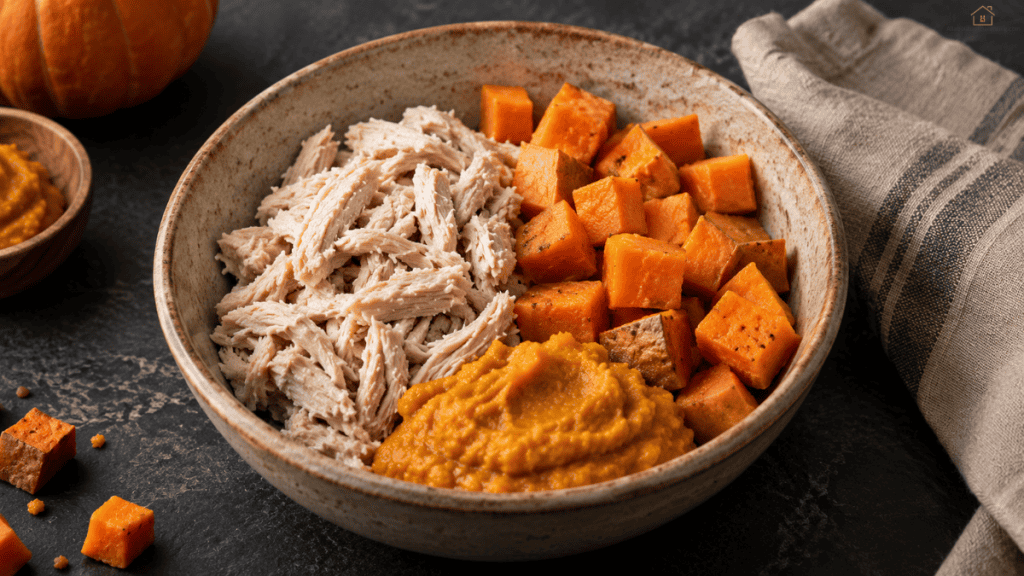
Best for: The ideal homemade food for puppies with sensitive stomachs. Pumpkin and sweet potato are gentle on digestion. Turkey is a novel protein for many puppies who have been on chicken-based food.
| Component | Ingredient | Amount |
| Protein | Ground turkey (cooked, drained) | 250g |
| Carbohydrate | Sweet potato (baked, mashed) | 150g |
| Vegetables | Pumpkin puree (plain) and zucchini (steamed) | 80g pumpkin plus 50g zucchini |
| Healthy fat | Coconut oil | 1 tsp |
| Organ meat | Beef liver — 2 to 3 times per week | 30g |
| Calcium | Ground eggshell OR calcium carbonate supplement | Per dosing guide |
| Multivitamin | Canine puppy premix | Per product directions |
| Omega-3 | Fish oil | 1,000mg |
Method: Brown ground turkey, drain excess fat. Bake sweet potato until soft, mash. Steam zucchini. Combine all ingredients. Add supplements after cooling. Serve at room temperature.
Recipe 3: Beef, Quinoa and Greens Bowl
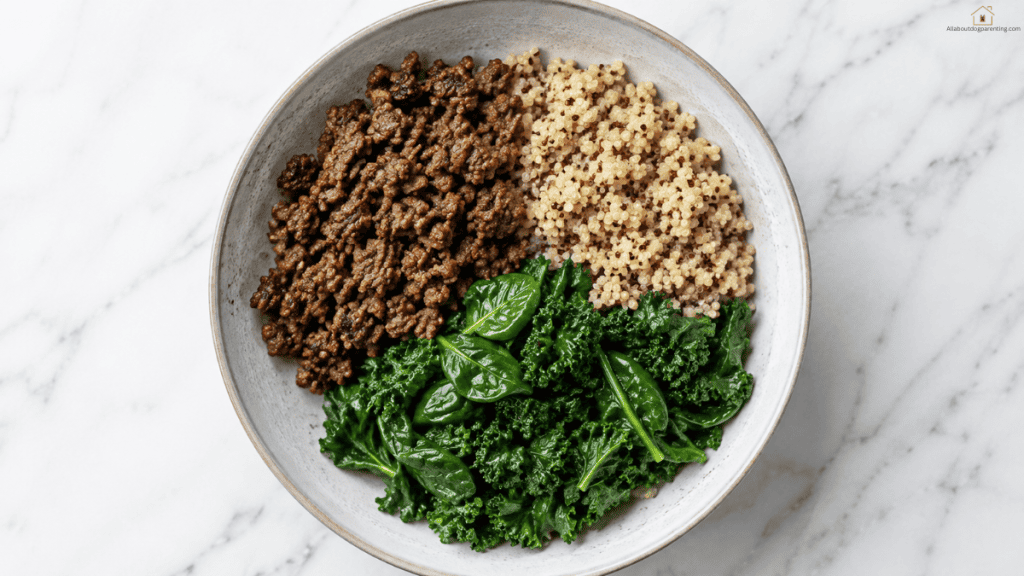
Best for: Active, high-energy puppies. Beef and quinoa together provide a dense nutritional profile with complete amino acids.
| Component | Ingredient | Amount |
| Protein | Lean ground beef (cooked, drained) | 250g |
| Carbohydrate | Quinoa (cooked) | 120g |
| Vegetables | Broccoli, kale, carrots (steamed, finely chopped) | 100g |
| Healthy fat | Sardines in water (mashed) — rich in omega-3 | 1 small tin, 2 to 3 times per week |
| Organ meat | Beef kidney or heart — 2 to 3 times per week | 30g |
| Calcium | Ground eggshell OR calcium carbonate supplement | Per dosing guide |
| Multivitamin | Canine puppy premix | Per directions |
This is the highest-iron recipe in the rotation. Particularly useful when cooking for a puppy during the 3 to 6 month growth phase where rapid development demands more from the diet.
Recipe 4: Fish, Rice and Egg Bowl
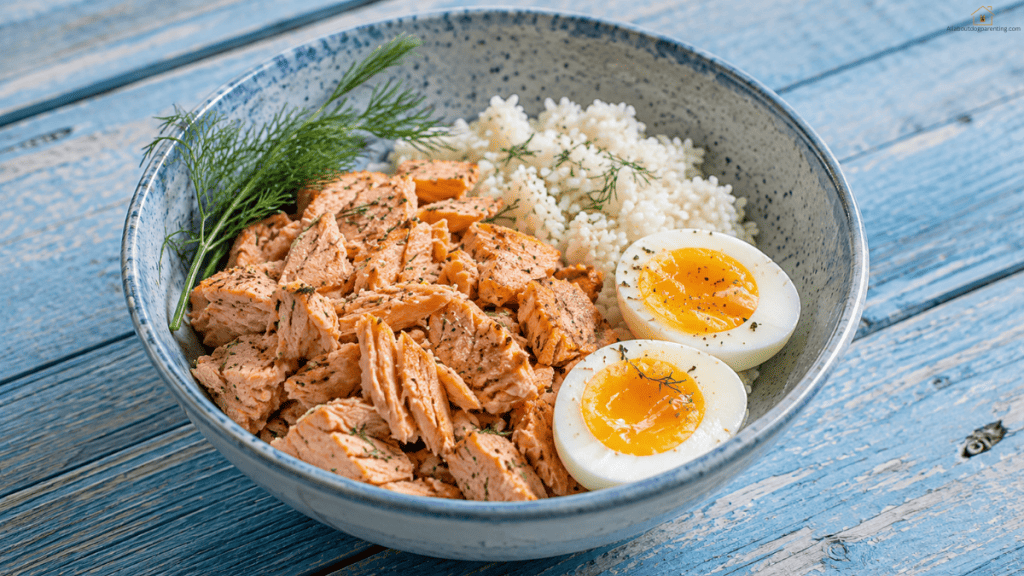
Best for: Ideal if you’re cooking for a puppy with chicken or beef sensitivities. Fish is one of the least common allergens in dogs and excellent for coat health due to natural omega-3 content. Also the gentlest recipe on digestion overall.
| Component | Ingredient | Amount |
| Protein | White fish (cod, tilapia) baked and flaked plus 1 whole egg (scrambled) | 200g fish plus 1 egg |
| Carbohydrate | White rice (cooked) — gentlest on digestion | 150g |
| Vegetables | Peas, carrots (steamed) | 80g |
| Healthy fat | Fish oil | 1,000mg |
| Calcium | Ground eggshell OR calcium supplement | Per dosing guide |
| Multivitamin | Canine puppy premix | Per directions |
I rotate between 3 to 4 homemade puppy food recipes weekly. This ensures nutritional variety, offering your pet different protein sources that provide different amino acid profiles, different vegetables provide different micronutrients.
The Supplements You Need (And How to Use Them)
Overview:
Every homemade puppy diet needs three supplements: a calcium source, fish oil for DHA and EPA, and a canine vitamin/mineral premix. Without these three, even a well-constructed whole-food diet will have nutritional gaps.
Homemade food for puppies cannot be nutritionally sustainable without the right supplementation. While the food serves as the foundation, the supplements fill the specific gaps that even the best whole-food ingredients cannot cover on their own. They take 30 seconds to add to a bowl.
| Supplement | Why It’s Needed | How to Add | Recommended Product Type |
| Calcium | Meat alone doesn’t provide enough calcium for bone development. This is the single most important supplement. | Ground eggshell: half tsp per 250g meat. Or calcium carbonate powder per vet/product guidelines. | Finely ground eggshell (make your own in a coffee grinder) or NOW Foods Calcium Carbonate powder |
| Fish oil (DHA/EPA) | Brain development, vision, cognitive function, coat health. Whole foods alone rarely provide enough DHA. | 1,000mg fish oil capsule per day for a medium puppy. Adjust by size. | Nordic Naturals Omega-3 Pet or Grizzly Salmon Oil |
| Vitamin/Mineral Premix | Covers zinc, iodine, vitamin E, manganese, and other micronutrients that are difficult to balance through food alone. | Follow product directions — add to food daily. | Balance IT Canine, Hilary’s Blend, or Dr. Harvey’s Veg-to-Bowl |
How to make your own ground eggshell calcium:
Easy hacks like these make DIY puppy food sustainable for the long haul:
- Save eggshells from any eggs
- Rinse and let dry completely
- Bake at 150 degrees Celsius/300 degrees Fahrenheit for 10 minutes to sterilise
- Grind in a coffee grinder or blender until a fine powder
- Store in an airtight jar. It can last for months
- Half a teaspoon provides approximately 1,000mg of calcium
Meal Prep Workflow: How to Make Homemade Feeding Sustainable
Overview:
Batch-cook 3 to 4 days’ worth of food at once and refrigerate, or prep a full week’s worth and freeze in daily portions. A Sunday meal prep session of 60 to 90 minutes can cover your puppy’s food for the entire week.
If you’re wondering, “Can I make my own puppy food without having to spend hours slaving in the kitchen?”, know that meal prep is key. All it takes is 60 to 90 minutes of your time each week. That’s less than most people spend scrolling on a Sunday. Once you’ve done it 2 to 3 times, it becomes automatic. I’ve made it a habit to prep my dog’s food alongside my own meals, which makes it even more convenient.
| Step | Time | What to Do |
| 1. Shop | 20 min | Buy protein, grains, vegetables, and organ meat for the week. Rotate recipes weekly. |
| 2. Cook proteins | 25 min | Boil, bake, or pan-cook all meat for the week in one batch |
| 3. Cook carbs | 20 min (simultaneous) | Cook rice, quinoa, or sweet potatoes while meat cooks |
| 4. Prep vegetables | 10 min | Steam and chop all vegetables |
| 5. Assemble | 15 min | Combine into daily portions in containers. Add supplements to each portion. |
| 6. Store | 5 min | Refrigerate 3 to 4 days’ worth, and freeze the rest in labelled containers |
Total weekly prep time: 60 to 90 minutes
Calculate portions based on your puppy’s daily calorie needs. As a rough guide, most puppies need approximately 2 to 3% of their expected adult body weight in fresh food daily. Weigh portions with a kitchen scale, especially during the first month of homemade feeding. Our puppy feeding chart covers daily calorie targets by age, breed size, and weight if you need a starting point.
How to Transition from Kibble to Homemade
Overview:
Transition gradually over 10 to 14 days, starting with 20% homemade and 80% kibble, increasing the homemade ratio every 2 to 3 days. Abrupt switches cause digestive upset. By day 10 to 14, you can be fully homemade if your puppy’s stools are firm and appetite is good.
| Days | Kibble | Homemade | Watch For |
| Day 1 to 3 | 80% | 20% | Normal stools: proceed |
| Day 4 to 6 | 60% | 40% | Slight stool softening is normal |
| Day 7 to 9 | 40% | 60% | Stools should be stabilising |
| Day 10 to 12 | 20% | 80% | Nearly there |
| Day 13 to 14 | 0% | 100% | Full homemade — monitor for 1 week |
If your puppy has a particularly sensitive stomach, use our 10-day food transition guide, which covers the process in detail, including what to do if digestive disruption appears mid-switch.
Getting a Custom Recipe from a Veterinary Nutritionist
Overview:
A veterinary nutritionist consultation costs $200 to $400 and gives you a recipe formulated specifically for your puppy’s breed, size, age, and health needs. Think of it as a personal meal plan that removes all guesswork from homemade feeding.
I think of the veterinary nutritionist consultation the way I think of getting a personal trainer. You CAN build a great workout on your own, and the general recipes in this article work well. But if you want a plan custom-built for YOUR dog with zero guesswork, the $200 to $400 is money well spent. Especially for the first 12 months when growth nutrition matters most.
What a DACVN does for you
- Analyses your chosen ingredients, calculates exact nutrient content, and identifies gaps
- Provides precise supplement dosing calibrated to your puppy’s size and growth stage
- Creates a recipe you can follow confidently, knowing it meets all requirements
- Updates the recipe as your puppy grows, typically every 3 to 4 months during the growth phase
When it’s most valuable
Large-breed puppies where calcium precision matters most, puppies with confirmed allergies or health conditions requiring custom elimination diets, and owners who want the complete peace of mind of knowing the nutrition is dialled in precisely.
Where to find one
The American College of Veterinary Nutrition directory lists all board-certified DACVN practitioners. Many consultations are now done remotely. You can also ask your regular vet for a referral, or use BalanceIt.com, which offers remote nutritionist-guided formulation.
The Topper Approach (For Those Not Ready to Go Fully Homemade)
Overview:
If full homemade feeding isn’t practical yet, start by adding homemade food as a topper covering 10 to 30% of daily calories over quality commercial food. This adds whole-food nutrition, variety, and palatability while the commercial food handles the baseline nutritional balance.
This is a legitimate starting point, and for many owners, it’s where they stay permanently. That’s a perfectly good choice. Adding boiled chicken, a scrambled egg, or steamed vegetables to your puppy’s kibble bowl requires no supplementation, no batch cooking system, and no professional formulation because the commercial food underneath covers the nutritional bases.
As you add more homemade food beyond 30% of calories, start adding the supplement trio to ensure nutritional completeness. The transition from topper to full homemade can happen gradually as you get more confident with the process. Our fresh dog food for puppies guide covers how commercial fresh food subscriptions fit into this spectrum if you want fresh-food quality without the cooking.
Common Mistakes in Homemade Puppy Feeding (And How to Avoid Them)
Overview:
The most common mistakes are skipping calcium supplementation, not including organ meats, relying on only one protein source, eyeballing portions instead of weighing, and forgetting to adjust recipes as your puppy grows.
| Mistake | Why It’s a Problem | The Fix |
| No calcium supplement | Meat alone can’t provide enough calcium for growing bones | Add ground eggshell or calcium carbonate to every meal. Non-negotiable |
| Skipping organ meats | Liver and kidney provide essential B vitamins, iron, and vitamin A that muscle meat lacks | Include organ meat (liver, kidney, heart) 2 to 3 times per week, approximately 10% of total meat content |
| Only one protein source | Single-protein diets miss different amino acid profiles and micronutrient profiles | Rotate between 3 to 4 proteins weekly: chicken, beef, turkey, fish |
| Eyeballing portions | Too much means an overweight puppy. Too little means nutritional shortfall. | Weigh ingredients with a kitchen scale, especially during the first month |
| Not adjusting as puppy grows | A 4-month-old and a 10-month-old have very different calorie needs | Recalculate portions monthly. Weigh your puppy weekly and adjust. |
| No fish oil or omega-3 | DHA is critical for brain development and not adequately provided by most whole foods | Add fish oil daily. This is the easiest and most impactful supplement |
| Feeding only muscle meat | “All chicken breast” lacks the fat, organ nutrients, and variety a puppy needs | Include dark meat, organ meats, eggs, and healthy fats for complete nutrition |
Foods That Are Safe and Unsafe for Homemade Puppy Meals
Overview:
Most fresh meats, many vegetables, eggs, and certain grains are safe and nutritious for puppies. Never include onions, garlic, grapes, raisins, chocolate, xylitol, macadamia nuts, or cooked bones. Link to our complete toxic foods article for the full reference.
| Safe to Include | Never Include |
| Chicken, turkey, beef, lamb, fish | Onions, garlic, leeks (all allium family) |
| Eggs (cooked) | Grapes, raisins, currants |
| Brown rice, quinoa, oats, sweet potato | Chocolate, cocoa |
| Carrots, green beans, peas, broccoli, spinach | Xylitol (found in some peanut butters) |
| Pumpkin (plain), zucchini, cucumber | Macadamia nuts |
| Blueberries, apple (no seeds), watermelon (seedless) | Cooked bones (splintering risk) |
| Liver, kidney, heart (organ meats) | Raw bread dough |
| Fish oil, coconut oil (small amounts) | Avocado |
For the full list of foods and ingredients that are dangerous for puppies, including emergency contacts and specific toxicity levels, see our best puppy food for allergies guide, which covers ingredient dangers in detail.
FAQs
1. Is homemade food better for puppies than kibble?
Homemade food made from fresh, whole ingredients provides superior ingredient quality and transparency compared to ultra-processed kibble. The key is ensuring nutritional completeness. Every homemade meal needs appropriate supplementation, including calcium, fish oil, and a vitamin/mineral premix, to match what commercial foods provide through fortification. Done right, homemade puppy food recipes give your puppy better ingredients with full nutritional coverage.
2. What supplements do I need to add to homemade puppy food?
Three are essential: a calcium source. You can use ground eggshell or calcium carbonate, fish oil for DHA and EPA for brain development and coat health, and a canine-specific vitamin/mineral premix covering zinc, iodine, vitamin E, and other micronutrients. These fill the specific gaps that even the best whole-food ingredients cannot cover alone.
3. How much homemade food should I feed my puppy per day?
Calculate based on your puppy’s daily calorie needs, then portion recipes accordingly. As a rough guide, most puppies need approximately 2 to 3% of their expected adult body weight in fresh food daily. Weigh portions with a kitchen scale for accuracy, especially during the first month of homemade feeding. See our puppy feeding chart for calorie targets by age and breed size.
4. Can I batch-cook and freeze homemade puppy food?
Yes, and you should. Batch-cooking makes homemade feeding practical and sustainable. Prep 5 to 7 days worth of food in one session of approximately 60 to 90 minutes, refrigerate 3 to 4 days worth, and freeze the rest in daily portions. Thaw overnight in the refrigerator. Frozen homemade food maintains nutritional quality for up to 2 months.
5. Is a veterinary nutritionist consultation necessary for homemade feeding?
Not strictly necessary if you follow well-balanced recipes with proper supplementation. The recipes in this article are designed for that purpose. However, a consultation at $200 to $400 is a worthwhile investment, especially for large-breed puppies where calcium precision is most critical, or for puppies with allergies or health conditions. Think of it as a custom meal plan that eliminates all guesswork for your specific puppy.
The Bottom Line
Homemade puppy food recipes, done properly, give your puppy something a bag of kibble simply cannot: complete ingredient transparency, minimal processing, and food tailored to their specific needs. With the right system that involves batch cooking once a week, three essential supplements added to every meal, and rotating recipes for nutritional variety, DIY puppy food becomes part of your routine rather than an effort-intensive project.
Start with one recipe. Get the supplement routine down. Try the 14-day transition. See what it does for your puppy’s coat, stools, and energy. Those changes, as I saw with my own GSD, are what turn cooking for your puppy from a good idea into a permanent commitment. Fresh food for puppies at home is genuinely achievable, and for owners willing to invest the time, it is the most rewarding feeding choice you can make.