Foods Toxic to Puppies: The Complete List (With Severity Levels)
Overview:
The most dangerous foods toxic to puppies are xylitol, chocolate, grapes and raisins, onions and garlic, and alcohol. If your puppy has eaten any of these, call your vet or the ASPCA Poison Control hotline at 888-426-4435 immediately. Don’t wait for symptoms to appear.
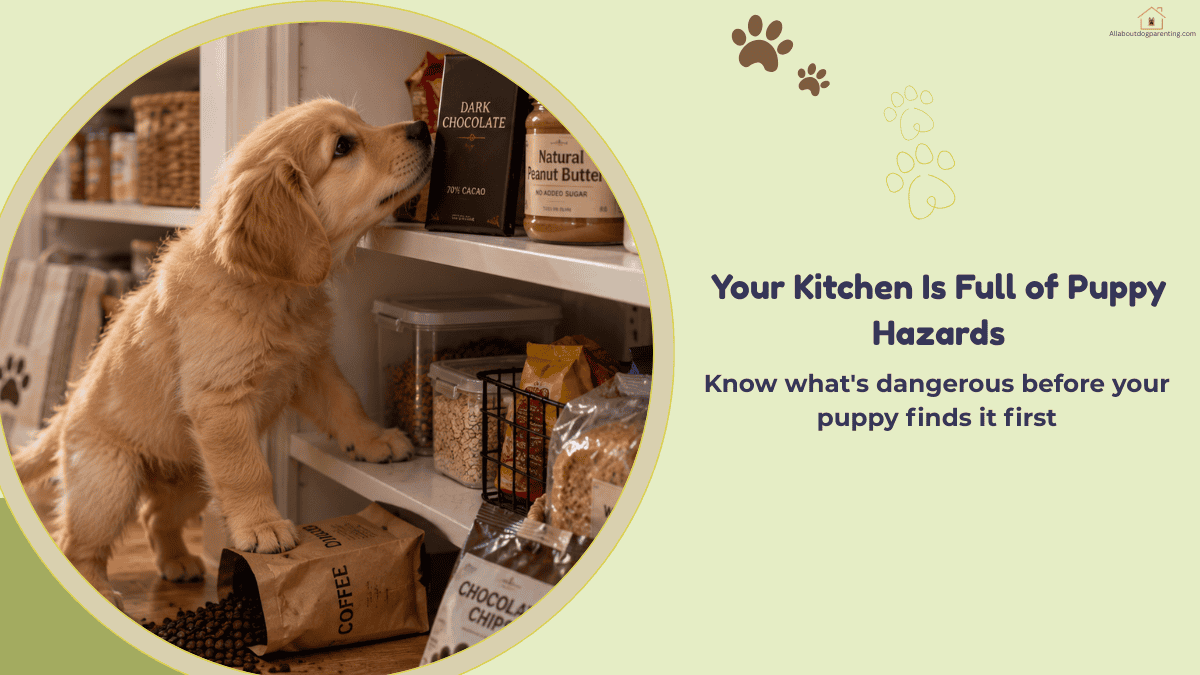
If you’re here because your puppy just ate something and you’re panicking, go straight to the emergency protocol below. If you’re here to puppy-proof your home before something happens, you’re making a smart call. This is the complete toxic food for dogs list, organised by severity level.
Life-threatening toxins come first, mild hazards last. Every entry includes real dose thresholds, hidden sources, and specific symptoms because knowing that chocolate is dangerous isn’t actionable. Knowing that half an ounce of dark chocolate can cause cardiac symptoms in a 2 kg puppy is.
If you’re wondering what foods are bad for puppies versus which ones are safe, the short answer is that this guide covers both. The article covering the severity-organised list, part of our Complete Guide to Puppy Nutrition, starts below the emergency protocol, and the safe foods table is at the end.
If Your Puppy Just Ate Something Toxic, Do This NOW
Overview:
Call your vet or the ASPCA Animal Poison Control Center at 888-426-4435 immediately. Note what your puppy ate, how much, and when. Do not induce vomiting unless your vet specifically tells you to. Some toxins cause more damage coming back up.
| Step | Action |
| 1 | Remove any remaining toxic food from your puppy’s reach immediately |
| 2 | Note: WHAT they ate, HOW MUCH (estimate as best you can), and WHEN |
| 3 | Call your vet or ASPCA Poison Control: 888-426-4435 (consultation fee applies) |
| 4 | Follow their instructions exactly. Do not induce vomiting unless told to. Bring the packaging to the vet. |
Two things not to do while you wait: don’t give milk or water thinking it will dilute the toxin, and don’t spend 30 minutes searching the internet trying to decide if it’s serious. Call first. Research later.
Why puppies are more vulnerable than adult dogs
Toxicity is dose-dependent, calculated against body weight. A 2 kg Chihuahua puppy eating the same amount of chocolate that barely registers for a 30 kg Labrador can be in serious danger. Puppies also have developing livers and kidneys that process toxins less efficiently than adult organs. Their natural curiosity means they’re more likely to eat things they shouldn’t in the first place.
Severity Level 1—Life-Threatening (Emergency Vet Immediately)
Overview:
These are the dangerous foods for puppies that require immediate veterinary intervention even when no symptoms are visible yet. With these toxins, waiting for symptoms to appear can mean the difference between a full recovery and permanent organ damage.
Here is a roundup of items that top the list of foods toxic to puppies:
1. Xylitol (Artificial Sweetener)
Xylitol is the most acutely dangerous entry on any foods toxic to puppies list. It’s a naturally derived sweetener used as a sugar substitute, and its effects on dogs are entirely different from its effects on humans.
Why it’s life-threatening: Doses of xylitol greater than approximately 100 mg/kg have been associated with hypoglycaemia in dogs. Some dogs ingesting xylitol at doses greater than 500 mg/kg may develop severe hepatic insufficiency or failure. Clinical signs of hypoglycaemia can develop within 30 minutes after ingesting xylitol or may be delayed up to 12 to 18 hours if the xylitol is in a substrate that slows absorption, such as some gum products. Merck Veterinary Manual
Hidden sources (this is the critical list): Sugar-free gum (the most common source), some natural peanut butters (always check the label), sugar-free candy and mints, children’s chewable vitamins, toothpaste, mouthwash, baked goods made with sugar substitutes, and some cough syrups. The peanut butter point deserves emphasis. Owners give peanut butter to puppies constantly for training and to fill Kong toys. Some brands contain xylitol. Check the ingredient label on every jar before it goes near your puppy.
Symptoms:
- Vomiting
- Weakness
- Collapse
- Tremors
- Seizures
- Jaundice (yellowing of skin and eyes indicating liver involvement)
What to do: Emergency vet immediately. Do not wait. This is always life-threatening regardless of the amount eaten.
2. Grapes, Raisins, Sultanas, and Currants
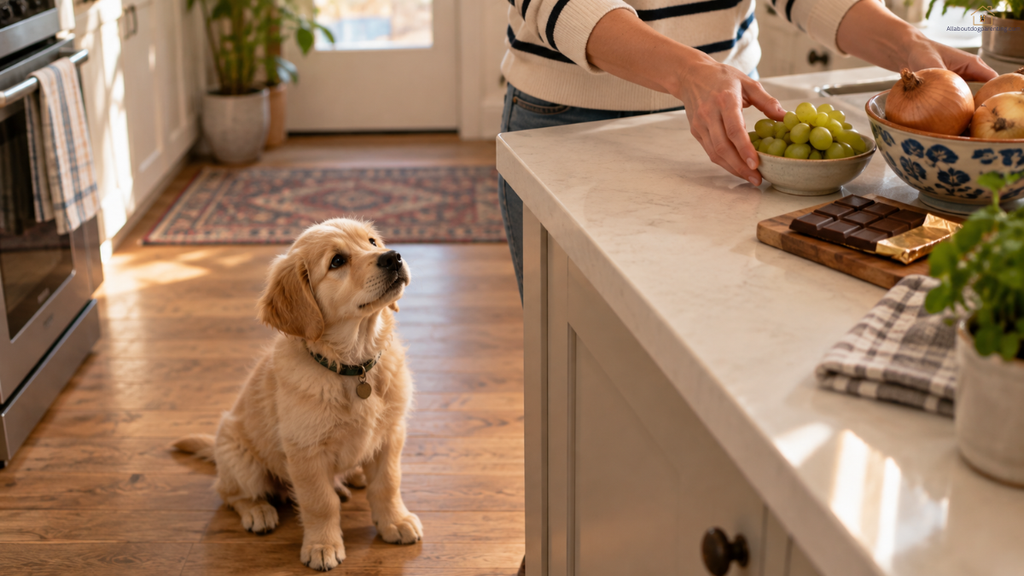
Grapes and their dried forms cause acute kidney failure in dogs. The exact toxic compound has never been identified, which is what makes this toxin particularly dangerous. There is no established safe dose.
Why it’s life-threatening: Some puppies react to a single grape with kidney failure. Others have eaten small amounts without apparent effect. Because individual sensitivity cannot be predicted, any grape or raisin ingestion is treated as an emergency by every major veterinary body.
Hidden sources: Fruit cake, oatmeal raisin cookies, trail mix, mince pies, hot cross buns, grape juice, and certain breakfast cereals. Raisins in baked goods are especially dangerous because owners don’t register them as “grapes.”
Symptoms:
- Vomiting and diarrhoea within a few hours
- Loss of appetite
- Lethargy
- Abdominal pain
- Decreased urination
- Kidney failure developing within 24 to 72 hours
What to do: Emergency vet immediately, even if your puppy seems completely normal. Kidney damage can be prevented with early treatment but cannot be reversed once established.
3. Chocolate
Chocolate is perhaps the most well-known of the foods toxic to puppies. But do you know why?
Why it’s dangerous: Chocolate contains theobromine, a compound dogs metabolise far more slowly than humans, allowing it to accumulate to toxic levels. The darker the chocolate, the higher the concentration. Cocoa powder and baking chocolate are the most dangerous at approximately 737 mg/oz and 376 mg/oz, respectively. Dark chocolate contains approximately 130 to 138 mg/oz, and milk chocolate approximately 58 mg/oz. White chocolate contains almost no theobromine.
Toxic thresholds: Mild clinical signs may occur in dogs ingesting 20 mg/kg of theobromine. Cardiotoxic effects occur after ingesting 40 to 50 mg/kg, and seizures occur after ingesting doses of 60 mg/kg or more. For a 2 kg puppy, less than half an ounce of dark chocolate reaches the threshold for cardiac effects.
| Chocolate Type | Theobromine per oz | Risk for a 2 kg puppy |
| White chocolate | ~0.25 mg | Very low (fat risk only) |
| Milk chocolate | ~58 mg | Toxic from approximately 0.7 oz |
| Dark chocolate | ~130 mg | Toxic from approximately 0.3 oz |
| Baking chocolate | ~376 mg | Toxic from very small amounts |
| Cocoa powder | ~737 mg | Toxic from a fraction of a teaspoon |
Hidden sources: Hot cocoa, chocolate-flavoured protein powders, baked goods, cocoa-dusted nuts, and chocolate-covered raisins, which combine two separate toxins simultaneously.
Symptoms:
- Vomiting
- Diarrhoea
- Restlessness
- Excessive thirst
- Rapid breathing
- Muscle tremors
- In severe cases, seizures and cardiac arrhythmia
What to do: Call your vet with the chocolate type, the estimated amount, and your puppy’s weight. An online chocolate toxicity calculator can give you a severity estimate, but a vet call is always the right next step.
4. Onions, Garlic, Leeks, and Chives (Allium Family)
All members of the allium family contain compounds that damage red blood cells and cause haemolytic anemia, putting it among the most severe category of foods toxic to puppies.
Why it’s life-threatening: What makes allium toxicity particularly insidious is that damage accumulates. Small amounts fed repeatedly over time can be just as harmful as a large single dose, and symptoms often don’t appear until several days after exposure.
Toxic dose: Toxicity has been reported at approximately 0.5% of body weight for onions. For a 2 kg puppy, that is roughly 10 grams, about one small ring. Garlic is significantly more concentrated, considered 3 to 5 times more toxic than onion by weight.
Hidden sources: Onion powder in seasoning blends, baby food containing meat-based flavourings, soup mixes, gravy granules, pasta sauces, pizza, restaurant food, and dehydrated soups. Powdered forms are more concentrated than raw vegetables, which makes seasoned processed foods as much a concern as fresh onion left within reach.
Symptoms:
Appear 3 to 5 days after ingestion, not immediately. Watch for,
- Lethargy
- Pale or yellowish gums
- Weakness
- Reduced appetite
- Collapse
The delayed onset means owners frequently don’t connect the symptom to the exposure
What to do: Call your vet even if your puppy seems fine. If exposure happened in the last two hours, your vet may recommend inducing vomiting. Blood monitoring may be required over several days.
5. Alcohol
Puppies have no tolerance for alcohol. The smaller the body, the faster alcohol reaches toxic blood levels
Why it’s life-threatening: Even small amounts can cause central nervous system depression, respiratory failure, dangerously low blood sugar, and death.
Hidden sources: Rising bread dough (yeast ferments in the warm stomach and produces alcohol), rum cake, vanilla extract (which is typically 35% alcohol), and kombucha. Bread dough is especially dangerous because the expanding dough simultaneously causes gastric distension alongside the alcohol toxicity.
Symptoms:
- Disorientation
- Vomiting
- Loss of coordination
- Difficulty breathing
- Seizures
What to do: Emergency vet immediately. No amount of alcohol in a puppy is a wait-and-see situation.

Severity Level 2 — Dangerous (Vet Consultation Required)
Overview:
These foods puppies can’t eat safely and require a vet call even if your puppy seems fine after eating them. They may not be immediately life-threatening in small amounts, but each carries serious health risks that need professional assessment.
While the severity level may be lower, these are foods toxic to puppies all the same:
1. Macadamia Nuts
The toxic compound in macadamia nuts hasn’t been identified, which means there’s no established safe dose. Toxic effects appear within 12 hours and include weakness in the hind legs, vomiting, tremors, and fever. Hidden sources include macadamia nut cookies, trail mixes, and some commercial biscuits. Call your vet if your puppy eats any amount.
2. Caffeine (Coffee, Tea, Energy Drinks)
Caffeine causes the same type of toxicity as theobromine, since both are methylxanthines. For a small puppy, the caffeine in a few swallowed coffee grounds or a lapped cup of tea can be significant. Hidden sources include energy drinks, tea bags left within reach, some pain medications, diet pills, and chocolate, which contains both theobromine and caffeine. Symptoms include hyperactivity, rapid breathing, tremors, and cardiac arrhythmia. Seek vet advice immediately.
3. Cooked Bones
Cooked bones splinter into sharp fragments that can lacerate the oesophagus, stomach, or intestines. If your puppy has swallowed a cooked bone, call your vet. Watch for gagging, retching, blood in stools, signs of abdominal pain, or loss of appetite.
4. Raw Bread Dough
Uncooked yeast dough expands in the warm environment of the stomach, causing painful gastric distension. As it ferments, it produces ethanol, creating alcohol toxicity on top of the physical risk. This can escalate quickly. Get to a vet if any dough has been ingested.
Severity Level 3 — Harmful in Large Quantities (Monitor Closely, Vet if Symptoms)
Overview:
These foods are not immediately life-threatening in small quantities but can cause serious problems in significant amounts. This section of the foods toxic to puppies spectrum is where most owners get complacent. Monitor your puppy closely and contact your vet if any symptoms develop.
If your puppy eats any of these, especially in large quantities, you must monitor them closely:
1. Avocado (persin)
The flesh, skin, pit, and leaves all contain persin, a compound that causes vomiting, diarrhoea, and, in large amounts, can cause myocardial damage. The pit also poses a choking and intestinal obstruction risk. Keep all parts of avocados away from puppies.
2. High-fat foods (pancreatitis risk)
Foods high in fat, including bacon fat, fried food, and fatty cuts of meat, can trigger pancreatitis in puppies. Symptoms include severe abdominal pain, vomiting, lethargy, and loss of appetite. Pancreatitis can be serious and recurring.
3. Raw eggs
Raw eggs can carry Salmonella, which is dangerous for a puppy’s developing immune system. They also contain avidin, a protein that interferes with biotin absorption when fed consistently over time. Occasional contact with a licked raw egg is unlikely to cause harm. Regular feeding of raw eggs is not recommended.
4. Salty foods (sodium ion poisoning)
Crisps, pretzels, salted popcorn, and similar snacks in significant quantities can cause sodium ion poisoning. Symptoms include excessive thirst and urination, vomiting, diarrhoea, tremors, and seizures. Very salty food in a small puppy is a vet call.
5. Corn on the cob
The corn itself isn’t toxic, but the cob poses a severe intestinal blockage risk. Puppies tend to swallow large pieces. If your puppy has eaten a corn cob, contact your vet regardless of whether symptoms are present.
6. Nutmeg
Large amounts cause hallucinations, rapid heart rate, disorientation, and seizures. Found in baked goods, eggnog, and spice mixes. Keep spice racks secured and out of reach.
Severity Level 4—Caution, Best Avoided
Overview:
These are dangerous foods for puppies in the sense that they’re not appropriate as regular additions to a puppy’s diet, but are unlikely to cause serious harm from a single small exposure. Avoid them as a general rule.
If you’re trying to understand what foods are bad for puppies in a general sense beyond the acute toxins, this is the section that covers everyday foods worth keeping away from your puppy’s bowl on principle.
1. Coconut and coconut oil in large amounts
Small amounts are unlikely to cause harm, but large quantities can cause loose stools and gastrointestinal upset.
2. Citrus in large amounts
The essential oils and psoralens in citrus fruits can cause irritation and central nervous system depression in large quantities. A licked piece of orange is not an emergency. Regular feeding of citrus is not a good idea.
3. Cherries
The flesh of the cherry is not toxic, but the pits, stems, and leaves contain cyanide compounds. Keep cherries away from puppies because the risk is simply unnecessary.
4. Green tomatoes and raw potatoes
Both contain solanine, a compound found in the nightshade family. Ripe tomatoes are generally considered safe in small amounts. Green tomatoes, tomato plants, and raw potatoes should be kept away from puppies.
Safe Human Foods for Puppies
Overview:
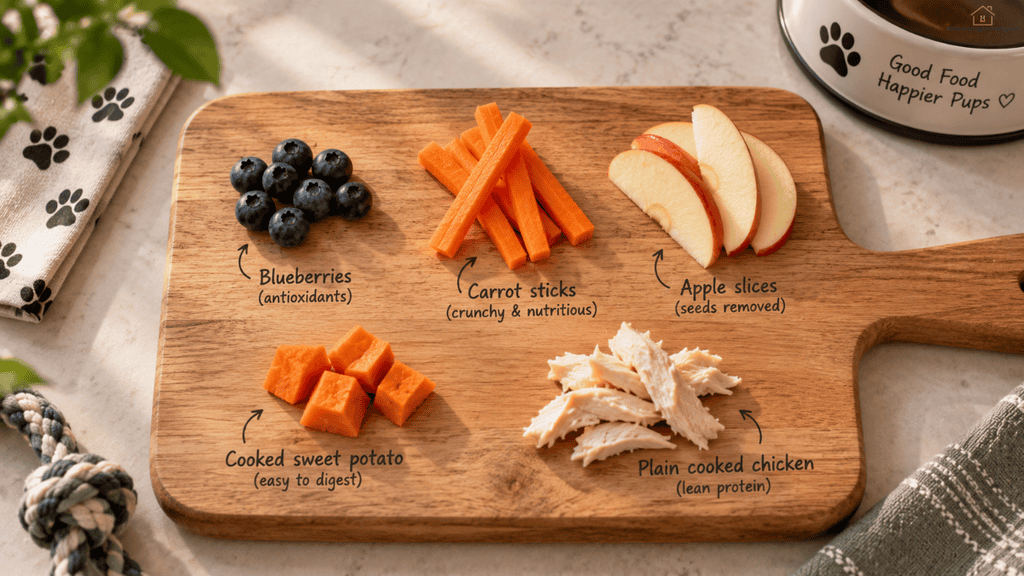
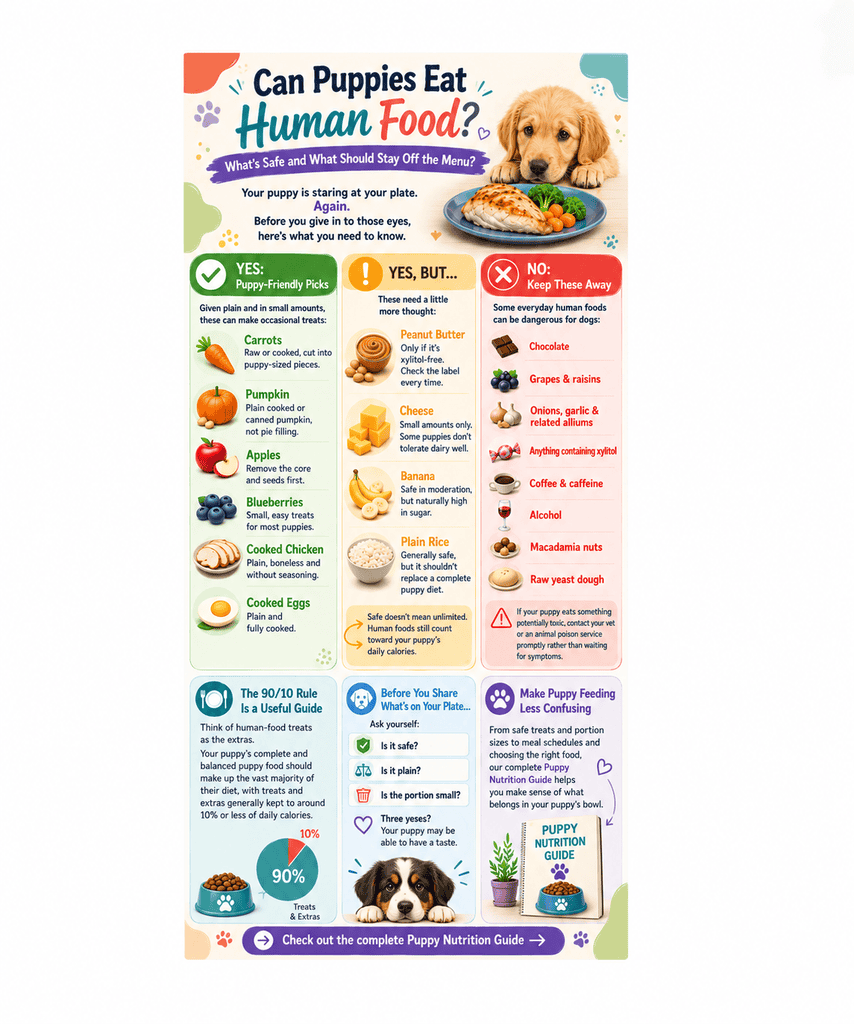
Not everything is off-limits. Plain cooked chicken, carrots, blueberries, cucumber, watermelon (no seeds), cooked sweet potato, plain pumpkin, and apple slices without seeds are all safe for puppies in small amounts as occasional additions to their regular food.
This is the part of the foods puppies can’t eat conversation that often gets left out entirely. Knowing what’s safe is just as useful as knowing what’s dangerous. If you want to share something wholesome with your puppy or use real food as a training reward, plenty of options exist. For a full guide to safe training treats and how to use them without throwing off your puppy’s daily calorie balance, see our best puppy treats for training guide.
| Safe Food | Safe Amount | Notes |
| Plain cooked chicken (no bones) | Small pieces | No seasoning, no onion, no garlic in the preparation |
| Carrots (raw or cooked) | A few small pieces | Low calorie, good for teething puppies |
| Blueberries | A small handful | Rich in antioxidants, good training treats |
| Cucumber | Thin slices | Very low calorie, hydrating |
| Watermelon (seedless) | Small cubes, no rind | Remove seeds and rind before offering |
| Cooked sweet potato | Small cubes | Plain only, no sugar or added seasoning |
| Plain canned pumpkin | 1 to 2 tablespoons | Not pumpkin pie filling. Check the label. |
| Apple slices | Small slices, no seeds or core | Seeds contain cyanide compounds. Always remove. |
| Plain cooked rice | Small amount mixed in | Useful for settling an upset stomach |
| Green beans (plain, cooked) | Small portion | Low calorie, safe as a food topper |
For guidance on incorporating safe whole foods into a puppy’s diet, see our homemade puppy food guide.
Puppy-Proofing Your Kitchen—A Prevention Checklist
Overview:
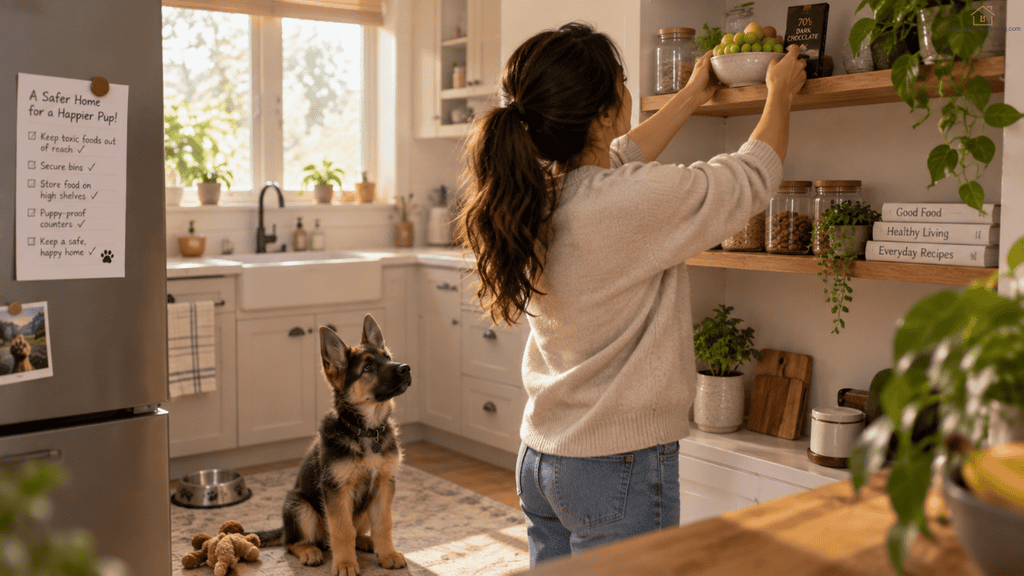
Move all toxic foods to high shelves or locked cabinets. Check every jar of peanut butter for xylitol before giving any to your puppy. Secure bin lids. Brief all family members on the toxic foods list. Post the ASPCA Poison Control number on your fridge: 888-426-4435.
Going through this checklist is the most practical use of the toxic food for dogs list you just read. Prevention is the entire point.
- Check every jar of peanut butter and nut butter: Read the ingredients on the back. If xylitol, birch sugar, or birch extract appears anywhere, remove it from the kitchen entirely.
- Secure your bin: Bins contain cooked bones, onion skins, coffee grounds, fruit skins, and packaging with food residue. A bin with a lockable or weighted lid is genuinely necessary, not a nice-to-have.
- Move grapes, raisins, and allium-containing foods: These live on high shelves or inside closed cupboards from today. Not on a fruit bowl or low counter where a puppy can reach them during an unsupervised moment.
- Brief everyone in the household: Children are the most frequent unintentional cause of puppy food accidents. A child offering a raisin or a square of chocolate to a puppy isn’t acting maliciously. They need to know specifically which foods are dangerous for the puppy even when they’re perfectly fine for humans.
- Save the ASPCA Poison Control number now: 888-426-4435. Put it in your phone under a name you’ll find in a moment of panic. Post it on the fridge. The time to look for it is not when you need it.
FAQs
1. What is the most toxic food for puppies?
Xylitol. Even tiny amounts relative to body weight can cause hypoglycaemia within 30 minutes and liver failure within 12 to 72 hours. Dogs that ingest doses of greater than 0.1 g/kg of xylitol are at risk for developing hypoglycaemia, while dogs that ingest greater than 0.5 g/kg may develop acute liver failure. For a 2 kg puppy, that threshold is reached quickly. It’s particularly dangerous because it appears in products people routinely give to puppies, especially some peanut butters.
2. Can a small amount of chocolate hurt my puppy?
It depends on the chocolate type and your puppy’s size. Dark chocolate and baking chocolate are far more dangerous than milk chocolate, and white chocolate poses essentially no theobromine risk, though its fat content can still cause problems. A small puppy eating even a small amount of dark chocolate warrants a vet call. Use the ASPCA’s chocolate toxicity resources at aspca.org or call your vet with the type, amount, and your puppy’s weight for a specific assessment.
3. Can puppies eat peanut butter?
Yes, but only if it does not contain xylitol. Always check the ingredient label before giving any peanut butter to your puppy, including brands marketed as natural. Most standard peanut butters are safe. Some specifically sold as sugar-free use xylitol as a sweetener. If the label lists xylitol, birch sugar, or birch extract, do not use it.
4. What should I do if my puppy eats a grape?
Call your vet immediately. No safe amount has been established, and some puppies develop kidney failure from a single grape. Do not wait for symptoms. Early intervention dramatically improves outcomes, and by the time symptoms appear, kidney damage may already be underway.
5. Are onions dangerous for puppies in small amounts?
Yes, allium toxicity is cumulative. Small amounts fed over time can cause the same red blood cell damage as a larger single dose. All forms are dangerous: raw, cooked, powdered, and dehydrated. Onion powder is more concentrated than raw onion by weight, which makes seasoned baby food or gravy a genuine concern alongside fresh onion dropped on the floor.
The Bottom Line
Knowing which foods are toxic to puppies is genuinely useful, but only if the knowledge is applied. Puppy-proof the kitchen before the puppy arrives. Check the peanut butter. Secure the bin. Brief the family. Save the ASPCA hotline number somewhere you can find it without thinking.
The list of foods toxic to puppies is long, but the actions it requires are straightforward. Most preventable outcomes happen when owners recognise the risk, decide to monitor rather than call, and then call too late. If your puppy eats anything on this list, call your vet or ASPCA Poison Control first and ask questions second.