Puppy Not Eating? 8 Reasons Why and Exactly What to Do
Overview:
Most puppies who skip a meal are reacting to stress, a new environment, teething, or overfeeding, not illness. If your puppy hasn’t eaten for 24 hours, or 12 hours if they’re a toy breed, and shows lethargy, vomiting, or diarrhoea, contact your vet immediately.
Your puppy won’t eat and you’re Googling at 11 pm trying to figure out if this is serious. Let’s get straight to what you need to know. A puppy not eating one meal is almost never an emergency. In most cases, it comes down to stress from a new home, a food change, teething pain, or a morning bully stick that filled them up before dinner. However, some situations need a vet today, not tomorrow. This article, part of our Complete Guide to Puppy Nutrition, helps you tell the difference, gives you fixes to try right now, and tells you exactly when to pick up the phone.
First: Is This an Emergency? (The Decision Chart)
Overview:
A puppy who skips one meal but stays playful and drinks water is almost certainly fine. A puppy who hasn’t eaten for 24 hours, is lethargic, vomiting, or unvaccinated needs a vet. Toy breeds under 3 kg should see a vet after just 12 hours of food refusal.
Before you panic over puppy not eating, use this table to triage your situation.
| Situation | Urgency Level | Action |
| Skipped one meal, otherwise playful and drinking | Normal | Wait for next meal, offer as usual |
| Skipped 2 meals, still playful | Low concern | Try the fixes in Section 3, monitor |
| Not eating plus lethargy or unusual quietness | Moderate concern | Call vet for advice today |
| Not eating plus vomiting or diarrhoea | High concern | Vet visit within 24 hours |
| Not eating plus bloody diarrhoea or severe vomiting | Emergency | Vet immediately. Possible parvovirus. |
| Not eating 12 or more hours, toy breed under 3 kg | Emergency | Vet today. Hypoglycaemia risk. |
| Not eating 24 or more hours, any breed | High concern | Vet visit. Prolonged fasting can indicate illness. |
| Not eating AND not drinking | Emergency | Vet immediately. Dehydration in puppies progresses fast. |
Print this table. Stick it on the fridge. When puppy skipping meals has you worried at midnight, this is your first reference.
The 8 Most Common Reasons Your Puppy Isn’t Eating
Overview:
In order of frequency: stress or environment change (most common), food transition or new food, teething, overfeeding or too many treats, vaccination side effects, eating too fast and then refusing, illness, and schedule disruption.
If your puppy is refusing food, one of these reasons could be the culprit:
Reason 1: Stress or Environment Change (The Most Common Reason)
A puppy who has just left their mother, their littermates, and the only home they’ve known is dealing with one of the biggest upheavals of their young life. Appetite is one of the first things to go when a puppy is overwhelmed.
Signs: Otherwise healthy but disinterested in food. May also be clingy, restless, or sleeping more than usual. No vomiting, no diarrhoea, and water intake is normal.
Fix: Keep meals calm and quiet. Feed in a low-traffic area, away from noise and unfamiliar faces. Maintain a consistent schedule. Give it 2 to 3 days before worrying.
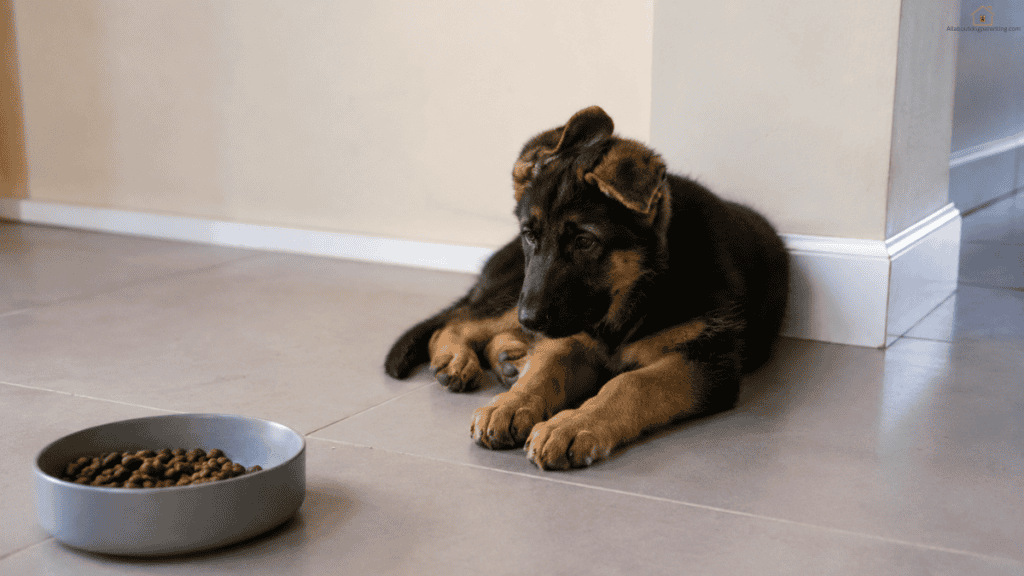
When I brought my German Shepherd home at 8 weeks, he barely touched his food for the first 36 hours. I sat on the floor next to his bowl, convinced something was wrong. By day 3, he was inhaling every meal. Stress from a new home is the number one reason puppies won’t eat in their first week, and it resolves on its own more often than not.
Toy breed note: If your Chihuahua, Yorkie, or Maltese puppy hasn’t eaten in 12 hours and seems lethargic, don’t wait 2 to 3 days. Get to a vet. Toy breeds under 3 kg face genuine hypoglycaemia risk from extended fasting.
Reason 2: Food Transition or New Food
An abrupt food change upsets the stomach and changes the taste and texture a puppy expects. The result is often flat-out refusal.
Signs: Puppy won’t eat shortly after you switched foods. May also have loose stools.
Fix: If you haven’t started a transition yet, go back to the old food and follow a proper 10-day mixing schedule. Our 10-day food transition guide walks through the daily ratios and what to watch for. If you’ve already switched abruptly, return to the previous food immediately and begin the gradual process.
Reason 3: Teething (3 to 6 Months)
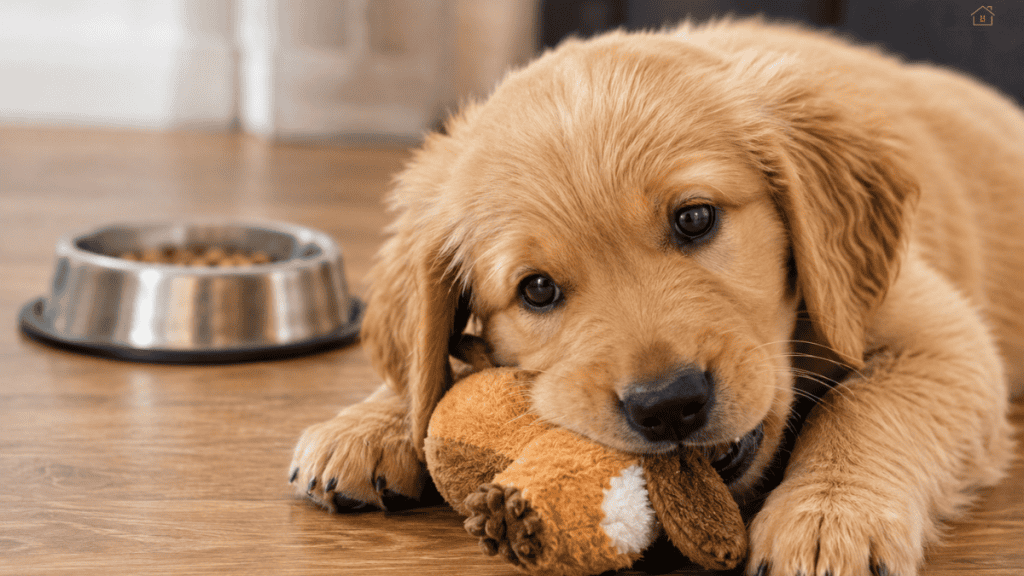
Between 3 and 6 months, baby teeth loosen and adult teeth push through inflamed gum tissue. Crunching hard kibble against sore gums is genuinely uncomfortable. Many puppies don’t stop eating entirely during teething, but they slow down noticeably or show less enthusiasm than usual.
Signs: Puppy won’t eat kibble but accepts softer food. May be mouthing or chewing on objects more than usual. Age falls between 3 and 6 months.
Fix: Soak kibble in warm water for 5 minutes before serving. The softened texture is much easier on sore gums. Offer wet food temporarily if the puppy still refuses. Frozen chew toys before meals can numb the gums enough to make eating more comfortable. Appetite returns to normal once adult teeth are settled, usually by 6 to 7 months.
Reason 4: Overfeeding or Too Many Treats
A puppy who had a bully stick in the morning (anywhere from 200 to 700 calories depending on size) followed by a training session with 50 treats simply isn’t hungry at dinner. This is the reason that trips up most owners because it doesn’t feel like overfeeding.
Signs: Puppy skipping meals selectively, particularly the meal after a treat-heavy period. Otherwise healthy and energetic.
Fix: Track treat calories. A single bully stick can contain more calories than a full meal. Apply the 10% rule: treats should account for no more than 10% of daily calorie intake. Our best puppy treats for training guide covers low-calorie options and the daily calorie budget framework.
Reason 5: Vaccination Side Effects
Mild appetite loss for 24 to 48 hours after a vaccination appointment is a documented and expected response. The immune system is active, and the puppy may feel off.
Signs: Puppy won’t eat within 24 to 48 hours of a vaccination. May also be slightly lethargic or have a mild fever.
Fix: Warm the food slightly and offer smaller amounts more frequently. Give it time. Contact your vet if loss of appetite or lethargy persists beyond 48 hours after vaccination.
Reason 6: Eating Too Fast, Then Refusing
Some puppies gulp food so fast they feel nauseated or bloated, then refuse the next meal. The behaviour looks like a puppy lost appetite when the actual problem is that the previous meal is still sitting uncomfortably.
Signs: Puppy inhales food quickly, then shows little interest at the next scheduled meal. May occasionally regurgitate shortly after eating.
Fix: Use a slow feeder bowl or puzzle feeder. Scatter kibble on a clean flat surface so the puppy has to pick up individual pieces. These approaches extend mealtime from 30 seconds to several minutes, reducing the risk of gulping and post-meal nausea.
Reason 7: Illness
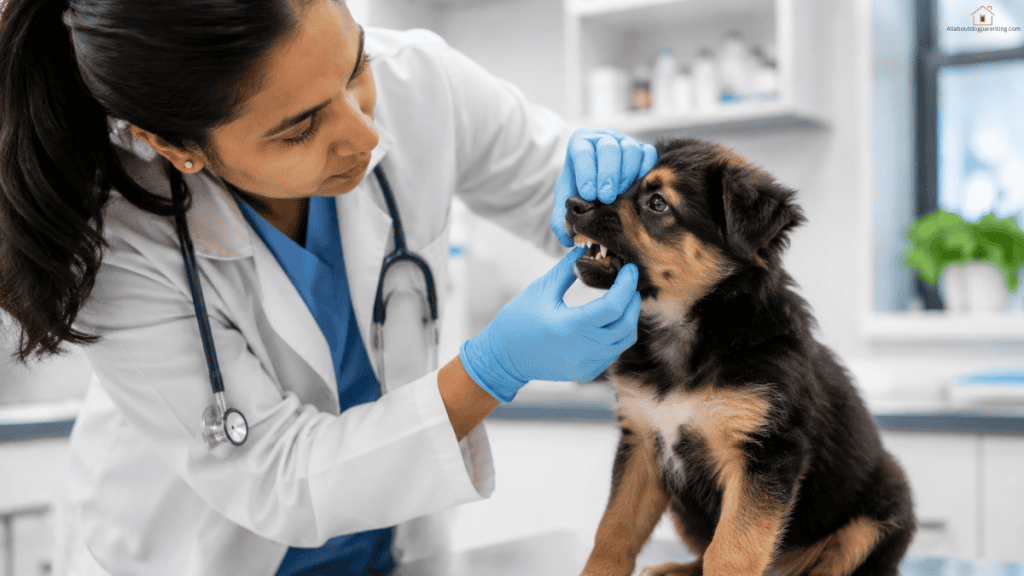
When a puppy not eating is accompanied by any other symptom, illness moves to the top of the list. The most common culprits in puppies are intestinal parasites like Giardia and roundworms, parvovirus in unvaccinated puppies, respiratory infections, and urinary tract infections.
The parvovirus risk is real and needs to be said plainly. According to PetMD, early signs of parvo in puppies include lethargy, decreased appetite, and fever, with vomiting and diarrhoea following quickly and leading to dehydration, shock, and death. Mortality rates for untreated parvovirus reach 91% in puppies, but unvaccinated puppies who receive immediate and aggressive care have survival odds of 85 to 90%. Time is everything. An unvaccinated puppy refusing food who seems even slightly lethargic needs a vet today, not tomorrow.
Fix: Do not try to food-fix a medical problem. If appetite loss comes with any other symptom, call your vet. For unvaccinated puppies, the threshold for a vet call is lower than for vaccinated ones.
Reason 8: Schedule Disruption
Puppies thrive on routine. Feeding at different times, by different family members, in different locations, or with varying amounts can suppress appetite in ways that look mysterious but are straightforwardly fixable.
Signs: Puppy won’t eat in certain situations but eats fine in others. Appetite varies day to day without an obvious cause.
Fix: Consistent meal times, same location, same person feeding when possible. Our puppy feeding schedule guide covers exactly how to structure the day so meals become predictable and expected.
6 Things to Try Tonight If Your Puppy Won’t Eat
Overview:
Warm the food slightly to release aroma, add a splash of low-sodium broth, soak kibble in warm water to soften, try hand-feeding a few pieces, move the bowl to a quieter location, or add a small amount of wet food on top of kibble.
When you’re frantically trying to understand, “Why is my puppy not eating?”, you need an actionable plan more than reasons and explanations. Here it is, in order of how easy each fix is to implement right now.
| Fix | How to Do It | Why It Works | Best For |
| Warm the food | Microwave for 10 seconds or pour warm water over kibble | Releases aroma. Dogs respond to smell far more than taste. | Picky eaters, food stored in the fridge |
| Add broth | A splash of low-sodium chicken or beef broth | Adds flavour and moisture without adding significant calories | Food refusal across all ages |
| Soak kibble | Cover with warm water, let sit 5 minutes before serving | Softens texture for sore gums | Teething puppies between 3 and 6 months |
| Hand-feed | Offer individual pieces of kibble from your open palm | Adds bonding, reduces mealtime anxiety | New puppies in a new home |
| Move the bowl | Feed in a quiet room, away from noise and other pets | Removes environmental stress from the eating context | Stressed or anxious puppies |
| Add wet food topper | 1 to 2 tablespoons of wet puppy food on top of kibble | Enhances taste and texture meaningfully | Persistent picky eaters |
Try one fix at a time rather than all six at once. If you change everything simultaneously, you lose the ability to identify what actually worked. Start with warming the food. That alone resolves a surprising number of puppy lost appetite situations.
For the comparison between wet and dry food formats and when wet food earns its place as more than a temporary fix, our wet vs dry puppy food guide covers the full picture.
The Picky Eater Trap (And How to Avoid Creating One)
Overview:
Puppies who learn that refusing food leads to better options become progressively pickier. The fix: offer food for 15 minutes, then pick up the bowl. No alternatives until the next scheduled meal. Healthy puppies will not starve themselves. They eat when they’re hungry.
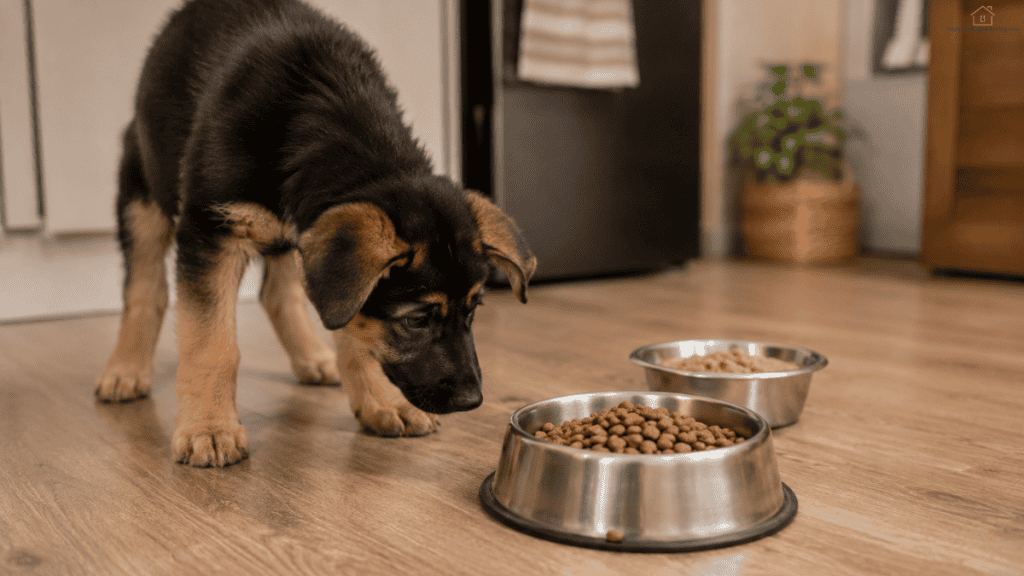
This is the section most puppy owners need and least expect when they search for, “Why is my puppy not eating?” Here is what creates a picky eater. The puppy skips a meal. The owner, worried, offers treats, table scraps, or a tastier alternative. The puppy eats the alternative. The puppy now knows that refusing kibble produces something better. By the following week, they’re reliably refusing every meal until the upgrade arrives.
The 15-minute rule
When dealing with your puppy not eating, sometimes you need to dole out some tough love. Put the bowl down. Leave it for 15 minutes. If the puppy hasn’t eaten, pick it up with no fuss and no alternatives. Offer the same food at the next scheduled meal. Most healthy puppies adjust within 2 to 3 days of consistent application.
Breaking an existing pattern
If your puppy is already trained into picky eating, the same approach applies but takes slightly longer, usually 3 to 5 days before the puppy accepts meals reliably. The first day is the hardest. Stay consistent.
The toy breed exception
Don’t apply hardball tactics to a puppy under 3 kg. The hypoglycaemia risk in toy breeds is real. A Yorkie or Chihuahua puppy who hasn’t eaten in 12 hours needs food or a vet visit, not a test of willpower. For small breeds, the 15-minute rule applies, but if they haven’t eaten anything within a 6-hour window, offer something palatable and call your vet if refusal continues.
When to Call the Vet (Specific Timelines)
Overview:
Call your vet if your puppy hasn’t eaten for 24 hours, or 12 hours for toy breeds. Call if food refusal comes with vomiting, diarrhoea, or lethargy. Call if your puppy is unvaccinated and refusing food, or if your puppy refuses both food and water.
Vague advice like “if it persists” isn’t useful when you’re staring at an untouched bowl at midnight. Here are the specific thresholds.
| Situation | When to Call |
| Any breed, no other symptoms | After 24 hours of food refusal |
| Toy breed under 3 kg, no other symptoms | After 12 hours of food refusal |
| Unvaccinated puppy, food refusal only | Call today. Don’t wait for additional symptoms. |
| Food refusal plus lethargy | Call for advice the same day |
| Food refusal plus vomiting or diarrhoea | Vet visit within 24 hours |
| Food refusal plus bloody diarrhoea | Go now. This is an emergency. |
| Refusing food AND water | Go now. Dehydration in puppies escalates fast. |
| Food refusal after vaccination | Wait 48 hours, then call if still not eating |
For puppies showing digestive symptoms alongside food refusal, our best puppy food for sensitive stomachs guide covers food-related causes and dietary changes that help. For puppies whose food refusal is consistent across multiple diet types and may indicate an underlying allergy, our best puppy food for allergies guide covers the diagnostic process.
FAQs
1. How long can a puppy go without eating?
Healthy medium and large breed puppies can safely skip 1 to 2 meals, up to 24 hours, without medical concern, provided they are still drinking water and acting normally. Toy breed puppies under 3 kg should not go more than 12 hours without food due to hypoglycaemia risk. If any puppy refuses food for more than 24 hours, contact your vet.
2. My puppy won’t eat kibble but will eat treats. What do I do?
This is classic picky eating. Your puppy has learned that refusing kibble leads to tastier alternatives. Stop offering treats until regular meals are eaten consistently. Put the bowl down for 15 minutes, then pick it up. No alternatives between meals. Most puppies return to normal eating within 2 to 3 days. Toy breed note: if your puppy is under 3 kg, consult your vet before restricting food, as hypoglycaemia risk makes strict food restriction dangerous for small breeds.
3. Is it normal for a new puppy to not eat the first day home?
Puppy not eating the first day home is very common. The stress of leaving their mother, siblings, and familiar environment suppresses appetite in most puppies. Most resume normal eating within 24 to 72 hours. Offer food in a quiet, calm location. Don’t hover or attempt force-feeding. If your puppy hasn’t eaten anything by 48 hours, contact your vet, especially if they’re also not drinking.
4. Should I change my puppy’s food if they won’t eat it?
Not immediately. Give the food at least 5 to 7 days before concluding they dislike it. Try warming it, adding broth, or softening it with warm water first. If they still refuse after a week of consistent offering with these adjustments, consider switching. Use the gradual 10-day transition plan to avoid digestive upset.
5. Can teething cause a puppy to stop eating?
Yes, teething between 3 and 6 months causes gum inflammation that makes crunching hard kibble uncomfortable. Soak kibble in warm water for 5 minutes to soften it, offer wet food temporarily, or mix soft food with kibble. Provide appropriate chew toys for gum relief between meals. Appetite typically returns to normal once adult teeth are fully settled, around 6 to 7 months.
The Bottom Line
A puppy not eating is one of the most common things new owners encounter, and in most cases the cause is benign: a new home, sore gums, a treat-heavy morning, or a skipped routine. The decision chart at the top of this article gives you the triage in under a minute. The 8 reasons cover the full range of causes in order of how often they actually occur. The 6 fixes give you something to try tonight.
The situation that requires immediate action is an unvaccinated puppy with any symptoms beyond food refusal. A puppy that seemed fine at breakfast can be limp and refuse water by dinner, and once vomiting and bloody diarrhoea start, dehydration can turn deadly within a couple of days. For unvaccinated puppies, trust the emergency column in the decision chart. Don’t wait to see if it gets worse. For everything else, a calm approach, a consistent routine, and the fixes in this article will get most puppies eating again within 24 to 48 hours.