How Much Water Should a Puppy Drink Per Day?
Overview:
Puppies need roughly 0.5 to 1 ounce of water per pound of body weight per day (30 to 60 ml per kg). A 10-pound puppy should drink 5 to 10 ounces daily. Always provide access to fresh water during waking hours. Adjust for activity level, weather, and diet type.
The question of how much water should a puppy drink is not one that gets asked as often as how much to feed a puppy or how to train them, but it is one that deserves attention nonetheless because hydration is an important part of your pet’s well-being. And if your puppy is drinking too much or too little, then it becomes a legitimate concern.
This article, part of our Complete Guide to Puppy Nutrition, gives you concise answers to this elusive question, complete with a chart, the factors that shift those numbers, the house-training water schedule that nobody explains clearly, two at-home tests for dehydration, and the upper threshold where water consumption warrants a vet call.
Puppy Water Intake Chart by Weight
Overview:
Use this chart as your starting guide. Puppies on dry food typically drink toward the higher end. Puppies on wet food or homemade diets need less from their bowl because their food already contains significant moisture.
So, how much water should a puppy drink? The answer depends on their weight, size, and the kind of food they are on, but as long as they remain within the given limits, you don’t have to stress about puppy hydration:
| Puppy Weight | Daily Water (Low End) | Daily Water (High End) | Approximate Cups |
| 2 kg (4 lbs) | 60 ml (2 oz) | 120 ml (4 oz) | ~1/2 cup |
| 5 kg (11 lbs) | 150 ml (5 oz) | 300 ml (10 oz) | ~1 to 1.25 cups |
| 10 kg (22 lbs) | 300 ml (10 oz) | 600 ml (20 oz) | ~1.25 to 2.5 cups |
| 15 kg (33 lbs) | 450 ml (15 oz) | 900 ml (30 oz) | ~2 to 4 cups |
| 20 kg (44 lbs) | 600 ml (20 oz) | 1,200 ml (40 oz) | ~2.5 to 5 cups |
| 30 kg (66 lbs) | 900 ml (30 oz) | 1,800 ml (60 oz) | ~4 to 7.5 cups |
The low end applies to a less active puppy in cool weather eating wet food. The high end applies to an active puppy in hot weather eating dry kibble. Most puppies fall somewhere between the two depending on the day.
You cannot expect puppy drinking water in the exact same quantities and proportions every day. They will drink more after a play session in the garden and noticeably less on a quiet indoor afternoon. Variation is normal. What matters is consistent access to fresh water and knowing what an unusual shift in intake looks like for your specific puppy.
Factors That Change How Much Your Puppy Drinks
Overview:
Activity level, weather, diet type, and age all affect water needs. A puppy who just ran in the garden on a hot day needs significantly more water than a napping puppy in an air-conditioned room. Kibble-fed puppies drink more than those on wet food because dry food contains only around 10% moisture.
How much water for puppy is enough? Is there such a thing as too much water? What happens if they drink too little? Before you spiral over these questions, make sure you understand the factors that influence water consumption:
| Factor | Effect on Water Intake | What to Do |
| Hot weather or summer | Increases 30 to 50% | Extra water bowl outdoors, bring water on walks |
| High activity or exercise | Increases 20 to 40% | Offer water every 15 to 20 minutes during play or walks |
| Dry kibble diet | Puppy drinks more. Food is approximately 10% moisture. | Normal. Ensure bowl is always full. |
| Wet food or homemade diet | Puppy drinks less. Food is approximately 75% moisture. | Normal. Puppy gets significant hydration from food. |
| Teething (3 to 6 months) | May drink more for gum relief | Normal. Some puppies are drawn to cold water or ice cubes. |
| Post-vaccination | May drink less for 24 to 48 hours | Normal. Monitor and offer water regularly. |
The wet versus dry food difference is the one that catches most owners off guard. A puppy on wet food who seems to drink very little from their bowl is not under-hydrated. They are getting a large proportion of their daily puppy water intake directly through their food. If you switch from wet to dry food and your puppy suddenly drinks significantly more, that is expected and normal. Our wet vs dry puppy food guide covers the full moisture content comparison.
The House-Training Water Schedule (When to Limit Access)
Overview:
During house-training, remove your puppy’s water bowl 2 to 3 hours before bedtime to reduce overnight accidents. Never restrict water during the day. Daytime dehydration is more dangerous than nighttime accidents. Always provide fresh water after meals, play, and exercise.
This is the contradiction that confuses most new puppy owners. Every source says “always provide access to fresh water,” but potty training advice says to remove the water bowl before bed. Both statements are correct, and they are not in conflict. The answer to how much water for puppy is enough also depends on what time of day it is.
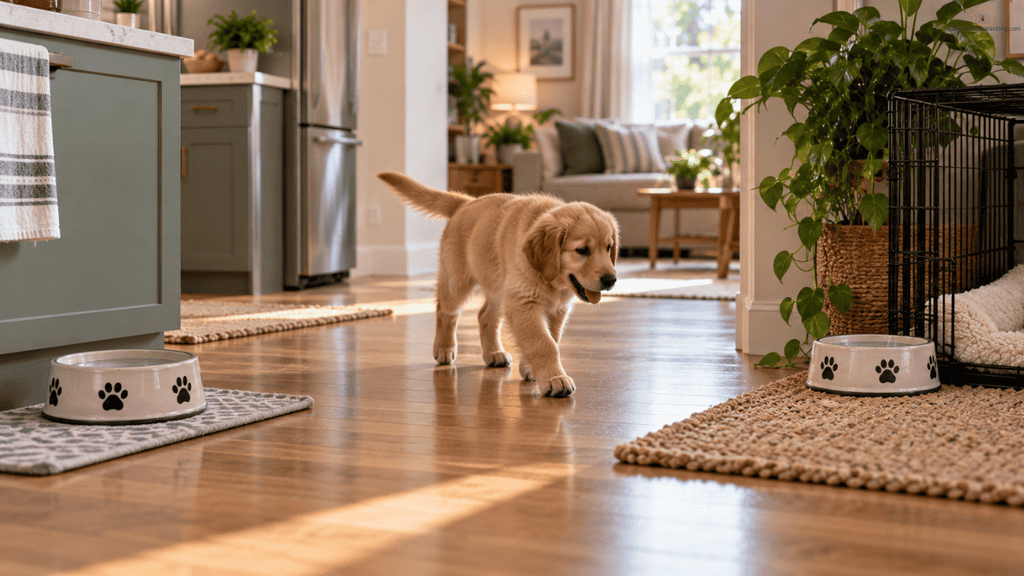
During the day: Free access to water at all times. Never restrict puppy drinking water in the daytime hours, regardless of how many accidents are happening. Daytime hydration is non-negotiable.
2 to 3 hours before bedtime: Pick up the water bowl. This reduces the volume of urine produced overnight without risking dehydration, because the puppy has had full access to water all day.
At the last potty break before bed: Offer a small final drink. This gives the puppy a little hydration for the night without flooding the kidneys right before sleep.
Overnight: No water in the crate during active house-training. This is a temporary measure while the puppy is learning to hold it overnight, not a permanent restriction.
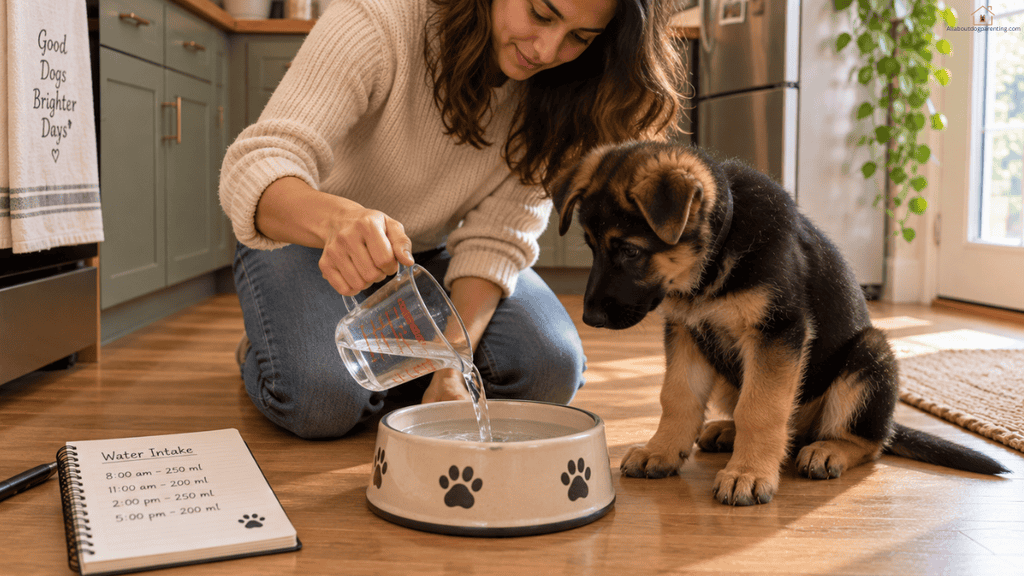
With my GSD, I picked up the water bowl at 8 pm for a 10:30 pm bedtime. He got one last drink at his 10 pm potty break. Within two weeks, overnight accidents stopped completely. Once he was reliably house-trained at around 5 months, I made water available 24/7 again. The evening restriction was a short-term house-training tool, not a long-term fixture.
For the full picture of how feeding timing, water timing, and potty break timing connect in a daily routine, our puppy feeding schedule guide maps all three together. For the potty side of this equation, our guide on how long puppies can hold their pee explains why the water-before-bed restriction works biologically.
How to Check If Your Puppy Is Dehydrated (At-Home Tests)
Overview:
Two quick tests: the skin elasticity test (pinch the scruff and skin should snap back immediately) and the gum test (gums should be wet and slippery). Slow skin return or dry, sticky gums indicate dehydration. Offer water immediately and call your vet if the puppy does not improve within an hour.
If you’re wondering how much water should a puppy drink because your pet doesn’t seem to be getting enough, these 2 simple at-home tests can confirm whether your concern in warranted:
Test 1: The Skin Elasticity Test
Gently pinch a small amount of skin at the back of your puppy’s neck between your thumb and forefinger. Pull it up slightly, then release. In a well-hydrated puppy, the skin springs back to its normal position immediately. If the skin stays tented or returns slowly, taking more than one second to flatten, the puppy may be dehydrated.
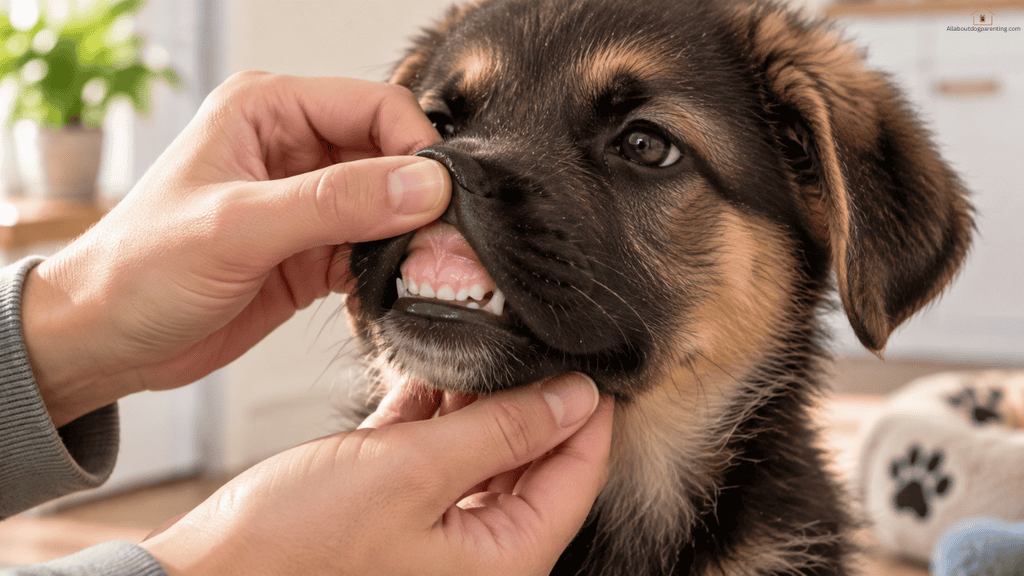
Test 2: The Gum Moisture Test
Lift your puppy’s lip and press your fingertip against their gum. The surface should feel wet and slippery. Healthy gums are also pink and moist. Gums that feel tacky, sticky, or dry signal dehydration. While you are there, press your fingertip firmly on the gum to blanch it white, then release. Colour should return within one to two seconds. Longer than two seconds is a warning sign.
| Sign | What You See | Urgency |
| Skin slow to snap back | Scruff stays tented for 1 or more seconds | Moderate. Offer water and monitor closely. |
| Dry or sticky gums | Gums feel tacky instead of wet and slippery | Moderate to high. Offer water and call the vet if there is no improvement within an hour. |
| Sunken eyes | Eyes appear recessed or dull | High. Vet visit. |
| Lethargy | Puppy unusually quiet or reluctant to move | High. Vet visit today. |
| Panting without exercise | Heavy breathing at rest in a calm, cool setting | High. Move to shade, offer water, vet if persistent. |
If your puppy is showing any of the high-urgency signs, do not wait to see if water access fixes it. Call your vet.
When Drinking Too Much Is a Warning Sign
Overview:
If your puppy suddenly starts drinking significantly more water than usual, over 100 ml per kg per day or more than double their normal intake, it could signal diabetes, kidney problems, Cushing’s disease, or urinary infection. A sudden, sustained increase in thirst warrants a vet visit.
Healthy puppies self-regulate their water intake reasonably well. They drink more after exercise and on hot days, and less when resting in cool conditions. That kind of variation is normal.
What is worth noting is a sudden, sustained change from your puppy’s established pattern. If a puppy who usually empties their bowl once a day starts draining it three times a day for several days running with no obvious environmental explanation, that is polydipsia (excessive thirst), and it is a symptom, not a behaviour.
Conditions that cause polydipsia in puppies include diabetes mellitus, kidney disease, Cushing’s disease (hyperadrenocorticism), urinary tract infections, and certain medications including steroids. Your vet will typically start with a urine sample and basic bloodwork to identify the cause.
The threshold to flag: how much water for puppy intake becomes concerning when it consistently exceeds approximately 100 ml per kg of body weight per day, or more than doubles what your puppy normally drinks. A 10 kg puppy drinking over a litre of water daily for several consecutive days, without a clear explanation like a heat wave or increased exercise, is worth a phone call to your vet.
FAQs
1. How much water should a puppy drink per day?
Roughly 0.5 to 1 ounce per pound of body weight, or 30 to 60 ml per kg. A 10-pound (4.5 kg) puppy needs approximately 5 to 10 ounces (150 to 300 ml) per day. Puppies on wet food drink less from their bowl because their food provides significant hydration. Use the chart above for specific amounts by weight.
2. Should puppies have access to water all day?
Yes, during all waking hours. The only exception is the 2 to 3 hours before bedtime during house-training, which reduces overnight urine production without risking dehydration. Always remove water at the same time each evening and restore access immediately in the morning.
3. Can a puppy drink too much water?
Normally, puppies self-regulate, but a sudden, sustained increase in thirst, particularly beyond 100 ml per kg per day, can signal medical issues including diabetes, kidney disease, or Cushing’s syndrome. If your puppy’s water intake increases dramatically without explanation, contact your vet.
4. Do puppies on wet food need less water?
Wet food contains approximately 75 to 78% moisture compared to dry kibble’s approximately 10%. A puppy eating wet food gets significant daily hydration from their meals and will typically drink less from their bowl. This is normal and not a sign of under-drinking. Always provide fresh water regardless of diet type.
5. How do I know if my puppy is dehydrated?
Do the skin elasticity test: gently pinch and release the scruff. Skin should snap back immediately. Then check the gums. They should be wet and slippery, not tacky or dry. Slow skin return or sticky gums indicate dehydration. Offer water immediately and call your vet if the puppy does not improve within an hour or shows lethargy, sunken eyes, or excessive panting at rest.
The Bottom Line
How much water should a puppy drink comes down to their weight, their diet, and what they have been doing. The chart gives you the numbers by weight. The factors table tells you when those numbers shift up or down. The dehydration tests give you a way to check right now if you are concerned. And the evening water restriction explained in the house-training section resolves the contradiction most puppy owners find confusing.
Provide fresh water freely during the day. Manage it in the 2 to 3 hours before bed while house-training. Know your puppy’s normal intake so a sudden change stands out. For how calorie and portion management fits alongside hydration in the bigger picture of puppy nutrition, our how much to feed a puppy guide covers the two together.