When to Switch Puppy to Adult Food (and How to Do It Safely)
🐾 Overview
Switch to adult food when your puppy reaches 80% of their expected adult size, typically 8–10 months for small breeds, 10–12 months for medium breeds, and 12–14 months for large breeds, and 18-24 months for giant breeds. Transition gradually over 10 days to avoid digestive upset.
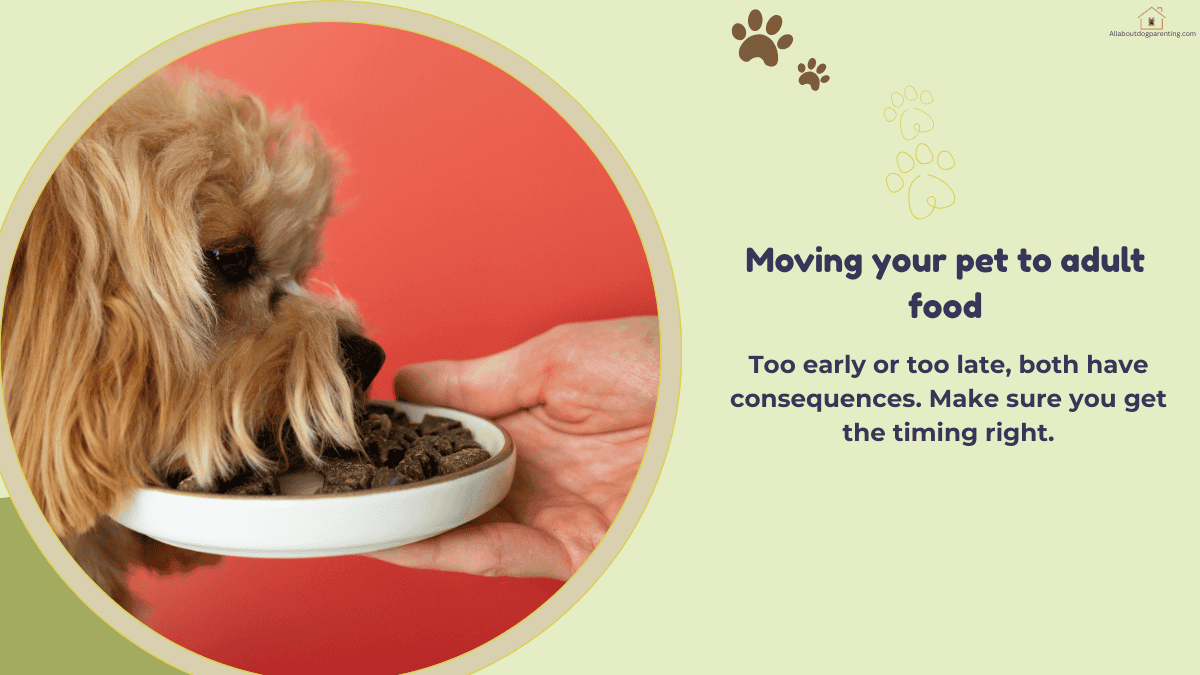
Knowing when to switch puppy to adult food largely rests on one key factor: how big your dog is going to be. A Chihuahua and a Great Dane are both puppies at ten months, but one of them is essentially done growing, and the other has more than a year of skeletal development ahead of them. Getting the timing wrong in either direction has real consequences. Too early, and you pull the nutritional rug out from under a puppy whose bones are still forming. Too late, and calorie-dense puppy food keeps adding weight to a dog whose growth has already stopped.
In this article, which is part of our Complete Guide to Puppy Nutrition, we focus specifically on getting the timing of the transition right and how to do it without digestive drama.
The Simple Answer: It Depends on Breed Size, Not Age
A Chihuahua can switch to adult food at 9 months. A German Shepherd should wait until 14–15 months. A Great Dane may need puppy food until 24 months. The trigger is skeletal maturity, when growth plates close, which happens at very different ages across breed sizes.
Figuring out when to stop puppy food is tied to a developmental milestone that arrives on a biological schedule governed by your puppy’s adult size. Here’s how that maps across breed categories:
| Breed Size | Example Breeds | Switch Window | Key Reason |
|---|---|---|---|
| Toy (under 5 kg / 10 lbs) | Chihuahua, Yorkie, Maltese | 8–10 months | Fast growth cycle, reaches adult size early |
| Small (5–10 kg / 10–22 lbs) | Pug, Shih Tzu, Dachshund | 10–12 months | Slightly longer growth but compact frame |
| Medium (10–25 kg / 22–55 lbs) | Beagle, Cocker Spaniel, Bulldog | 12–14 months | Standard growth curve, one-year mark for most |
| Large (25–40 kg / 55–88 lbs) | German Shepherd, Labrador, Golden Retriever | 14–18 months | Extended bone development, calcium-sensitive growth |
| Giant (40+ kg / 88+ lbs) | Great Dane, Mastiff, St. Bernard | 18–24 months | Very slow skeletal maturity, growth plates close late |
Why Breed Size Drives the Timing — Decoding the Biology
The timing of when to switch puppy to adult food matters because it ties directly to your puppy’s long-term health and well-being. Puppy food has a higher content of protein, fat, calcium, and phosphorus than adult food and is specifically calibrated to fuel rapid growth. The reason large and giant breeds need to stay on puppy food longer comes down to growth plates: areas of soft cartilage at the ends of long bones where new bone tissue forms. These plates gradually harden as the puppy approaches skeletal maturity, and in large breeds, that process takes significantly longer than in small ones.
Until six months of age, the small intestinal tract passively absorbs 70% of total dietary calcium, meaning a large breed puppy can’t regulate excess calcium out of their system during this window. This is why large-breed puppy food is specifically formulated with controlled calcium levels, and why the puppy-to-adult food transition in large breeds matters more than in small ones. Switching a large breed too early removes that controlled nutritional scaffold before the skeleton has finished forming. Keep a small breed on puppy food too long, and the excess calorie density has nowhere to go except body fat.
Understanding how fast your puppy grows by breed size gives useful context here. The growth timelines that determine when to switch from puppy food are the same ones that determine everything else about breed-specific puppy care.
5 Signs Your Puppy Is Ready for Adult Food
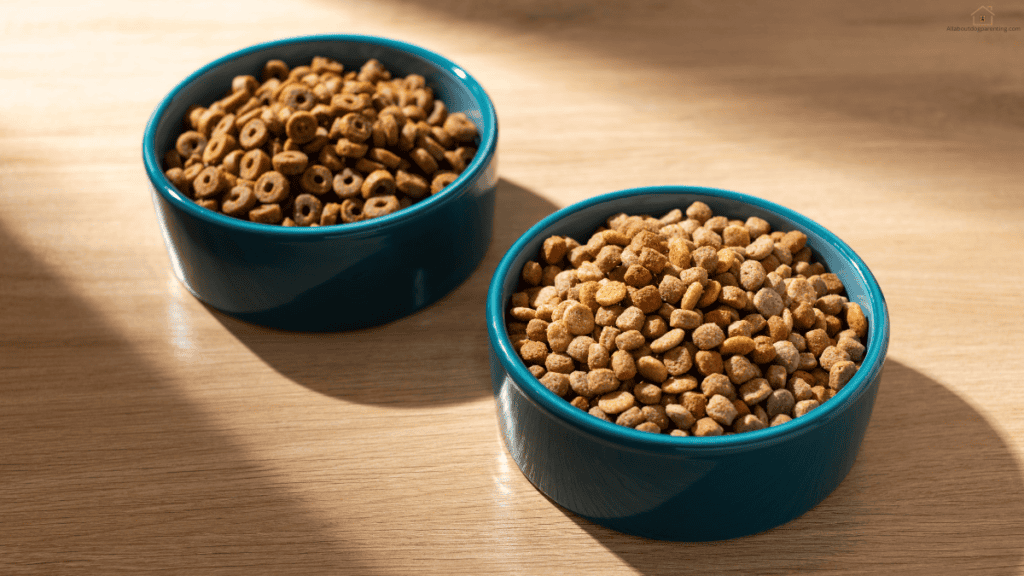
Your puppy is ready to switch when they’ve stopped growing taller, have reached their expected adult weight range, leave food in the bowl regularly, maintain stable energy without extra calories, and your vet confirms their growth is complete. If you’re wondering when to stop puppy food, look out for these signs:
1. Growth has plateaued
Wondering when to switch puppy to adult food, here is a good rule of thumb to go by: when your puppy hasn’t gained height in two to three months. They may still be filling out in the chest and shoulders, but vertical growth has stopped. Now you still see some upward trajectory in weight because dogs, especially large breeds, continue to bulk up well after they stop growing taller. So, the metric to focus on when trying to figure out when to switch puppy to adult food is your pet’s stabilized height, not their weight.
2. They’ve reached 80–90% of their expected adult weight
Look up the expected adult weight range for your breed. If your puppy has reached 80-90% of their ideal adult weight, it may be time to wean them off puppy food. For a German Shepherd expected to reach 35 kg, the switch window opens around 28–32 kg. For a Beagle expected at 12 kg, around 10–11 kg. You can check our puppy weight chart by age for breed-specific weight milestones if you’re not sure what to expect.
3. They’re leaving food in the bowl
Puppy food is calorie-dense by design. As growth slows, the body needs fewer calories for development, and the calorie surplus has to go somewhere. If your puppy, who previously demolished every meal in thirty seconds, starts eating half their food and walking away, it’s a sign their food needs an upgrade. Their body is signalling that the nutritional demand of growth is easing off.
4. Energy stays stable without extra calories
If your puppy seems just as active, alert, and healthy despite their reduced enthusiasm for meals, their metabolism is shifting from growth mode to maintenance mode. A puppy who is genuinely underfed shows it in energy, coat quality, and body condition. A puppy transitioning out of the growth phase just stops eating as urgently.
5. Your vet gives the go-ahead
At your regular checkup, ask directly, “Are we ready to switch to adult food?” Vets assess body condition and growth trajectory at every visit, and for large breeds, can sometimes confirm growth plate closure via X-ray if you want certainty rather than estimation. This is one of the most useful questions you can ask at a routine appointment.
My German Shepherd hit around 30 kg at about 13 months, which was roughly 85% of his expected adult weight. He’d always been a demolish-the-bowl type, so when he started leaving a portion of his breakfast, I discussed it with the vet, and she confirmed his growth was slowing right on schedule. We started the puppy to adult food transition the following week. The half-eaten breakfast bowl was the clearest readiness signal I had, and I nearly overthought it into something more complicated than it was.
What Happens If You Switch Too Early or Too Late
Switching too early deprives growing puppies of essential nutrients for bone development, potentially causing skeletal problems. Switching too late leads to excess calorie intake, weight gain, and increased joint stress in a dog whose growth has already finished.
Switching too early — The real risks
Pulling a large breed puppy off controlled-calcium puppy food before growth plates close removes a nutritional safeguard that exists specifically to protect their developing skeleton. Unbalanced diets can lead to nutritional deficiencies or excesses, resulting in detrimental health consequences, especially during growth.
These consequences are most evident in puppies with adult weights over 23 kg. The conditions associated with premature nutritional transition in large breeds include hip dysplasia, osteochondrosis, and elbow dysplasia. All of these problems are difficult and expensive to manage once they develop.
For small breeds, switching too early is less about bone damage and more about losing growth support during the final developmental stretch. Nutritional gaps in the final months of puppyhood are unlikely to cause the dramatic skeletal problems seen in large breeds, but they’re still not nothing. Feeding a formula built for small-breed metabolism makes those final months count. See our picks for the best puppy food for small breeds. That’s why, it’s crucial to be mindful of when to switch puppy to adult food.
Switching too late is also a real issue
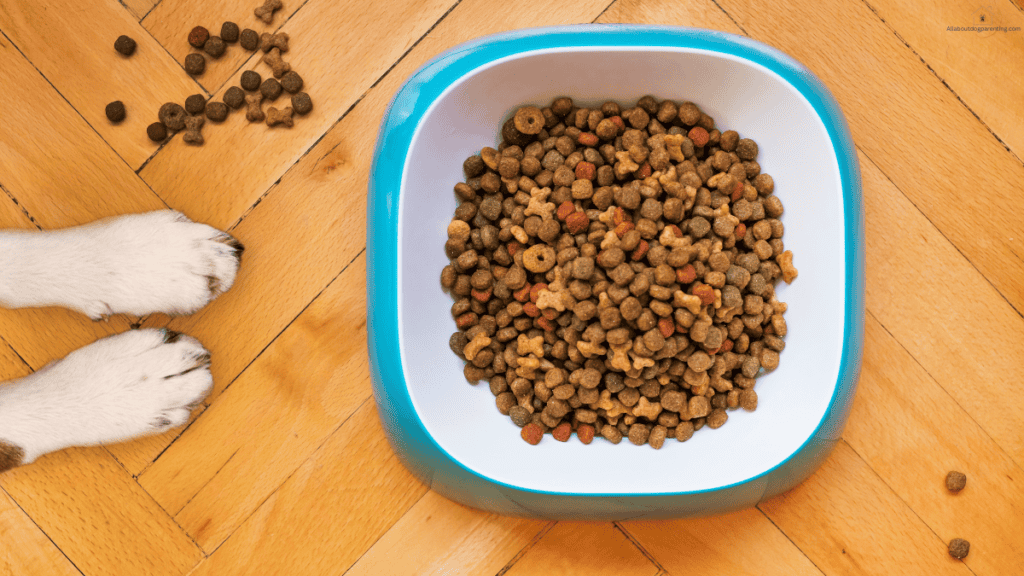
Puppy food typically contains 15–25% more calories than adult maintenance food. Keep a small breed on puppy food for three or four months past their growth endpoint, and that surplus adds up fast. Overweight puppies carry additional stress on developing joints.
How long to feed puppy food matters in both directions. The reassuring part is that this isn’t a cliff edge. Two or three weeks on either side of the ideal switch date won’t cause harm. It’s sustained miscalculation for months where problems accumulate.
The Spay/Neuter Factor Most Guides Skip
Spaying or neutering can reduce your puppy’s calorie needs by up to 30%. If your puppy is fixed before they’ve finished growing, you may need to reduce portions of puppy food or discuss an earlier switch to adult food with your vet, even if the standard breed-size timeline says otherwise.
This is a genuinely important factor that almost every guide on when can puppy eat adult food ignores completely. The logic is straightforward: calorie needs drop noticeably after spaying or neutering because the hormonal influence on metabolism changes. A large breed puppy fixed at six months but not due to switch food until 15 months is spending nine months eating calorie-dense puppy food with a metabolism that now needs less.
The options, in order of preference:
Reduce puppy food portions
Rather than switching food early and losing the growth-supportive nutrient profile, reduce the amount of puppy food to match the puppy’s lower post-neuter calorie needs. Our guide on how much to feed a puppy shows you how to recalculate portions from calorie density. Monitor body condition weekly and adjust until you find the right amount
Discuss an earlier switch with your vet
For some large-breed puppies, particularly those fixed at six months or earlier, a vet may recommend switching to a large-breed adult formula slightly ahead of the standard timeline, accepting that the growth plate window has shortened.
Don’t ignore it
The worst outcome is continuing to feed full portions of calorie-dense puppy food to a dog whose calorie requirements just dropped 30%. That’s a reliable path to an overweight puppy, which creates the exact joint stress that careful large-breed nutrition is meant to prevent.
The 10-Day Transition Plan
Transition gradually by mixing increasing amounts of adult food into decreasing amounts of puppy food over 10 days. This prevents digestive upset issues such as diarrhoea, gas, or stomach discomfort.
The gradual puppy to adult food transition works because it gives the gut microbiome time to adjust to a different ingredient profile. Even if the new food is high quality and your puppy’s digestion is generally robust, a sudden switch overwhelms the digestive system. Ten days is the minimum. Some owners extend to 14 for breeds with sensitive stomachs. For switching brands, moving between wet and dry, or handling a picky eater, see our full guide on how to transition puppy food.
| Day | Puppy Food | Adult Food | What to Watch |
|---|---|---|---|
| Day 1–2 | 80% | 20% | Stool should remain normal |
| Day 3–4 | 65% | 35% | Watch for any loosening |
| Day 5–6 | 50% | 50% | Midpoint. Most puppies handle this fine |
| Day 7–8 | 35% | 65% | Nearly there. Monitor appetite |
| Day 9 | 20% | 80% | Almost complete |
| Day 10+ | 0% | 100% | Full adult food. Monitor for one additional week |
Common issues and how to address them
Even with a careful plan, there can be some hiccups in the transitions. Here are the most common issues that pet parents experience and my two cents on how to address them:
- Loose stools at any stage: This signals the transition is moving faster than the gut can adapt. Go back to the previous day’s ratio for two to three days before moving forward again. Don’t push through loose stools.
- Refusing the new food: Add a small amount of warm water or low-sodium bone broth to the adult food. Aroma is the main driver of food acceptance in dogs, and warming the food increases it considerably
- Vomiting: Stop the transition entirely, return to 100% puppy food, and call your vet. Vomiting during a food transition suggests an ingredient sensitivity in the new food rather than just digestive adjustment, and pushing forward will make it worse
My GSD barely registered the switch. By Day 5, he was eating the 50/50 mix with exactly the same enthusiasm he’d had for his puppy food, and by Day 10, he moved to 100% adult food without a single soft stool. That’s the ideal outcome, but that’s not everyone’s experience. Some pet parents I have spoken to report noticeably soft stools around Days 5 and 6 of the transition. Every one of them said the same thing fixed it: slow down, hold the ratio, give it a few extra days.
Understanding puppy development milestones by age is a useful context during the transition window. The food change often coincides with other developmental shifts, and knowing what’s developmental versus what’s a food-related response helps you read your puppy’s reactions accurately.
How to Choose the Right Adult Food
Choose an adult food that’s AAFCO-certified for adult maintenance, lists a named protein source as the first ingredient, matches your dog’s breed size category, and comes from a brand with veterinary nutritionists behind the formulation. You don’t need to stay with the same brand you used for puppy food.
The key label check: look for the AAFCO statement reading “complete and balanced for adult maintenance.” This confirms the food meets the nutritional standards for a dog whose growth is complete. When you see a reference to either an AAFCO nutrient profile or a feeding trial using AAFCO procedures on a pet food label, you’re better assured that the “complete and balanced” claim is valid.
For large breeds specifically, choose an adult formula labelled for large-breed adults. These have lower calorie density than standard adult food, which matters for dogs whose adult size means even small calorie surpluses accumulate quickly.
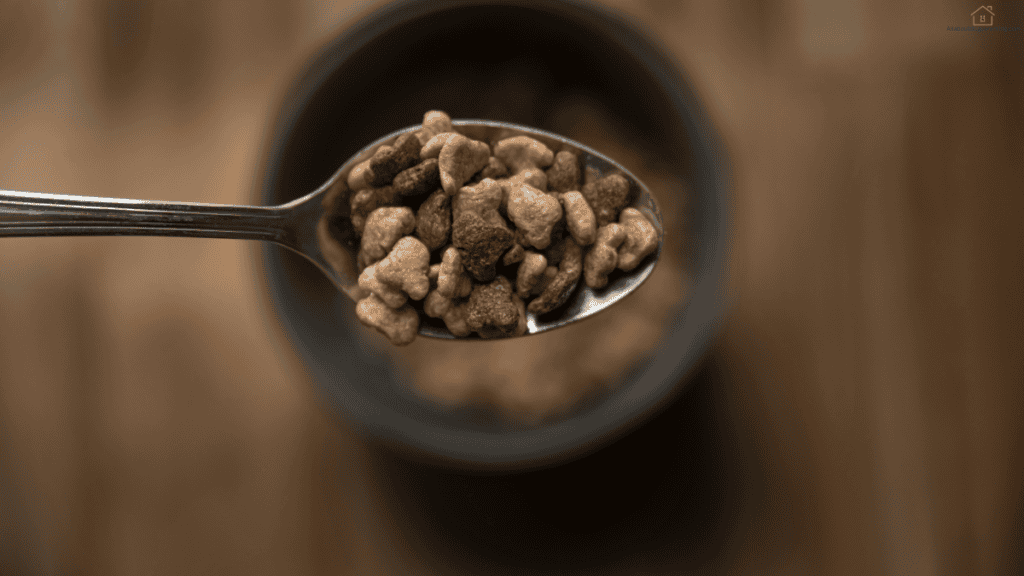
Named protein sources such as chicken, beef, salmon, or lamb should be the first ingredient. Generic terms like “meat meal” or “animal by-products” as lead ingredients are a signal to look elsewhere. Beyond that, the brands most consistently recommended by veterinary nutritionists are those with extensive feeding trial data and board-certified vets involved in formulation. You don’t have to spend a premium to find these. Mid-market options in this category are a solid choice. You may also want to consider nutritionally complete home-cooked meals at this point.
FAQs
1. Can I switch my puppy to adult food at 6 months?
For most breeds, 6 months is too early. Puppies are still undergoing significant bone development at this age, and the controlled nutrient profile of puppy food, particularly calcium management for large breeds, is still doing important work. The only exception might be a very small toy breed that has genuinely reached adult size, and even then, confirm with your vet before switching.
2. What if I have a mixed breed and don’t know their adult size?
Estimate from their growth trajectory. A common rule: double a mixed-breed puppy’s weight at 4 months for a rough adult weight estimate. Your vet can also estimate adult size based on current growth rate, paw size, and body proportions. When in doubt, lean toward the later end of the transition window. Staying on puppy food a little longer does less harm than switching too early for a larger dog. Our puppy weight chart can help you track whether your puppy’s growth is still climbing or beginning to plateau.
3. Should I switch to the same brand’s adult version?
No biological requirement. Many owners switch brands entirely at this point, choosing whatever adult food best fits their dog’s size needs and their budget. The 10-day transition handles any ingredient differences regardless of whether you’re switching brands, formulas, or both. The gradual mix is what protects the gut, not brand continuity.
4. My large breed puppy looks fully grown at 10 months. Can I switch?
Probably not yet. Large-breed puppies frequently look externally complete months before their growth plates have closed. A dog can appear done growing while still actively forming bone tissue internally. This is one of the most common reasons owners switch to adult food too early with large breeds is that they trust their eyes instead of the biology. Ask your vet to confirm before switching.
5. Do I need to change the feeding schedule when I switch?
Most puppies are already on two meals daily by the time the switch happens (see our puppy feeding schedule by age), so the schedule itself doesn’t change. What you may need to adjust is portion size. Adult food has different calorie density than puppy food, so recalculate portions using the new food’s feeding guidelines rather than carrying over the amounts you were using for puppy food. See our puppy feeding chart for guidance on calculating portions based on calorie density.
The Bottom Line
When to switch puppy to adult food is a decision driven by biology, not convenience. The breed-size timing chart gives you the framework. The readiness signs give you confirmation. And the 10-day transition plan gets you there without disrupting your dog’s digestion. The window is forgiving. A few weeks either way won’t cause lasting harm. Get the timing roughly right, watch for the signals your individual puppy gives you, and work with your vet on anything that doesn’t fit cleanly into the breed-size guidelines. The puppy development milestones guide and the puppy growth stages overview both provide broader context for where the food transition fits within your puppy’s overall first-year development. These will come in handy when you’re trying to coordinate multiple care decisions at once.