Best Puppy Food for Small Breeds: 6 Vet-Reviewed Picks for 2026
Overview:
The best small breed puppy foods are calorie-dense (above 350 kcal/cup), come in small kibble sizes for tiny mouths, and are AAFCO-certified for growth. Top picks: Royal Canin Small Puppy, Purina Pro Plan Small Breed Puppy, Hill’s Science Diet Small Paws, Blue Buffalo Small Breed, Wellness Small Breed, and The Farmer’s Dog.
Most best puppy food small breed articles you’ll find are written by people with a financial stake in what you buy. The picks on almost every page-one result reflect commission rates as much as nutritional merit. This article earns nothing from any product on this list. The six foods below were selected because they meet specific criteria that every small-breed puppy owner should understand before they spend a dollar.
I raise German Shepherds, not Chihuahuas. I’ll be upfront about that. But I’ve spent considerable time researching best puppy food small breeds thrive on, as part of our Complete Guide to Puppy Nutrition, and the science in this article comes from veterinary sources, feeding trial data, and AAFCO standards, not brand marketing.
Why Small-Breed Puppies Need Different Food
Overview:
Small-breed puppies have faster metabolisms, smaller stomachs, and higher calorie needs per kilogram of body weight than larger breeds. They need calorie-dense food in small kibble sizes, and toy breeds face a genuine risk of hypoglycaemia if they go too long without eating.
The differences between small-breed and large-breed puppy nutrition aren’t cosmetic. They’re biological. And the consequences of getting it wrong fall harder on small breeds in some specific ways that rarely get explained clearly.
Higher metabolic rate, smaller stomach
A 2 kg Chihuahua puppy burns roughly 40 to 50 calories per kilogram of body weight daily. A 30 kg GSD puppy burns roughly 25 to 35 calories per kilogram. Small breeds need nearly double the calories per unit of body weight, packed into a stomach that can hold approximately one to two tablespoons of food per meal. Standard puppy food at 340 to 360 kcal per cup often isn’t dense enough. Small-breed formulas run 380 to 420 kcal per cup precisely because every bite has to count.
Kibble size is a safety issue, not a preference
Standard puppy kibble runs 10 to 14mm in diameter. Toy breed puppy kibble is 5 to 7mm. A Maltese or Yorkie puppy physically cannot manoeuvre standard-size kibble. This isn’t pickiness. It’s anatomy. Feeding a toy breed puppy “all breeds” kibble is a choking and gulping risk that genuine small-breed formulas are designed to eliminate. This is an important consideration when deciding the best puppy food small breeds and toy breeds need.
Hypoglycaemia is a real risk with small breeds

This is the section that matters most for toy breed owners, and the one that gets the least attention in every buyer’s guide I’ve read. Toy breed puppies under 2.5 kg are genuinely vulnerable to hypoglycaemia, a dangerous drop in blood sugar that can progress to seizures if not caught quickly.
It happens because these puppies have almost no body fat reserves. When they burn through their glycogen stores, there’s nothing to fall back on. A toy puppy skipping two consecutive meals isn’t a feeding inconvenience. It can be a veterinary emergency.
Symptoms to watch for
- Lethargy
- Trembling
- Wobbliness
- Glazed or unfocused eyes
- In severe cases, seizures
If you see any of these in a toy breed puppy who hasn’t eaten in more than four hours, rub a small amount of Karo syrup or honey on their gums immediately and get to a vet.
Prevention is straightforward. Feed toy breed puppies under 12 weeks four to five times per day, never allow a gap of more than four to five hours between meals, and keep a simple sugar source on hand. If you have a Chihuahua, Yorkie, Maltese, or Pomeranian puppy under three months old, take this seriously. A Beagle skipping breakfast is inconvenient. A Yorkie doing the same could end up in emergency care.
Faster maturity, earlier transition
Small breeds reach their adult size at seven to ten months compared to fourteen to twenty-four months for large breeds. The puppy food phase is shorter, but the growth intensity per month is higher. The good news: you’re not committing to the same extended timeline of puppy-specific feeding that large-breed owners face.
How We Selected These Foods (Our Criteria)
Overview:
Every food on this list meets five criteria: AAFCO-certified for puppy growth, calorie density above 350 kcal/cup, kibble sized for small mouths, manufactured by a brand employing veterinary nutritionists, and validated through feeding trials or extensive feeding trial history.
Same methodology as our large-breed buyer’s guide: no affiliate commissions, no brand relationships. Picks are based on the five criteria below and nothing else.
1. AAFCO statement for “growth” or “all life stages”: Confirms the food is nutritionally complete for growing puppies, not just adults.
2. Calorie density above 350 kcal/cup: Small-breed puppies eat small volumes. If the food isn’t calorie-dense enough, a toy breed puppy physically cannot consume enough calories to meet their energy needs. Foods that fall below this threshold are genuinely insufficient for toy breeds regardless of how appealing the ingredient list looks.
3. Kibble sized for small and toy breed mouths: A physical safety requirement. Any food on this list is confirmed to offer small-breed-appropriate kibble sizing (5 to 9mm).
4. Brand employs board-certified veterinary nutritionists: The single most reliable indicator of formulation quality. Brands meeting this standard: Purina, Hill’s, Royal Canin, Mars Petcare, JustFoodForDogs, The Farmer’s Dog. Blue Buffalo and Wellness have smaller veterinary nutrition teams by comparison, which is noted where relevant.
5. Feeding trial validation: AAFCO’s feeding trial pathway requires testing on actual dogs over time. It’s a higher bar than nutrient profile formulation alone. Most picks on this list have feeding trial data. Exceptions are noted clearly.
The 6 Best Small-Breed Puppy Foods (2026)
Overview:
Top 6 picks: Royal Canin Small Puppy (best overall), Purina Pro Plan Small Breed Puppy (best value), Hill’s Science Diet Small Paws (best for sensitive stomachs), Blue Buffalo Small Breed (best ingredient list), Wellness Small Breed (best protein content), and The Farmer’s Dog (best fresh option).
Here is what makes them the best foods for small-breed puppies:
Pick 1: Royal Canin Small Puppy — Best Overall
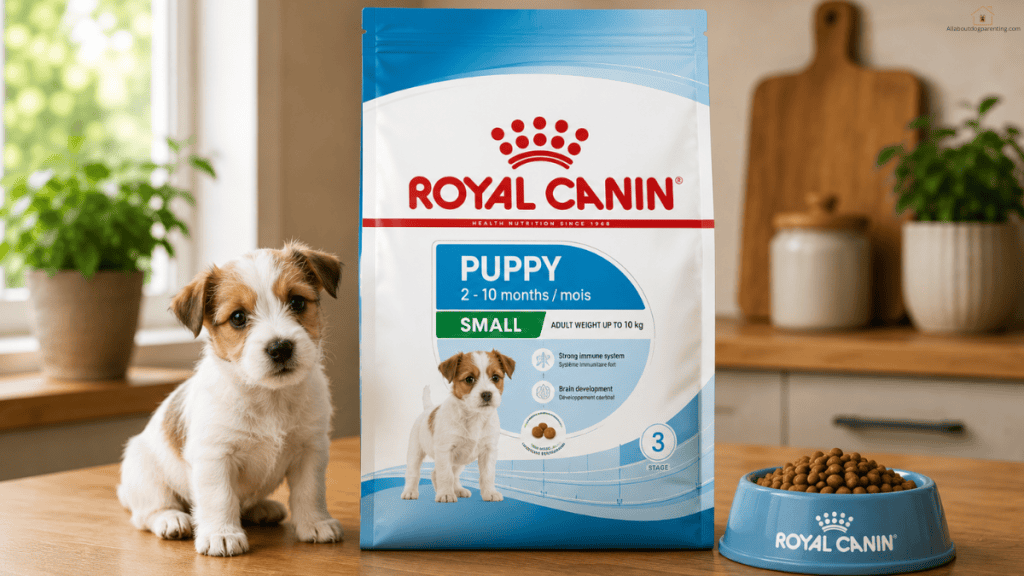
Royal Canin’s small puppy formula is purpose-built for puppies reaching 9 to 22 lbs at maturity. The kibble is miniature-sized for small jaws, the calorie density sits above the threshold for toy breed safety, and the formula includes DHA for brain development. It’s among the most widely used small-breed puppy foods in veterinary clinics and is frequently recommended by small-breed breeders for good reason.
| Spec | Value |
| Protein | 29% min |
| Fat | 18% min |
| Kcal/cup | ~378 |
| Kibble size | Mini (designed for toy mouths) |
| Price estimate | $45–55 per 13 lb bag (~$3.70/lb) |
Best for: Most small-breed puppies. The safe, proven default for first-time small-breed owners and the strongest small breed puppy food vet recommended pick among the kibble options.
Drawback: Higher price per pound than larger bags from competitors. Contains corn and chicken by-product meal, which some owners prefer to avoid.
Pick 2: Purina Pro Plan Small Breed Puppy — Best Value
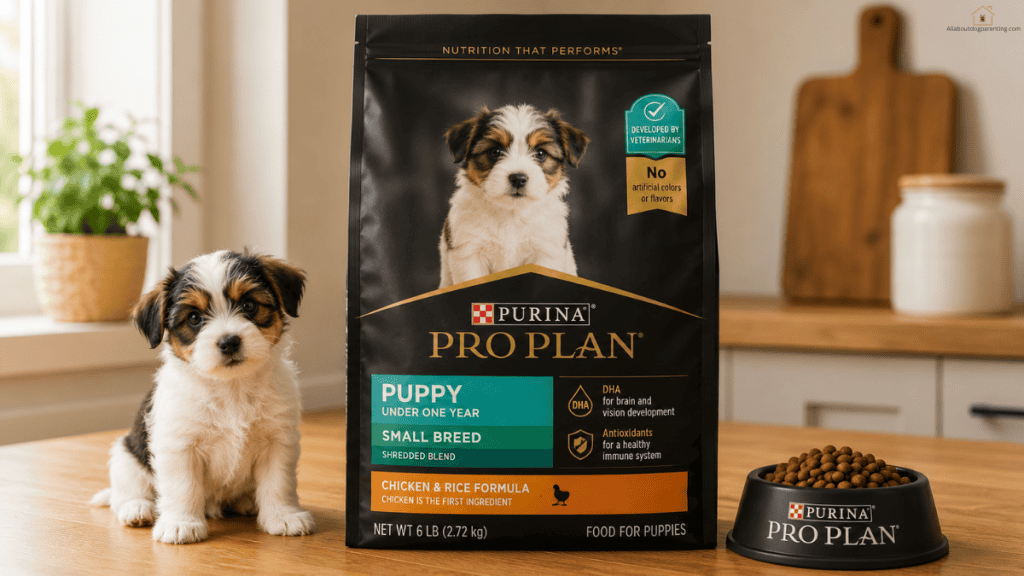
Purina’s small-breed puppy formula has the highest calorie density on this list at 418 kcal per cup, making it particularly well-suited for toy breed puppies who need maximum nutrition from minimum volume. It contains live probiotics for digestive health, DHA from fish oil, and chicken as the primary protein. Backed by Purina’s extensive AAFCO feeding trial history.
| Spec | Value |
| Protein | 30% min |
| Fat | 19% min |
| Kcal/cup | ~418 |
| Kibble size | Small breed specific |
| Price estimate | $35–45 per 16 lb bag (~$2.50/lb) |
Best for: Budget-conscious owners who want nutritional quality without the premium price. The highest calorie density on this list makes it especially practical as puppy food for small dogs with toy breed metabolisms.
Drawback: Contains poultry by-product meal. Some owners report palatability issues compared to Royal Canin, which matters more for notoriously picky small breeds.
Pick 3: Hill’s Science Diet Small Paws Puppy — Best for Sensitive Stomachs
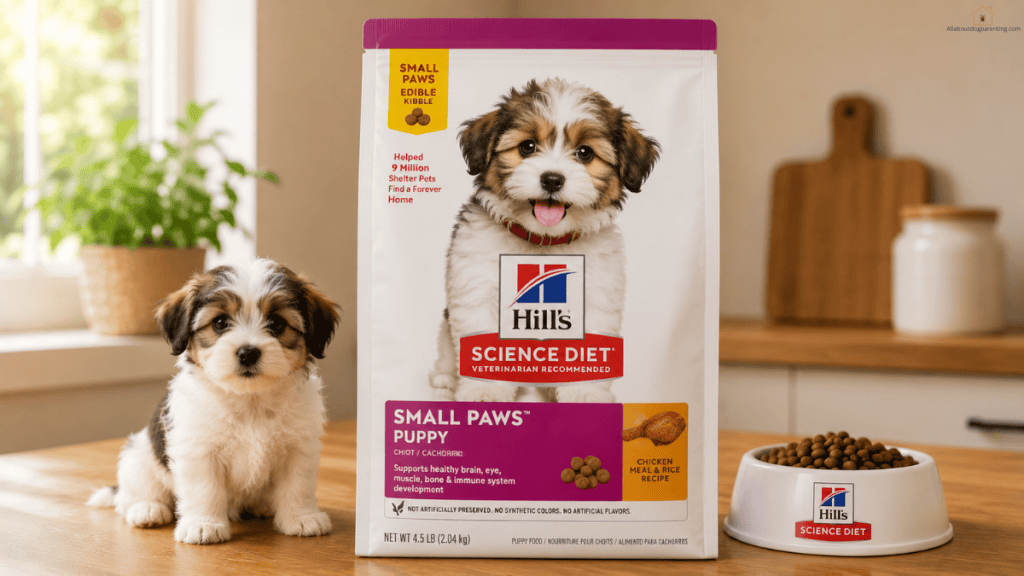
Hill’s is a reliable go-to for puppies with digestive sensitivities, and their small-breed formula includes a prebiotic fibre blend alongside clinically proven antioxidants for immune support. Chicken meal and barley are the primary ingredients. Widely used in veterinary practice for puppies who struggle with loose stools or food sensitivity.
| Spec | Value |
| Protein | 27% min |
| Fat | 17.5% min |
| Kcal/cup | ~395 |
| Kibble size | Small Paws specific |
| Price estimate | $40–50 per 12.5 lb bag (~$3.60/lb) |
Best for: Small-breed puppies with loose stools, gas, or recurring digestive issues. Particularly relevant for French Bulldogs, Shih Tzus, and other small breeds known for sensitive stomachs.
Drawback: Slightly lower protein than the other kibble picks. Premium price point for a smaller bag size.
Pick 4: Blue Buffalo Life Protection Small Breed Puppy — Best Ingredient List
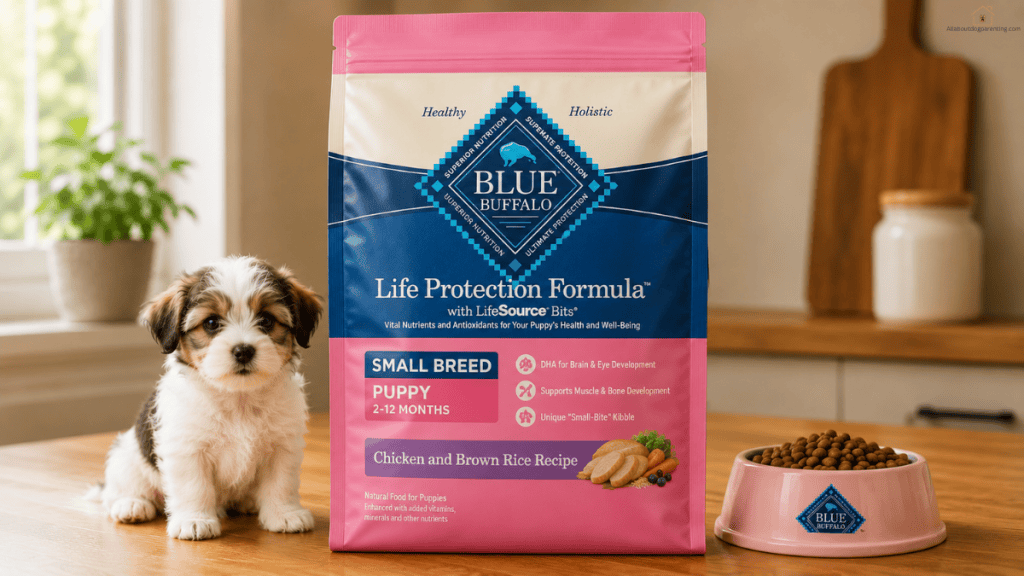
Blue Buffalo uses deboned chicken as the first ingredient rather than a meal or by-product, and their LifeSource Bits blend adds antioxidants, vitamins, and minerals. Brown rice and oatmeal are the primary carbohydrates. No corn, wheat, or soy.
| Spec | Value |
| Protein | 29% min |
| Fat | 17% min |
| Kcal/cup | ~398 |
| Kibble size | Small breed specific |
| Price estimate | $35–45 per 15 lb bag (~$2.70/lb) |
Best for: Owners who prioritise a clean ingredient list with real deboned meat as the first ingredient and no by-products.
Drawback: Blue Buffalo employs fewer board-certified veterinary nutritionists than Purina, Hill’s, or Royal Canin. Some owners report inconsistent palatability across production batches, which is worth knowing given how easily small breeds develop food preferences.
Pick 5: Wellness Complete Health Small Breed Puppy — Best Protein Content
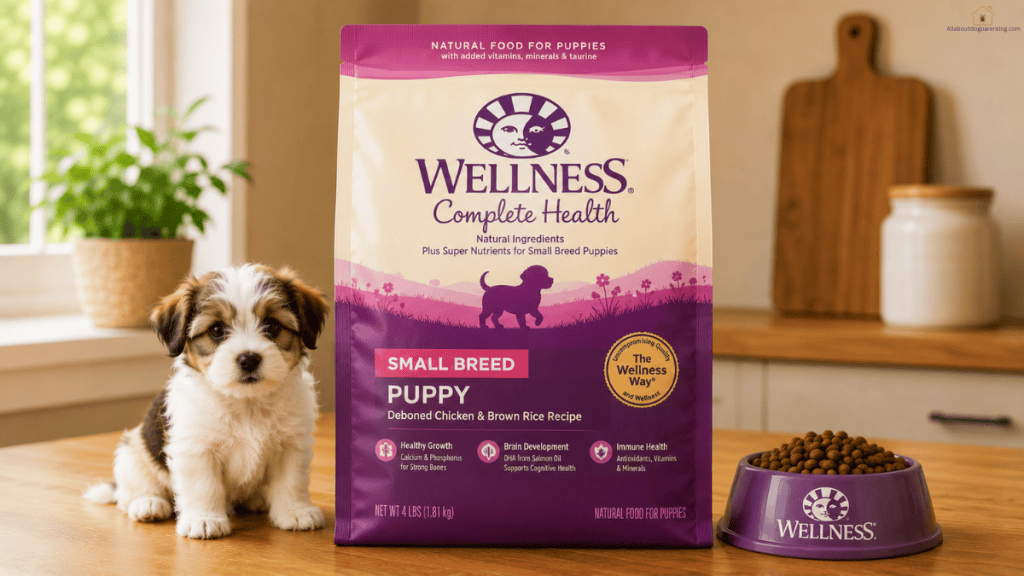
Wellness delivers the highest meat-protein ratio among the dry kibble picks on this list. Deboned turkey and salmon meal are the primary proteins, with no meat by-products, artificial preservatives, or fillers. DHA from salmon oil and glucosamine for joint support round out the formula.
| Spec | Value |
| Protein | 32% min |
| Fat | 18% min |
| Kcal/cup | ~416 |
| Kibble size | Small breed specific |
| Price estimate | $40–50 per 12 lb bag (~$3.75/lb) |
Best for: Active small-breed puppies who need higher protein. Owners who specifically want a meat-first, by-product-free formula among the best small breed puppy food options.
Drawback: Premium price per pound for a smaller bag. Less widely available than Purina or Royal Canin. Wellness has a smaller veterinary nutrition team than the major brand manufacturers.
Pick 6: The Farmer’s Dog — Best Fresh Option
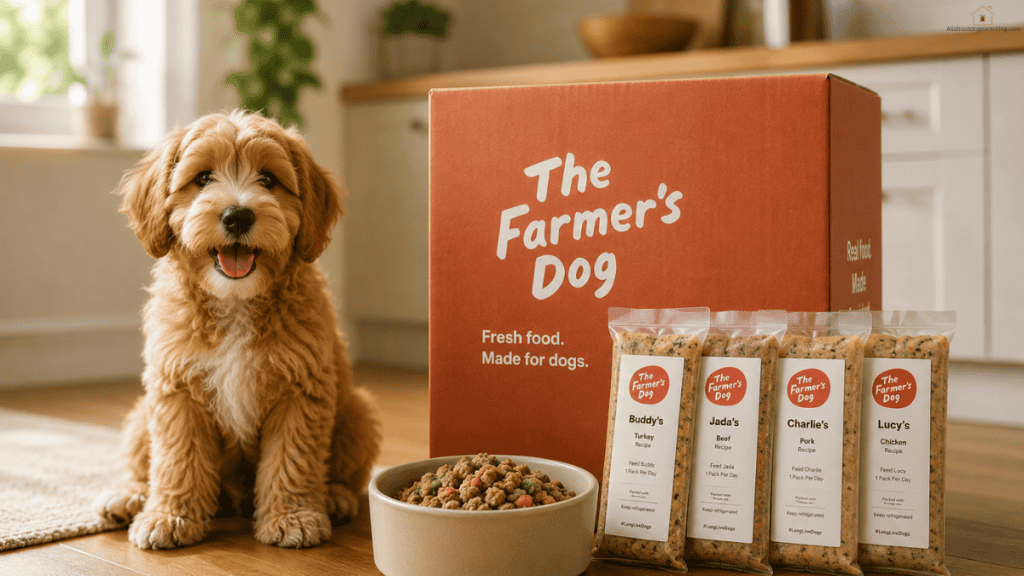
The Farmer’s Dog offers AAFCO-certified fresh food formulas for growth, including small-breed-appropriate portions. For small breeds specifically, the cost equation is considerably more manageable than it is for large breeds. A 2 kg Chihuahua puppy’s subscription costs a fraction of what a GSD would require. Fresh food’s strong aroma and appealing texture also make it particularly effective for picky small-breed puppies who consistently refuse kibble.
| Spec | Value |
| Protein | ~38–42% dry matter |
| Fat | ~20–25% dry matter |
| Kcal/serving | Custom portioned |
| Price estimate | $2–6/day for small breeds ($60–180/month) |
Best for: Owners who want maximum ingredient transparency. Picky small-breed puppies who refuse kibble. Fresh food’s aroma wins over most reluctant eaters quickly.
Drawback: More expensive than kibble. Requires freezer space. Not practical for puzzle feeders or training rewards. Our fresh dog food for puppies guide covers the full cost-benefit analysis if you’re weighing this option seriously.
Side-by-Side Comparison Table
All six picks compared on the specs that matter most for small-breed puppies: protein, fat, calorie density, kibble size, price, and whether the brand employs veterinary nutritionists.
| Brand | Protein | Fat | Kcal/Cup | Kibble Size | Price/lb | Vet Nutritionists | Feeding Trials | Best For |
| Royal Canin Small Puppy | 29% | 18% | 378 | Mini | ~$3.70 | Yes | Yes | Most small puppies |
| Purina Pro Plan Small Breed | 30% | 19% | 418 | Small | ~$2.50 | Yes | Yes | Best value |
| Hill’s Science Diet Small Paws | 27% | 17.5% | 395 | Small Paws | ~$3.60 | Yes | Yes | Sensitive stomachs |
| Blue Buffalo Small Breed | 29% | 17% | 398 | Small | ~$2.70 | Limited | Formulated | Best ingredient list |
| Wellness Small Breed | 32% | 18% | 416 | Small | ~$3.75 | Limited | Formulated | Highest protein |
| The Farmer’s Dog | ~40% DM | ~22% DM | Custom | N/A (fresh) | ~$2–6/day | Yes | Formulated | Premium fresh |
Small Breed vs Toy Breed: Does It Matter?
Overview:
It matters significantly. Toy breeds under 5 kg face higher hypoglycaemia risk, need extra-small kibble, and often require four to five meals daily until 16 weeks or longer. Small breeds between 5 and 10 kg have more dietary flexibility but still need small-breed-specific food.
Here is why specifically tailored toy breed puppy food is important:
| Factor | Toy Breeds (under 5 kg / 10 lbs) | Small Breeds (5–10 kg / 10–22 lbs) |
| Breeds | Chihuahua, Yorkie, Maltese, Pomeranian | Pug, Shih Tzu, Dachshund, Cavalier |
| Hypoglycaemia risk | High, especially under 12 weeks | Low to moderate |
| Meals per day (under 12 weeks) | 4 to 5 meals, never skip | 4 meals, standard schedule |
| Meals per day (3 to 6 months) | 3 to 4 meals | 3 meals |
| Kibble size needed | Extra-small (5 to 7mm) | Small (7 to 9mm) |
| Switch to adult food | 7 to 9 months | 9 to 12 months |
| Emergency prep | Keep Karo syrup or honey on hand | Standard puppy first-aid |
If you have a toy breed puppy under 2 kg, take the feeding schedule seriously. Set phone alarms for meal times if needed. Pre-portion meals so there’s no delay. A Yorkie puppy skipping two meals is not making a preference statement. It’s running down a very small reserve of blood sugar. Our puppy feeding schedule guide covers the full daily routine for toy and small breed puppies by age, including exact meal timing.
What to Look for on the Label (Small-Breed Specifics)
Overview:
Look for an AAFCO “complete and balanced for growth” statement, calorie density above 350 kcal/cup, small or toy breed designation on packaging, named animal protein as first ingredient, and DHA for brain development. Avoid all-breed kibble for toy-breed puppies. It’s physically too large.
Must have
An AAFCO statement reading “complete and balanced for growth” or “all life stages.” This is the baseline. Without it, the food is not nutritionally complete for a growing puppy regardless of what the front of the bag says.
Named animal protein as the first ingredient: chicken, turkey, salmon, beef. Not “meat,” not “poultry protein,” not vague terms that could include anything. Calorie density above 350 kcal/cup. Check the guaranteed analysis, not the marketing copy. For toy breeds specifically, this figure matters more than almost any other number on the label.
DHA from a named source, typically fish oil or fish meal. Brain and eye development in the early growth months depends on it. A “small breed” or “toy breed” designation confirming that kibble size and calorie density have been calibrated for small mouths and fast metabolisms.
Red flags
“All breeds” kibble offered to a toy breed puppy. The kibble is likely too large physically and the calorie density may be insufficient.
Grain-free formulas with peas or lentils prominent in the first five ingredients. The FDA’s DCM investigation flagged a statistical association between high-legume grain-free diets and heart disease. Our grain-free vs grain-inclusive guide covers the evidence in full.
Calorie density below 320 kcal/cup. For a toy breed puppy eating tablespoon-sized portions, this is insufficient regardless of how clean the ingredient list looks. Brands that don’t publish nutritional data or disclose who formulates their food.
Monthly Feeding Cost for Small Breeds (The Good News)
Overview:
Feeding a small-breed puppy costs significantly less per month than feeding a large breed, despite higher per-pound food prices. Expect $15 to $45 per month for quality kibble. This makes premium options genuinely accessible in a way that large-breed owners rarely experience.
This is the part of small-breed ownership that surprises most people. The food costs more per pound, but your puppy eats so little that the monthly bill is remarkably low.
| Breed Size | Daily Intake | Quality Kibble Cost/Month | Premium Kibble/Month | Fresh Food/Month |
| Toy (under 3 kg adult) | ~¼–½ cup/day | $15–25 | $25–35 | $50–90 |
| Small (3–5 kg adult) | ~½–¾ cup/day | $20–30 | $30–45 | $70–120 |
| Small-medium (5–10 kg adult) | ~¾–1.25 cups/day | $25–40 | $35–55 | $90–160 |
Even The Farmer’s Dog at $70 to $120 per month for a small breed is a genuinely manageable premium for most households. For portion calculations and calorie targets by age and weight, our puppy feeding chart covers small-breed puppies specifically.
Picky Eating in Small Breeds: When It’s Dangerous
Overview:
Picky eating in small-breed puppies is more common and more dangerous than in larger breeds. A toy puppy refusing two consecutive meals risks hypoglycaemia. If your small-breed puppy consistently refuses food, switch to a higher-palatability option, try warming the food, or contact your vet if your puppy has gone more than 12 hours without eating.
Small breeds are notoriously selective eaters. This tendency is partly behavioural and partly biological. Owners of small dogs are more likely to offer alternatives when food is refused, which quickly teaches the puppy that holding out produces better results. The danger for toy breeds is that this isn’t just an inconvenience. A 1.5 kg Yorkie puppy refusing food for twelve hours is approaching the window where hypoglycaemia becomes a real risk.
Practical fixes to try before worrying:
- Warm the kibble for 10 seconds in the microwave. The aroma increase makes a significant difference for scent-driven small breeds
- Add a splash of low-sodium chicken broth to the bowl
- Try a different protein flavour within the same brand before switching entirely
- Mix in a small spoonful of wet food as a topper. The palatability uplift usually resolves most kibble refusals
- Feed in a quiet, low-distraction location. Small breeds are easily put off food by noise or unfamiliar environments
If your toy breed puppy has refused all food for more than 12 hours and shows any sign of lethargy, trembling, or disorientation, contact your vet immediately. At that point the concern is hypoglycaemia, not pickiness. When to switch your puppy to adult food and how to do the transition without triggering refusal behaviour is covered in our 10-day food transition guide.
FAQs
1. What’s different about small-breed puppy food vs regular puppy food?
Three things: smaller kibble sized for tiny mouths (5 to 9mm vs 10 to 14mm for standard), higher calorie density per cup (380 to 420 kcal vs 340 to 380 for general puppy food), and sometimes higher fat content to meet the faster metabolic rate of small breeds. These differences address real physical and metabolic needs, not just marketing positioning.
2. When should a small-breed puppy switch to adult food?
Most small breeds reach adult size between 7 and 10 months. Switch when your puppy has reached approximately 80% of their expected adult weight and your vet confirms growth is slowing. Toy breeds may be ready as early as 7 to 8 months, while slightly larger small breeds may continue until 10 to 12 months. Our timing guide covers readiness signs and how to make the change without digestive disruption.
3. How many times a day should I feed a small-breed puppy?
Toy breeds under 5 lbs expected adult weight need four to five meals daily until 16 weeks, then three to four meals until six months. Slightly larger small breeds follow the standard schedule: four meals until 12 weeks, three until six months, then two meals. Never let a toy breed puppy under 12 weeks go more than four to five hours without food due to hypoglycaemia risk.
4. Is wet food better than dry food for small-breed puppies?
Both work. Wet food is more palatable and useful for picky small-breed puppies. Dry kibble in small-breed sizes is practical for daily feeding and training rewards. Mixing the two works well: a base of dry kibble with a spoonful of wet food on top gives you palatability without abandoning the convenience and consistency of kibble. Our wet vs dry guide covers the full comparison, including cost and calorie considerations.
5. My small-breed puppy won’t eat kibble. What should I do?
Try warming it, adding low-sodium broth, or mixing in a small amount of wet food. If your puppy is a toy breed and refuses all food for more than 12 hours, contact your vet rather than waiting. Small puppies are at genuine risk of hypoglycaemia from extended fasting, and this requires medical attention, not just a food swap. If the refusal is consistent across multiple meals without a medical cause, switching to a higher-palatability formula or using fresh food as a topper usually resolves it.
The Bottom Line
The best puppy food small breed decision starts with understanding what small breeds actually need: calorie density, appropriate kibble size, and for toy breeds specifically, a feeding schedule that prevents hypoglycaemia. Every food on this list clears those bars. The differences come down to ingredient quality, price point, and which specific situation each formula serves best.
The affordability of small-breed feeding is the genuine upside here. Premium food that would be financially unsustainable for a large-breed owner over 14 months of puppyhood is entirely accessible for most small-breed households. Use that advantage. Feed well, feed on a consistent schedule, and if your toy breed puppy ever refuses food for more than a few hours, treat it as an urgent matter rather than a waiting game.