Grain-Free vs Grain-Inclusive Puppy Food: What the Science Actually Says
Overview:
Grain-inclusive puppy food is the safer default for most puppies. The FDA investigated a potential link between grain-free diets and heart disease but couldn’t prove causation. Unless your puppy has a confirmed grain allergy, there’s no nutritional reason to avoid grains.
Is grain-free puppy food safe? The debate produces more heat than light. One camp says grain-free kills dogs. The other says the FDA found nothing, and grain-free is perfectly fine. Neither position is accurate, and neither helps a puppy owner trying to make a sensible decision.
Here’s what’s actually true: the FDA investigated a statistical association, couldn’t prove causation, and paused the investigation pending better data. The pattern in the data is real and hasn’t been explained away. And for puppies specifically, grain-inclusive food is the better-supported default for reasons that have nothing to do with the controversy. Whether grain-free puppy food is safe or not depends on what you mean by safe, and on what replaces the grains.
This article, part of our Complete Guide to Puppy Nutrition, covers the full picture: the FDA investigation, the legume-taurine hypothesis, the “grains are fillers” myth, when grain-free actually makes sense, and how to read the conflict-of-interest angle honestly.
The Quick Answer: Is Grain-Free Puppy Food Safe?
For most puppies, grain-inclusive food is the better-supported, safer default. It’s well-tolerated, nutritionally complete, widely recommended by veterinary nutritionists, and doesn’t carry unanswered questions about heart disease. The exception is puppies with a vet-confirmed grain allergy, which is genuinely rare.
| Your Situation | Recommended Choice | Why |
| Healthy puppy, no known allergies | Grain-inclusive | Safer default, well-supported, no DCM concerns |
| Puppy with vet-confirmed grain allergy | Grain-free, carefully selected | Avoid the allergen but choose a formula low in legumes |
| Puppy with digestive issues | Consult vet first | Digestive problems are more often caused by protein sources than grains |
| Large or giant breed puppy | Grain-inclusive breed-specific formula | Controlled calcium-phosphorus ratios are easier to achieve |
| You’ve read that grains are fillers | Grain-inclusive | Grains are not fillers: they provide digestible energy, vitamins, and fibre |
I’ll walk through the full science below. But the short version: my German Shepherd eats grain-inclusive food. Here’s why I made that choice, and why most veterinary nutritionists would reach the same conclusion.
What Happened: The FDA Investigation Explained Simply
Overview:
In 2018, the FDA began investigating reports of dilated cardiomyopathy (DCM) in dogs eating grain-free diets. By November 2022, 1,382 cases had been reported. The FDA concluded the data was insufficient to prove causation, but the statistical pattern across those cases was notable enough that the investigation ran for over four years.
Most coverage of this topic lands on one of two oversimplifications: “grain-free causes heart disease” or “the FDA cleared grain-free.” Both misrepresent what actually happened.
| Date | What Happened |
| July 2018 | FDA announces investigation into DCM reports in dogs eating grain-free diets |
| February 2019 | First update: reports suggest atypical DCM in breeds not genetically prone |
| June 2019 | FDA reports 524 DCM cases. Over 90% ate grain-free food. 93% had peas and/or lentils as primary ingredients |
| September 2020 | Kansas State University holds scientific forum on non-hereditary DCM causes |
| November 2022 | FDA’s case tally reaches 1,382, including 124 or more fatalities |
| December 2022 | FDA states data “does not supply sufficient data to establish a causal relationship” |
| 2023 onward | FDA stops issuing public updates until “meaningful new scientific information” is available |
The FDA found that more than 90% of products associated with DCM reports were grain-free, and 93% of reported products contained peas and/or lentils. That’s a striking statistical pattern. What the FDA did not do was explain it. The investigation didn’t exonerate grain-free diets. It concluded the data was insufficient to prove a causal link, which is a different statement entirely.
The grain-free dog food DCM story isn’t over. The investigation is paused, not closed. A 2025 narrative review published in MDPI Veterinary Sciences found that many apparently healthy dogs eating grain-free diets showed early-stage heart modifications, and many affected dogs improved after switching to more traditional diets, suggesting this form of DCM may be reversible.
It’s Probably Not About the Grains — It’s About What Replaces Them
Overview:
The emerging scientific consensus points less to the absence of grains and more to the high concentration of legumes (peas, lentils, chickpeas) used as grain replacements. These pulse ingredients may interfere with taurine metabolism, and taurine deficiency is a documented cause of DCM in dogs.
When wondering, “Is grain-free puppy food safe?”, you have to consider that when manufacturers remove grains, they need a replacement carbohydrate and binding agent. Most use peas, lentils, chickpeas, or potatoes. UC Davis researchers found that dogs eating grain-free, legume-rich diets were not making or maintaining enough taurine, an amino acid critical for heart health.
Taurine is essential for heart muscle function. Dogs can synthesise taurine internally, unlike cats, who must get it directly from food, but certain diets appear to impair that synthesis. In a study of 24 Golden Retrievers diagnosed with taurine deficiency and DCM, 23 out of 24 were eating grain-free and/or legume-rich diets. The majority showed significant health improvement after a diet change and taurine supplementation.
The mechanism isn’t fully understood. Researchers note it may not simply be that the diet is grain-free or legume-heavy, but that ingredients are interacting to reduce taurine availability, or that other nutrients are missing or interacting in the formulation.
Some breeds appear more susceptible than others. Golden Retrievers, Cocker Spaniels, and Newfoundlands show up disproportionately in the case reports. But DCM cases have appeared across a wide range of breeds, including those with no genetic predisposition, which is part of what made the pattern worth investigating in the first place.
This is why grain-free vs. grain-inclusive puppy food is a misleading frame. The absence of grains may not be the issue. The massive quantities of legumes that replace them in most commercial grain-free products are the more likely variable. A grain-free food using sweet potato as its primary carbohydrate would carry a different risk profile from one listing peas and lentils in the first five ingredients.
The “Grains Are Fillers” Myth
Overview:
Grains are not nutritionally empty fillers. Whole grains like brown rice, oats, barley, and sorghum provide digestible energy, B vitamins, iron, fibre, and essential fatty acids. They have been a well-tolerated component of commercial dog food for over 60 years with a strong safety record.
The filler narrative was largely built by grain-free marketing. Pet food companies selling grain-free formulas at premium prices needed a justification for the higher cost, so they positioned conventional grains as inferior. The science doesn’t support that framing.
| Grain | What It Provides | Why It’s Not a Filler |
| Brown rice | Digestible carbohydrate, manganese, B vitamins | One of the most digestible grains for dogs, widely used in veterinary diets |
| Oats | Soluble fibre, iron, zinc, B vitamins | Gentle on sensitive stomachs; used in many hypoallergenic formulas |
| Barley | Fibre, selenium, copper, B vitamins | Slow-release energy, well-suited to sustained activity |
| Sorghum | Antioxidants, fibre, protein | Naturally gluten-free, increasingly used in premium formulas |
| Corn | Energy, essential fatty acids, antioxidants | Highly digestible when properly processed; controversial but not nutritionally empty |
For growing puppies specifically, the case for grain-inclusive food is practical as well as nutritional. Puppies need accessible carbohydrate energy to fuel rapid development alongside high protein and fat. Grains provide this in a well-understood, low-risk format. Grain-inclusive puppy formulas have decades of feeding trial data behind them. Puppy food without grains, by comparison, has considerably less long-term data to draw from. For a puppy whose bone and organ development are happening at speed during a narrow window, the option with the longer track record matters.
When Grain-Free Actually Makes Sense for Puppies
Overview:
Grain-free puppy food is appropriate when your puppy has a vet-confirmed allergy or intolerance to a specific grain. True grain allergies in puppies are rare. Most food allergies in dogs are caused by protein sources, not grains. If grain-free is necessary, choose a formula low in legumes.
Is grain-free food bad for puppies across the board? No. For the small percentage of puppies with a genuine grain allergy, puppy food without grains is genuinely the right call. The problem is that most owners making this switch are responding to perceived sensitivities rather than confirmed allergies, and those two things are not the same.
How to know if your puppy has a grain allergy
True food allergies produce persistent symptoms: chronic itching, particularly around ears and paws; recurrent ear infections; ongoing gastrointestinal problems; and skin irritation that doesn’t resolve with other interventions. The only reliable diagnostic tool is a veterinary elimination diet, typically 8 to 12 weeks of a novel protein or hydrolysed protein diet followed by systematic reintroduction of individual ingredients.
Blood tests and hair tests marketed for pet food allergies are not recommended by veterinary dermatologists. They’re unreliable and frequently produce false positives. Most food allergies in dogs are reactions to protein sources, with beef being the most common, followed by dairy and chicken. Grain reactions specifically are estimated at 1 to 2% of the dog population.
If your puppy does need grain-free food
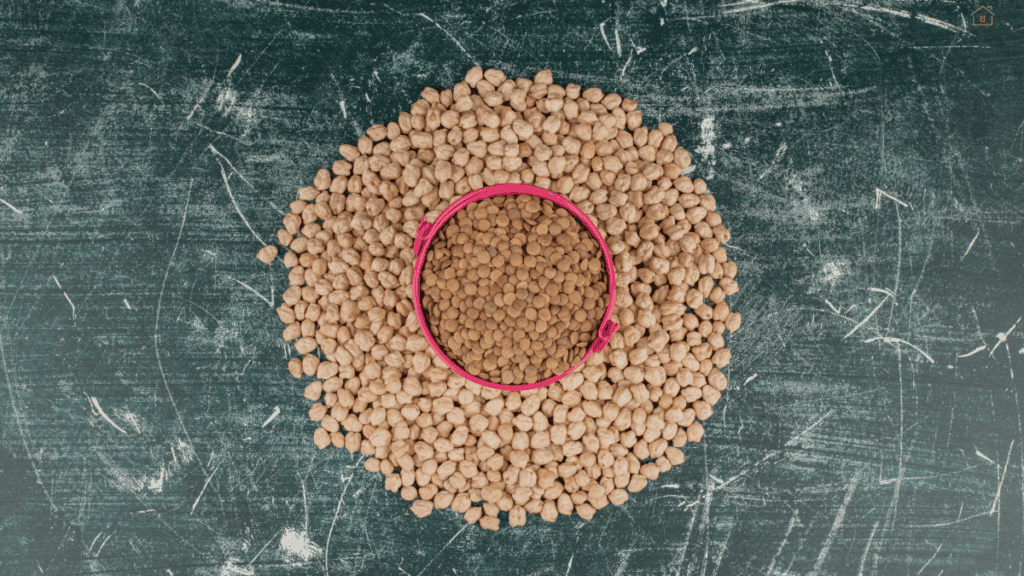
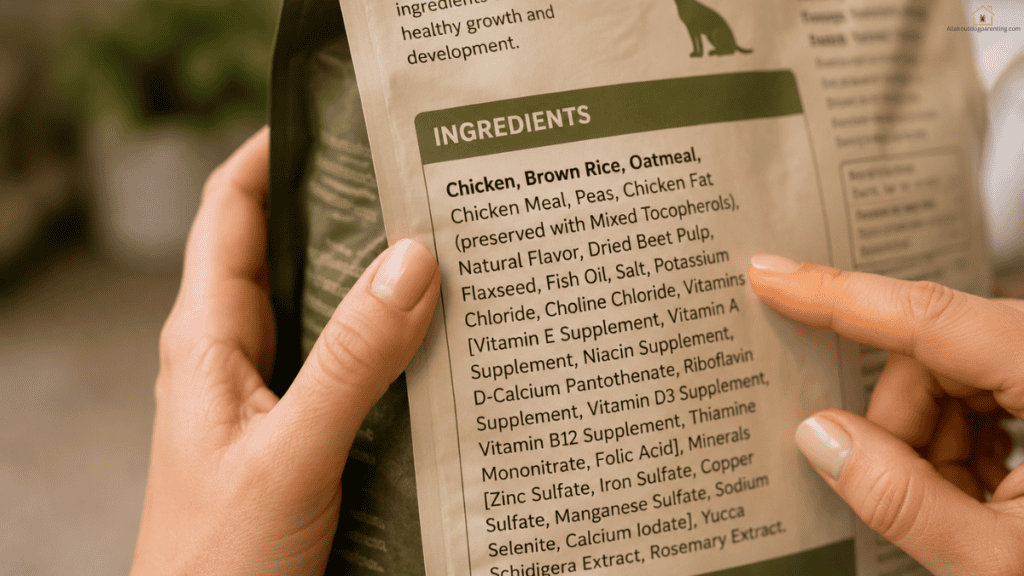
Look for an AAFCO “complete and balanced for growth” statement. Check whether peas, lentils, or chickpeas appear in the first five ingredients. Prefer formulas using sweet potatoes, tapioca, or other non-legume carbohydrate sources. Choose a brand that employs veterinary nutritionists and conducts AAFCO feeding trials rather than formulation-based testing only. Tell your vet your puppy is on a grain-free diet so they can monitor for any cardiac concerns at checkups.
Grain-Free vs Grain-Inclusive: Side-by-Side Comparison
Grain-inclusive food is cheaper, has a longer track record, and carries no DCM-related statistical association. Grain-free costs 15 to 30% more and replaces grains with legumes, whose long-term effects in growing puppies are still being studied.
| Factor | Grain-Inclusive | Grain-Free | Notes |
| Nutritional completeness | Widely available AAFCO-certified | Available but fewer feeding-trial-validated options | Both can be complete; grain-inclusive has more data |
| DCM concern | No statistical association | Pattern under investigation, not proven causal | Notable enough to factor into decision-making |
| Primary carb source | Rice, oats, barley, corn | Peas, lentils, potatoes, tapioca | Legume-heavy formulas are the specific concern |
| Protein content | 25 to 32% typical | 28 to 38% typical | Higher protein in grain-free comes partly from legume protein |
| Cost (medium breed, monthly) | $35 to $60 | $45 to $80 | 15 to 30% premium for grain-free |
| Vet nutritionist recommendation | Broadly recommended | Recommended for confirmed grain allergies only | Most vet nutritionists default to grain-inclusive |
| Feeding trial data | 60 or more years of data | 15 to 20 years of mainstream data | Grain-inclusive has a substantially longer track record |
| True grain allergy prevalence | N/A | Estimated 1 to 2% of dogs | Most sensitivities are protein-based, not grain-based |
For a comparison of food formats beyond grain content, see our wet vs dry puppy food guide, which covers palatability, cost, and practical differences between kibble and canned options.
The Conflict-of-Interest Question (Addressing It Honestly)
Overview:
Some veterinarians who prompted the FDA’s DCM investigation had reported financial ties to major grain-inclusive pet food manufacturers. This doesn’t invalidate the science, but transparency is part of intellectual honesty, and you should know about it when evaluating the debate.
This point circulates widely in the raw feeding and grain-free communities. Ignoring it would undermine the credibility of everything else here.
Among the earliest and most prominent contributors to the FDA’s diet-associated DCM case pool was Dr. Lisa Freeman of Tufts University’s Cummings School of Veterinary Medicine. Subsequently, a 2022 journalism investigation reported that some researchers and vets involved in raising the initial DCM alarm had consulting relationships with companies including Purina, Hill’s, and Royal Canin, all of which are major grain-inclusive brands.
What this means: it’s a legitimate transparency concern. Financial relationships don’t automatically mean the science is wrong, but they warrant scrutiny. What this doesn’t mean: the FDA investigation was conducted by government scientists, not by pet food companies. The 1,382 DCM cases were independently reported by veterinary cardiologists across multiple institutions. The statistical pattern, over 90% grain-free, 93% high in legumes, exists in the data regardless of who raised the alarm first.
I think ignoring this would be dishonest. Using it to dismiss the entire DCM concern would be equally irresponsible. There is a real pattern in the data AND legitimate questions about who pushed the narrative and why. Both things can be true at the same time.
What I Feed My German Shepherd (And Why)
Overview:
Grain-inclusive dry kibble formulated for large breeds. The combination of a longer safety record, controlled calcium-phosphorus ratios, lower cost, and no DCM-related statistical association made it the straightforward choice for a breed already predisposed to orthopaedic issues.
I considered grain-free when I was researching food for my GSD. The premium branding is effective, and the “know what’s in the bowl” appeal is real. Then I looked at what the evidence actually showed, including the DCM investigation, the legume-taurine research, and the fact that grain-free puppy food had a significantly shorter track record than grain-inclusive alternatives.
For a large-breed puppy whose skeletal development I couldn’t afford to get wrong, I went with the option that had decades of data behind it. The grain-free question felt like an unnecessary gamble during the most critical growth window. If the science eventually resolves cleanly in grain-free’s favour, I can revisit that for his adult years. In the meantime, he’s doing well, his coat is healthy, his digestion is consistent, and I’m not carrying any unanswered questions about his heart health.
For calorie targets and portion sizes at each growth stage, our puppy feeding chart covers this regardless of food format. And if you’re considering transitioning to a new food based on this research, the 10-day transition guide walks through the process safely.
FAQs
1. Did the FDA prove that grain-free food causes heart disease in dogs?
No, the FDA stated it had insufficient data to establish causality among DCM case reports and pet food products eaten by affected dogs, and it does not intend to release further public updates until there is meaningful new scientific information. However, the statistical pattern across 1,382 cases, over 90% grain-free and 93% high in peas and lentils, was notable enough that the investigation ran for four years. The absence of proven causation is not the same as a clean bill of health.
2. Are grains bad for puppies?
No, whole grains like rice, oats, and barley are well-tolerated by the vast majority of dogs and provide digestible energy, B vitamins, fibre, and essential fatty acids. True grain allergies are estimated at 1 to 2% of the dog population. For most puppies, grains are a nutritious, well-supported ingredient with a long safety record.
3. My puppy seems to do better on grain-free food. Should I switch back?
If your puppy is genuinely thriving on a grain-free food and your vet is monitoring their health, there may not be a compelling reason to change immediately. Before assuming grains were the problem, though, consider whether the improvement came from removing grains or from changing the protein source simultaneously. An elimination diet with your vet is the only reliable way to identify the real trigger.
4. Is grain-free food bad for puppies in every case?
No, and that framing is too blunt. Grain-free food carries specific concerns, particularly when it’s heavily legume-based, but it’s appropriate for puppies with confirmed grain allergies. The problem is that most puppies fed grain-free food don’t have confirmed grain allergies. The decision should follow a veterinary diagnosis, not marketing.
5. Which grains are best in puppy food?
Brown rice and oats are the most digestible and nutritious grain options for puppies. Barley and sorghum are also solid choices. These whole grains provide slow-release energy, fibre for digestive health, and essential micronutrients. Avoid formulas where wheat middlings or corn gluten meal appear as primary ingredients. These are lower-quality grain by-products rather than whole grains.
The Bottom Line
As you can see, there is no clear yes or no answer to the question that many pet parents ponder: Is grain-free puppy food safe? The FDA investigation into grain-free vs. grain-inclusive puppy food identified a real statistical pattern but couldn’t establish a causal mechanism. The legume-taurine research is compelling but not yet conclusive. And the DCM investigation, though paused, is not resolved.
For most puppies, grain-inclusive food is the safer, better-supported default. It has a longer track record, a cleaner risk profile, and no unanswered questions about heart health. The grain-free option makes sense for puppies with confirmed grain allergies, with careful attention to what replaces the grains. For everyone else, the premium price tag of puppy food without grains doesn’t buy you anything the evidence supports.