Raw Food for Puppies: Pros, Cons, and What Vets Actually Say
Overview:
Most veterinary organisations advise against raw diets for puppies due to heightened risks of bacterial contamination and nutritional imbalance during growth. If you choose raw feeding, use a commercial raw food labelled “complete and balanced for growth” and never use a DIY recipe without veterinary nutritionist oversight.
Raw food for puppies is one of the most divisive topics surrounding pet nutrition, where the passion runs high and the research gets ignored. The raw feeding community is large, vocal, and genuinely motivated by love for their dogs. The veterinary consensus, meanwhile, is more unified on this topic than on almost anything else in pet nutrition. Somewhere between those two realities is a new puppy owner trying to make a good decision.
This article, part of our Complete Guide to Puppy Nutrition, lays out the raw puppy food pros and cons honestly: what supporters claim, what the evidence shows, what every major vet organisation says, and what the safest path looks like if you’ve already decided raw feeding is what you want to do.
What Is a Raw Food Diet for Puppies?
Overview:
A raw food diet, also called BARF (Biologically Appropriate Raw Food), consists of uncooked meat, bones, organ meats, fruits, and vegetables. Raw diets come in two formats: commercial pre-formulated products and DIY home-prepared recipes. These carry very different risk profiles.
The BARF diet puppies are sometimes fed was developed by Australian vet Ian Billinghurst in 1993. The premise is that dogs evolved eating raw prey and that commercial processing destroys nutrients. The concept has grown considerably since then. Global raw pet food sales are projected to reach $19.93 billion in 2026, driven by social media and the broader human wellness trend of whole-food eating.
A typical raw puppy meal contains raw muscle meat, ground bone, organ meat such as liver and kidney, eggs, vegetables, and some fruit. The standard DIY formula followed by most home raw feeders is 80% muscle meat, 10% bone, and 10% organ meat.
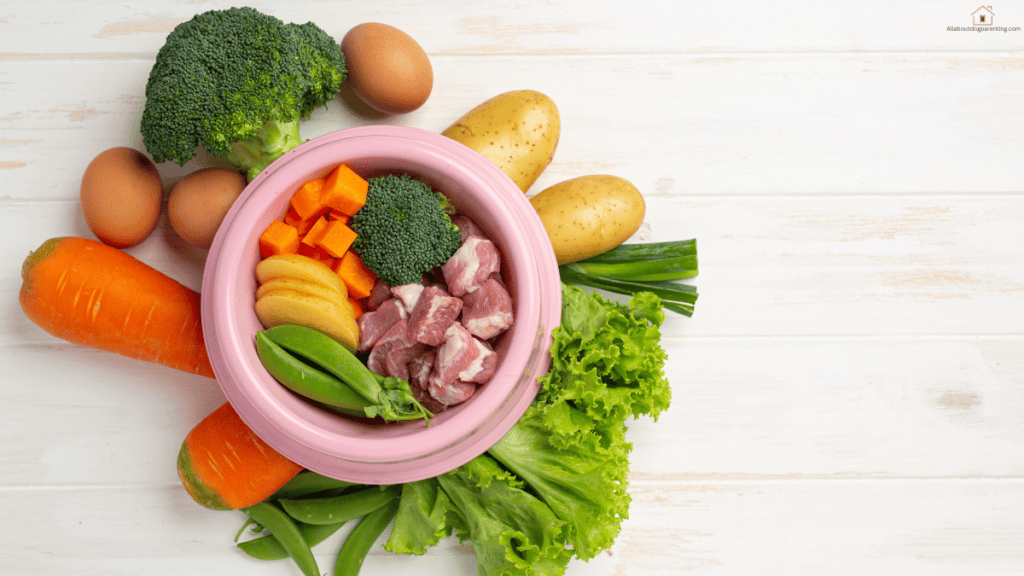
The distinction between commercial and DIY raw matters enormously and most articles treating raw food for puppies as a single category miss this entirely. Commercial raw is pre-formulated, frozen or freeze-dried, and some brands carry AAFCO nutritional adequacy statements. Reputable commercial options may also use High-Pressure Processing (HPP) to reduce pathogen load. DIY raw is owner-formulated from grocery store ingredients. The nutritional control is entirely in the hands of the person making it, and the margin for error in a growing puppy is extremely narrow.
I seriously considered raw feeding when I brought my first German Shepherd home. The logic is appealing: you know exactly what’s in the bowl, there are no preservatives, and the ingredients are recognisable. Then I started researching what it takes to get the calcium-phosphorus ratio right for a large-breed growing puppy, and that alone changed my mind.
The Claimed Benefits of Raw Feeding (What Supporters Say)
Overview:
Raw feeding advocates report shinier coats, firmer stools, better digestion, improved energy, and better dental health from chewing raw bones. These are largely anecdotal. Rigorous clinical studies confirming these benefits specifically in puppies remain limited.
Before getting into the risks, the claims raw feeding supporters make deserve a fair hearing. Some of the proposed mechanisms are plausible. The evidence base, however, does not yet match the enthusiasm.
| Claimed Benefit | What Supporters Report | Evidence Level |
| Shinier coat, healthier skin | Natural omega fatty acids preserved without heat | Anecdotal: plausible mechanism, no controlled puppy studies |
| Smaller, firmer stools | Higher digestibility means less waste | Anecdotal: observed in some dogs, not universal |
| Improved digestion | Less processed ingredients, easier absorption | Anecdotal: some puppies do better, some do worse |
| Fewer allergies | Elimination of common kibble fillers | Anecdotal: true food allergies are rare in puppies |
| Better dental health | Chewing raw bones scrapes plaque | Moderate evidence in adults; bone risks are higher in puppies |
| Higher energy | More bioavailable nutrients | Anecdotal: may also reflect higher calorie intake |
The raw feeding community includes thoughtful, research-aware people who have seen genuine improvements in their dogs. The problem with raw food for puppies specifically is that the risks are amplified during growth in ways that simply do not apply to adult dogs. An adult dog on a carefully managed raw diet is a different conversation from a 12-week-old puppy with an immature immune system and a skeleton that is actively forming.
The Real Risks for Puppies (Why Vets Are Cautious)
Overview:
The primary risks of raw food for puppies are bacterial contamination, nutritional imbalance during critical growth periods, bone fragment injuries, and pathogen transmission to humans. These risks are specifically higher for puppies than adult dogs because of their developing immune systems and narrow nutritional requirements.
This is the aspect most raw feeding articles bury or skip entirely. For puppies, the risks deserve detailed attention.
1. Bacterial contamination
Based on research conducted by the FDA Center for Veterinary Medicine, the odds of being exposed to a foodborne pathogen, like Salmonella, Listeria, or toxigenic E. coli, in frozen raw meat diets for pets purchased online are about 1 in 3. That statistic comes directly from Cornell University’s Riney Canine Health Center and is worth sitting with for a moment.
Puppies have immature immune systems. They are more vulnerable to foodborne pathogens than adult dogs, and the consequences of a Salmonella or Listeria infection in an 8-week-old are considerably more serious. The risk extends beyond the puppy too. Raw food bacteria spread through saliva, food bowls, and faeces. Households with young children, elderly members, pregnant people, or immunocompromised individuals face elevated exposure every time they handle raw pet food or interact with a raw-fed puppy.
One documented case involved a child who contracted E. coli O157:H7, a strain capable of causing kidney failure, traced back to commercial raw frozen food fed to the family dog. HPP processing reduces pathogen load but does not eliminate it.
2. Nutritional imbalance (the calcium-phosphorus problem)
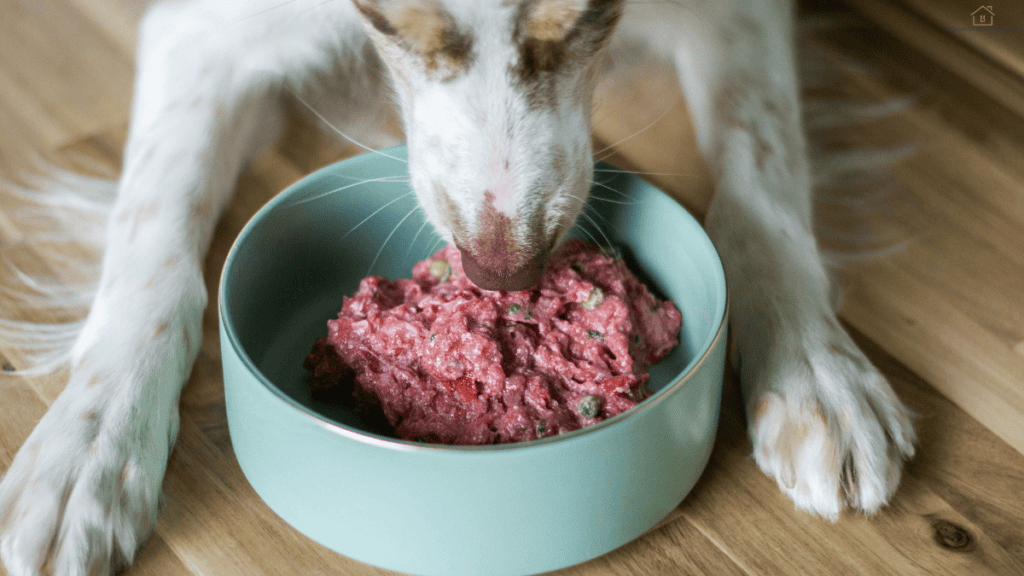
This is the most critical issue for raw feeding a puppy, and the one most articles mention without properly explaining. Growing puppies need a precise calcium-to-phosphorus ratio of approximately 1.2:1 to 1.5:1 for proper bone development. Too much calcium causes skeletal deformities, osteochondrosis, and retained cartilage cores, conditions particularly dangerous in large and giant breed puppies whose growth windows are long. Too little calcium produces soft bones, fractures, and growth delays.
Commercial puppy food formulated for growth has this ratio precisely controlled and independently verified. The standard DIY raw formula of 80/10/10 does not automatically produce the correct ratio. It varies depending on the specific meat sources used, the type of bone included, and how consistently the formula is followed. Published research has documented nutritional osteodystrophy in puppies fed BARF diets, which is a skeletal disease caused directly by nutritional imbalance and largely preventable with correctly formulated food.
For large-breed puppies specifically, the risk compounds further. Until around six months of age, a puppy’s small intestinal tract passively absorbs a high percentage of dietary calcium, meaning excess intake cannot be regulated out. Whatever goes in gets absorbed. This is precisely why large-breed puppy kibble is formulated with controlled calcium levels and why replicating that control in a DIY raw diet is so difficult.
3. Bone fragments
Raw bones are a core component of BARF diets for puppies. Raw bones are safer than cooked bones, which splinter dangerously, but they still carry real risks: tooth fractures, oesophageal obstruction, and intestinal perforation. Puppy teeth are smaller and weaker than adult teeth. Ground bone in commercial raw food is considerably safer than whole bones, but whole bones remain widely used in home raw feeding.
4. Meeting growth-phase nutrient requirements
Puppies need higher protein, fat, calcium, phosphorus, and DHA than adult dogs. Formulating a DIY raw diet that meets all of these simultaneously, in the right proportions, requires professional oversight. Multiple studies analysing home-prepared raw diets have found the majority to be nutritionally incomplete.
What the Major Veterinary Bodies Say
The AVMA, AAHA, FDA, BVA, CVMA, and WSAVA all formally advise against raw meat diets for pets. The level of international consensus on this topic across major veterinary organisations is unusual and worth taking seriously.
| Organisation | Position | Key Concern |
| AVMA | Discourages raw feeding | Bacterial contamination risk to animals and humans |
| AAHA | Recommends against raw | Insufficient evidence of benefit, documented risks |
| FDA | Advises against raw | Higher pathogen rates in raw pet food vs processed food |
| BVA | Recommends against raw | Bacterial risk and nutritional imbalance |
| CVMA | Discourages raw | Risk to animals and public health |
| Cornell Vet School | Cautions against raw | 1-in-3 pathogen rate in commercially sold raw food |
| WSAVA | Does not recommend raw | Insufficient evidence of benefit over commercial diets |
The AVMA recognises public interest in feeding raw diets but formally discourages feeding any raw or undercooked animal-sourced proteins to dogs and cats because of their risk to human and animal health.
The AAHA states its position is based on overwhelming scientific evidence, and it does not advocate or endorse feeding pets any raw or dehydrated nonsterilised foods, including animal-origin treats. The CVMA finds compelling evidence for health risks to pets fed raw meat-based pet food products, and to humans who are in contact with such products or with pets that consume them.
This level of consensus across international veterinary bodies is unusual. These organisations disagree on plenty of things. On raw feeding, particularly for puppies, the alignment is striking.
It is worth noting that some individual vets and veterinary nutritionists do support carefully formulated raw diets, particularly commercial options with verified AAFCO certification. The positions above reflect organisational policy. Even among vets who take a more permissive view of raw feeding in adult dogs, puppies are consistently flagged as the highest-risk group.
If You Still Want to Feed Raw: The Safest Approach
If you choose raw feeding for your puppy, use only commercial raw food carrying an AAFCO “complete and balanced for growth” statement. A DIY raw diet requires oversight from a board-certified veterinary nutritionist. Strict hygiene protocols apply at every single meal.
Is raw food safe for puppies under any circumstances? With the right commercial product, professional guidance, and consistent hygiene, the risk can be meaningfully reduced. Here is how to make the safest choices if raw feeding is your firm decision.
Rule 1: Commercial raw only, with AAFCO certification
Look specifically for the AAFCO statement confirming the food is “complete and balanced for growth” or “all life stages, including growth of large-size dogs” for large breeds. Any label reading “for supplemental or intermittent feeding only” means the food is nutritionally incomplete and should not be your puppy’s primary diet. Brands using HPP provide an additional layer of pathogen reduction, though not total elimination.
Rule 2: Board-certified veterinary nutritionist
A Diplomate of the American College of Veterinary Nutrition (DACVN) is a specialist who can formulate or verify a raw diet’s nutritional adequacy for a growing puppy. This is not the same as your regular vet. If DIY raw puppy feeding is genuinely what you want to do, this consultation is non-negotiable. Custom diet formulation costs $200 to $400. Find a board-certified specialist at acvn.org.
Rule 3: Strict hygiene, every time
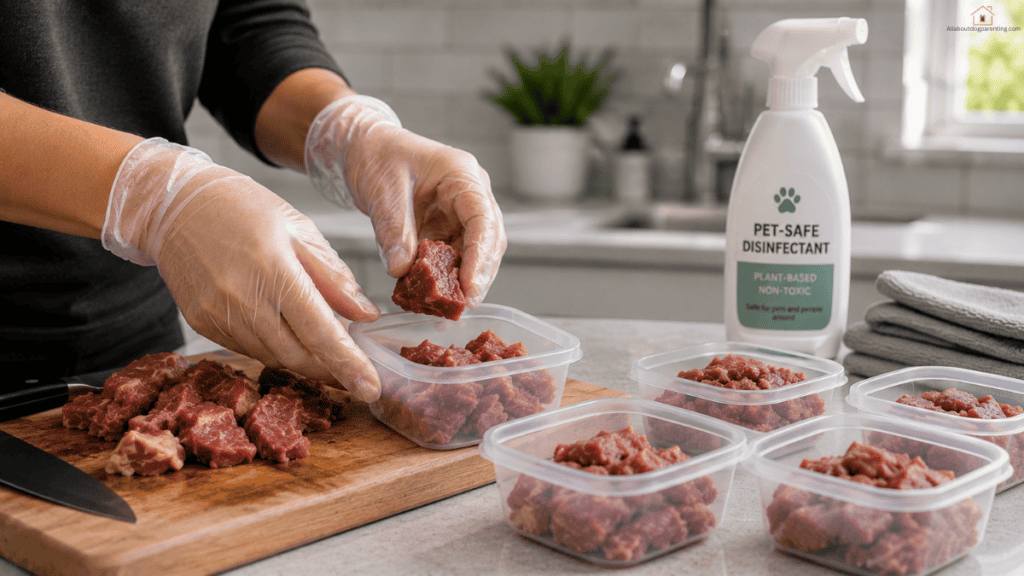
Wash hands thoroughly after handling raw food. Clean bowls, surfaces, and utensils with hot soapy water after each meal. Store raw food completely separately from human food. Pick up any uneaten food within 15 minutes. Keep raw-fed puppies away from immunocompromised family members for 30 minutes after eating, as bacteria in saliva pose a genuine transmission risk.
Rule 4: Monitor growth closely
Weigh your puppy weekly. Ask your vet to assess body condition and skeletal development at every checkup. For large and giant breeds on a raw diet, periodic X-rays to monitor growth plate development are worth discussing. The goal is to confirm that the calcium-phosphorus balance is producing normal skeletal outcomes, not guessing.
Raw vs Kibble vs Fresh: Cost Comparison for Puppies
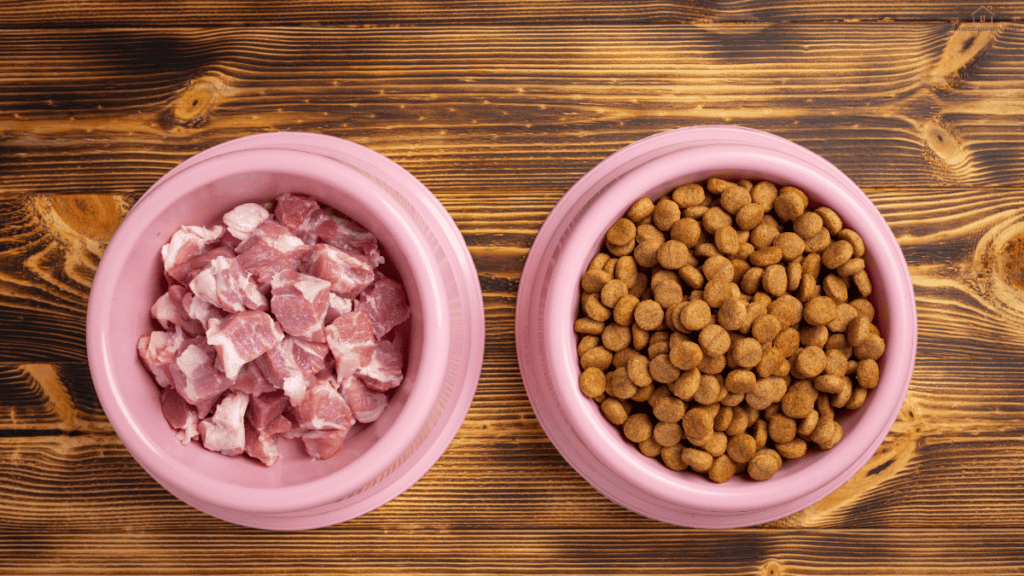
Raw feeding costs roughly 2 to 4 times more than kibble. For a large-breed puppy, expect to spend $140 to $250 per month on commercial raw compared to $50 to $80 for quality kibble. DIY raw ingredient costs are lower but exclude veterinary nutritionist fees.
| Breed Size | Quality Kibble | Commercial Raw | Fresh Food | DIY Raw (ingredients only) |
| Small (under 10 kg) | $25 to $40/mo | $60 to $120/mo | $80 to $150/mo | $40 to $80/mo |
| Medium (10 to 25 kg) | $35 to $60/mo | $90 to $180/mo | $120 to $220/mo | $60 to $120/mo |
| Large (25 to 40 kg) | $50 to $80/mo | $140 to $250/mo | $180 to $300/mo | $90 to $170/mo |
| Giant (40 kg and above) | $65 to $100/mo | $200 to $350/mo | $250 to $400/mo | $130 to $230/mo |
DIY raw ingredient costs exclude the veterinary nutritionist consultation needed to formulate a balanced recipe and the supplements required to fill nutritional gaps. Factor those in, and the first-year cost of a properly managed DIY raw diet for a large-breed puppy rises considerably.
For my GSD at 30 kg plus, the monthly cost difference between quality kibble at around $70 and commercial raw at $180 or more was easy to calculate. Over 14 months of puppyhood, that gap exceeds $1,500. That money goes toward professional training, annual vet checkups, and preventive care instead. For calorie needs by age and breed size regardless of food format, our puppy feeding chart has the calculations covered.
FAQs
1. Can I feed my 8-week-old puppy raw food?
It is possible with a commercial raw food labelled for “growth” or “all life stages,” but most vets advise against it at this age. An 8-week-old puppy has a developing immune system, is adjusting to a completely new environment, and is in a critical nutritional window. The risk-to-benefit ratio is unfavourable compared to a high-quality commercial puppy food with a verified AAFCO statement.
2. Is commercial raw food safer than homemade raw for puppies?
Significantly safer. Commercial raw food from reputable brands is formulated to meet AAFCO nutritional standards and may use HPP to reduce pathogens. Homemade raw diets are repeatedly found to be nutritionally incomplete in formal analyses, and the calcium-phosphorus balance required for a growing puppy is extremely difficult to achieve accurately without professional diet formulation.
3. Can raw food cause Salmonella in puppies?
Yes, research conducted by the FDA Center for Veterinary Medicine found that the odds of pathogen exposure from frozen raw meat diets purchased online are approximately 1 in 3. Healthy adult dogs can sometimes carry and shed these bacteria without obvious symptoms. Puppies with immature immune systems are considerably more vulnerable to infection and its consequences.
4. Do vets recommend raw food for puppies?
The major veterinary organisations—AVMA, AAHA, FDA, BVA, CVMA, and WSAVA—all formally advise against raw meat diets for pets, with particular concern about puppies and immunocompromised animals. Individual vets may hold different views, but the institutional consensus is as uniform as it gets in veterinary medicine. If your vet supports raw feeding for your puppy, make sure they provide a formally verified, complete, and balanced diet plan alongside that recommendation.
5. Can I mix raw food with kibble?
Some raw feeding advocates claim that mixing raw and kibble causes digestive problems because they digest at different rates. Veterinary science does not support this claim. Adding a small amount of raw food to kibble will not cause harm, but it also will not deliver the full benefits raw advocates describe unless the diet is formulated as a complete raw diet. If you are switching between food formats, our 10-day food transition guide covers how to make the change safely.
The Bottom Line
Raw feeding a puppy carries meaningfully higher risks than raw feeding an adult dog, and those risks are well-documented across decades of research and the formal positions of every major international veterinary organisation. The bacterial contamination statistics are real. The calcium-phosphorus challenge is genuinely difficult to manage in a growing puppy without professional help. The consequences of getting either wrong during the growth window can be permanent.
That assessment is worth taking seriously before making the decision. If raw feeding is still your choice, commercial raw with an AAFCO growth statement and strict hygiene protocols is the safest version of that path. DIY raw without a board-certified veterinary nutritionist’s oversight is the riskiest. The gap between those two options is wide, and it matters considerably more for a puppy than for an adult dog. When your puppy is ready to transition away from a growth-phase diet, our guide on when to switch from puppy food to adult food covers breed-size timing and how to make the change without digestive disruption.