Is Your Puppy Overweight? Signs, Risks, and How to Get Back on Track Safely
Overview:
An overweight puppy has ribs you can’t easily feel, no visible waist from above, and a belly that hangs level with or below the chest. During the growth phase, excess weight causes permanent joint damage. The fix: reduce portions by 10 to 15%, increase exercise gradually, and eliminate treat calories.
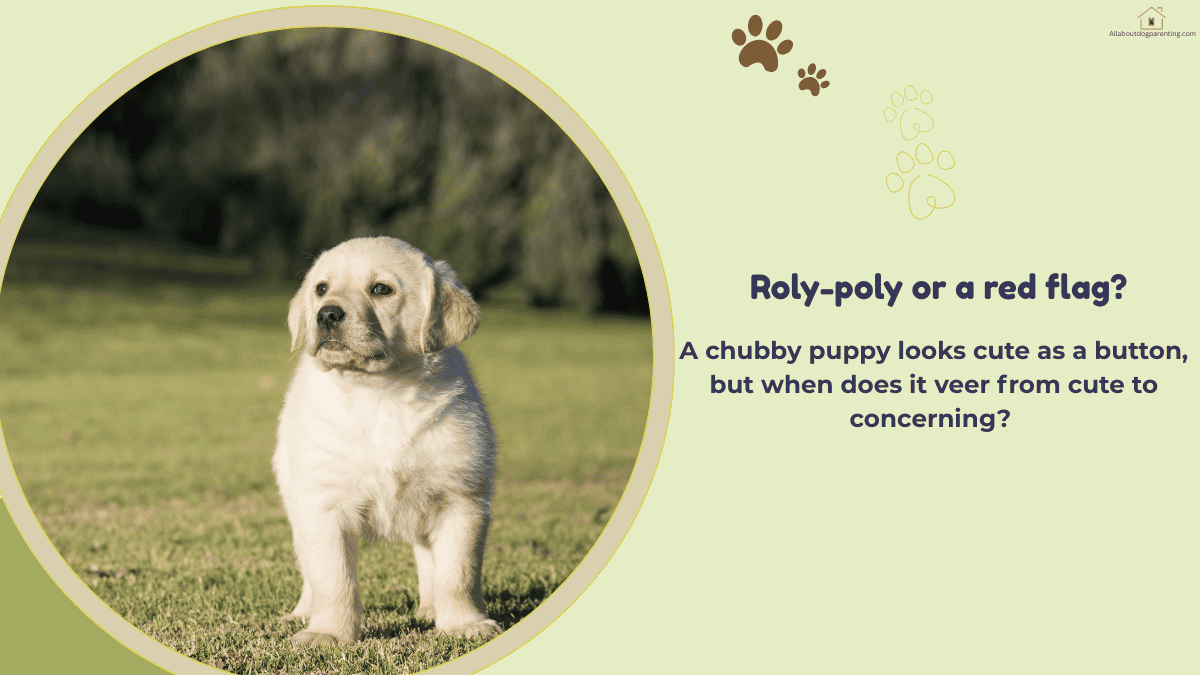
A round, roly-poly puppy is one of the things most people find irresistible. Friends comment on how healthy they look. Strangers on walks say how cute the little chubby one is. The problem is that “healthy looking” and “healthy” are not the same thing when it comes to a growing dog, and puppy obesity causes lasting damage.
So, is your puppy overweight? This article, part of our Complete Guide to Puppy Nutrition, helps you find the answer. If you suspect your puppy is carrying excess weight and want to know what to do about it safely without compromising the growth your puppy still has ahead of them.
How to Tell If Your Puppy Is Overweight (The Body Condition Check)
Overview:
A healthy puppy has easily felt ribs with light pressure but no visible prominence, a clear waist behind the ribs from above, and a slight abdominal tuck from the side. If you cannot feel ribs without pressing hard, your puppy is carrying excess weight.
Is your puppy overweight? This check takes about 90 seconds and is more accurate than any scale reading. Run it once a week during puppyhood.
| Check | Underweight | Ideal Weight | Overweight | Obese |
| Ribs (touch) | Prominent, sharp edges, no fat covering | Easily felt with light pressure, thin fat layer | Hard to feel without firm pressure | Impossible to feel under thick fat layer |
| Waist (from above) | Extreme hourglass, hip bones visible | Clear waist narrowing behind the ribs | Waist barely visible or absent | No waist definition. Body is oval or rectangular. |
| Tummy (from side) | Dramatic tuck, abdomen much higher than chest | Slight upward tuck from chest to belly | Belly level with chest, no tuck | Belly hangs below chest level, may sway |
| Overall appearance | Bony, angular | Lean, athletic, well-proportioned | Round, soft, padded | Visibly obese, waddling gait |
One thing that genuinely confuses owners: puppies are naturally rounder than adult dogs. They carry puppy fat that is completely normal at 8 to 12 weeks. By 4 to 5 months, that roundness should be resolving. A 6-month-old puppy who still looks round is probably overweight rather than just puppy-shaped. That distinction is where the problem usually starts to compound.
The “is my puppy too fat?” concern is worth taking seriously from 4 months onward. If the rib check requires significant pressure to feel anything, and the waist is absent when you look down at your puppy from above, they are carrying more weight than is healthy for their stage of development.
Why Puppy Obesity Is More Dangerous Than Adult Obesity
Overview:
An overweight adult dog carries extra load on finished joints. An overweight puppy carries extra load on growing joints, and that load causes permanent structural damage. Growth plates develop abnormally under excess weight, leading to hip dysplasia, osteochondrosis, and cartilage problems that persist for life.
This is the section that most puppy owners have never encountered, because almost every article about dog obesity is written about adult dogs. The growth-phase difference is significant enough to change how you think about the whole issue.
When an adult dog is overweight, the primary problem is mechanical: extra weight stresses joints that have already finished forming. The joints themselves are structurally complete. Lose the weight, reduce the stress, and the situation improves. The damage is largely reversible.
When a puppy is overweight during the growth phase, the problem is developmental. Growth plates are soft cartilage zones at the ends of long bones where new bone tissue forms. They are still actively developing, and under excess load, they develop abnormally. Cartilage retention occurs in areas that should have calcified properly. The result is structural joint abnormality, including hip dysplasia, elbow dysplasia, and osteochondrosis dissecans. These conditions do not resolve when the weight comes off later. They are baked into the skeleton at the point of formation.
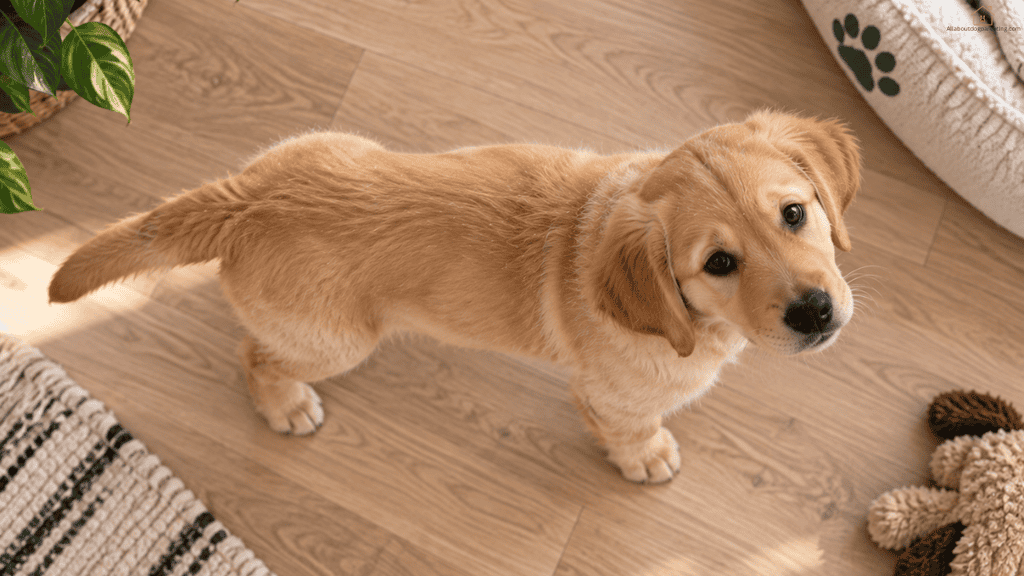
Research cited by the Purina Lifetime Study suggests that lean growth reduces the severity of hip dysplasia by up to 25% even in genetically predisposed breeds. Other research in the veterinary nutrition literature puts this figure closer to 40% for controlled-feeding versus free-feeding comparisons. The joint health benefit of lean growth during puppyhood is one of the most robust findings in companion animal nutrition.
The 4 to 10 month window is the highest-risk period, because this is peak growth velocity when bones are forming fastest, and growth plates are most vulnerable to deformation under load. Large and giant breeds face compounded risk because their growth periods are longer and their adult weights higher, but the principle applies across all breed sizes.
This is the fact that changed how I fed my German Shepherd. Once I understood that excess weight during growth could permanently damage his joints in ways that no later weight loss could fix, I stopped worrying about him looking lean and started actively monitoring to make sure he never tipped into the overweight category. The body condition check became a weekly habit from the day he came home.
What Causes Puppy Obesity
Overview:
The top causes of puppy obesity are too many treats, incorrect portion sizes, too many family members feeding, and inadequate exercise. Medical causes like hypothyroidism are rare in puppies. Overfeeding is the cause in well over 95% of cases.
Medical causes of weight gain in puppies exist but are genuinely uncommon. If your puppy is gaining weight rapidly despite controlled portions, a vet check to rule out hypothyroidism or Cushing’s disease is worth doing. In the large majority of cases, the cause is simpler.
| Cause | How It Happens | The Fix |
| Treat overload | Training treats plus chew sticks plus table scraps equals 30 to 50% of daily calories from treats without anyone realising | Apply the 90/10 rule: 90% meals, 10% treats maximum. Reduce meal portions on heavy training days. |
| Feeding to appetite | “He seems hungry, so I give more,” especially common with Labs, Beagles, and food-motivated breeds | Feed to the chart and body condition, not to appetite. Our puppy feeding chart gives exact amounts by weight and age. |
| Multiple feeders | Grandma feeds, the kids feed, a partner feeds and nobody is tracking the total | One person manages feeding, or use a visible meal-tracking log that everyone in the house can see |
| Free-feeding | Food available all day leads to gradual overconsumption that nobody notices | Measured meals at set times. Pick up uneaten food after 15 minutes, every meal. |
| Too little exercise | Modern puppies spend significantly more time indoors than previous generations | Age-appropriate exercise: 5 minutes per month of age, twice daily |
| Growth food too long | Staying on high-calorie puppy food past the transition window keeps calorie density too high | Switch to adult food at the appropriate time for your breed size. Our when to switch to adult food guide covers this. |
The treat category is the one that surprises most owners when they actually run the numbers. A single large bully stick can contain 200 to 700 calories depending on size. A training session with 60 small treats at 3 calories each adds 180 calories. For a medium-breed puppy eating 800 calories per day, a bully stick and a training session can together represent 50% or more of their entire daily food intake, all arriving outside the bowl and outside anyone’s mental accounting.
For a practical guide to managing treat calories without abandoning training, our best puppy treats for training guide covers low-calorie options and the daily budget framework that keeps training functional without creating an overweight puppy.
The Safe Puppy Weight-Loss Plan, Without Compromising Growth
Overview:
Never put a growing puppy on a diet the way you would an adult dog. Instead: reduce current portions by 10 to 15%, eliminate treat calories above the 10% rule, increase daily exercise by 10 to 15 minutes, and reassess body condition every two weeks. Consult your vet before making any changes.
Puppy overweight what to do, you ask? The key principle that separates puppy weight loss from adult dog weight loss: a growing puppy still needs complete growth-phase nutrition. You cannot simply halve portions or switch to a diet food and expect good outcomes. The goal is slowing weight gain, not creating a calorie deficit so severe that development is compromised.
Step 1: Confirm with your vet
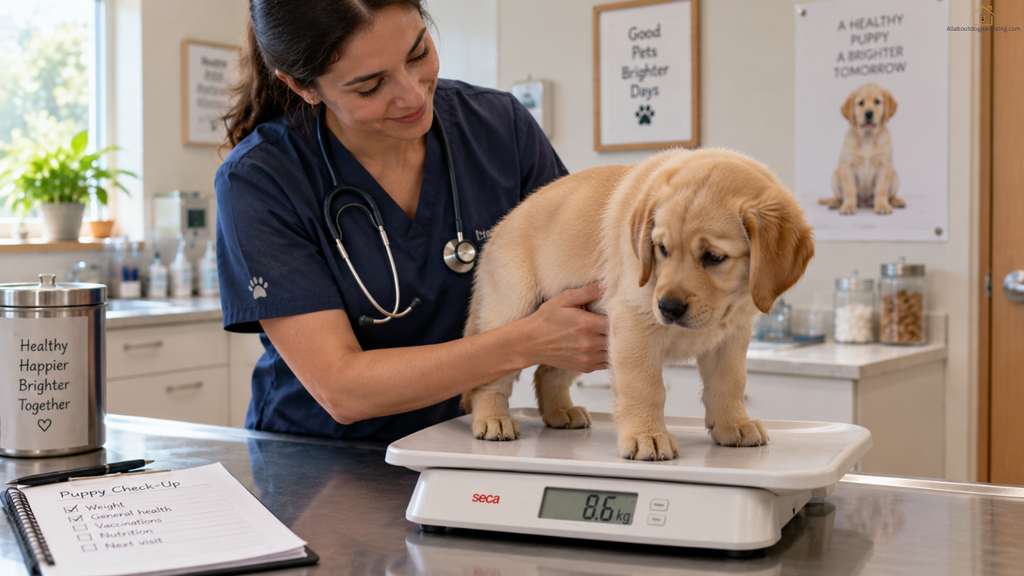
Before adjusting anything, have your vet assess body condition and confirm your puppy is overweight rather than appropriately growing for their breed. Some breeds, including Bulldogs, Pugs, and Basset Hounds, naturally carry a rounder build and have breed-specific body condition references. Get a professional baseline. This visit also rules out medical causes.
Step 2: Reduce portions by 10 to 15%
Not 30%, not 50%. A modest reduction slows weight gain without starving development. If your puppy currently eats 2 cups per day, reduce to 1.7 to 1.8 cups and hold there for two weeks before reassessing. Recalculate using the feeding chart for your puppy’s current weight. Our how much to feed a puppy guide covers the calculation method.
Step 3: Eliminate hidden calories
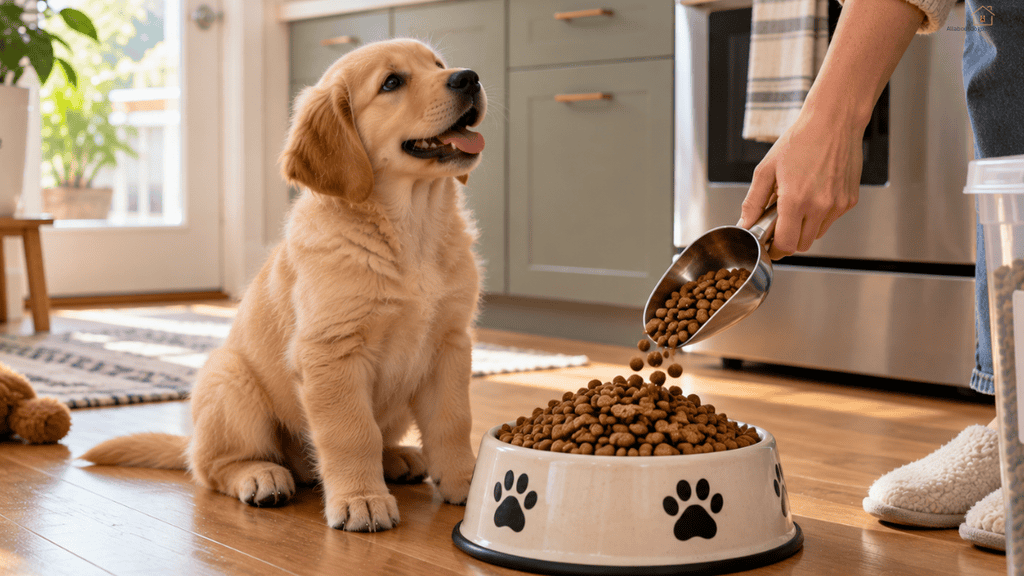
Audit everything that goes into your puppy’s mouth beyond meals. Training treats, dental chews, bully sticks, table scraps, and lick mats with peanut butter all carry calories most owners don’t track. Add them up for a typical day and compare to the 10% treat budget for your puppy’s daily calorie intake. Cut or replace high-calorie treats with kibble from the daily meal portion. Use the 90/10 structure from this point forward: 90% of daily calories from complete puppy food, 10% from treats maximum.
Step 4: Increase exercise gradually
Add 5 to 10 minutes to daily walks. Add a second short play session if only one currently exists. Avoid high-impact exercise, specifically jumping, sustained stair-climbing, and hard running, for puppies under 12 months. The entire point of addressing puppy weight loss during the growth phase is joint protection. Introducing high-impact exercise before the skeleton matures works against that goal.
Expected timeline: Visible improvement typically appears within 4 to 6 weeks. A puppy losing weight at the right pace will lean out gradually. You should notice more waist definition and easier rib-feel within a month. If no change is apparent after 6 weeks of consistent changes, bring your puppy back to the vet.
For the feeding schedule structure that supports measured meals and consistent timing, our puppy feeding schedule guide maps the full daily routine.
The “Cute and Chubby” Problem
Overview:
Friends, family, and social media celebrate round puppies, but a lean puppy is a healthy puppy. The social pressure to keep a puppy looking chubby works against their joint health, especially in large breeds. Body condition, not social approval, should guide feeding decisions.
This is worth naming directly because it is a genuine barrier for many owners. You put your puppy on a more structured feeding plan. Their waist becomes visible. Someone tells you they look thin. Someone else says they looked healthier when they were rounder. A well-meaning family member slips them extra food at every visit.
The pressure is real and it comes from a good place. People who love dogs associate a round, well-padded puppy with wellbeing. The association feels intuitive even though it runs counter to the evidence.
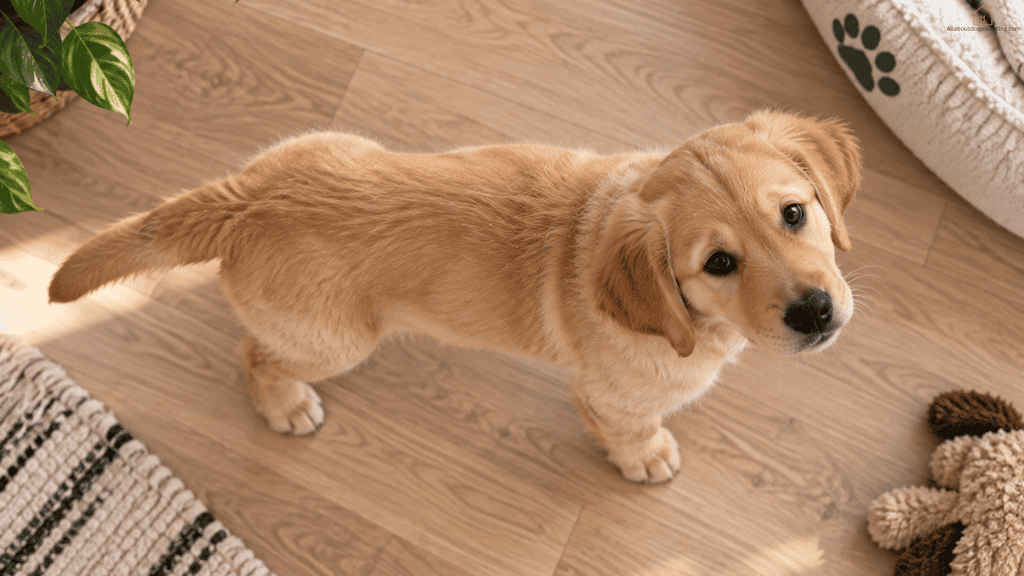
A fat puppy with absent ribs and no waist definition is not thriving. A lean puppy with easily palpable ribs, a visible waist from above, and a slight abdominal tuck from the side is in ideal condition. A puppy who looks “a bit thin” to someone accustomed to seeing overweight dogs is often exactly where they should be. The body condition check in the table above is your reference point.
When people commented that my GSD looked too skinny during his puppy months, I showed them the body condition assessment my vet had done at his last checkup. “The vet says he’s a four out of nine. That’s perfect.” That tended to settle the conversation.
For breed-specific weight expectations that help you distinguish lean-and-healthy from genuinely underweight, our German Shepherd puppy food guide and Labrador puppy food guide both cover breed-specific weight benchmarks.
FAQs
1. How can I tell if my puppy is overweight?
Run the body condition check. Press gently along the ribcage: ribs should be easily felt with light pressure but not visible. From above, there should be a clear waist narrowing behind the ribs. From the side, the belly should slope upward slightly toward the hindquarters. If ribs require firm pressure to feel and the waist is absent, your puppy is carrying excess weight. The full table earlier in this article gives you a four-level assessment across all three checks.
2. Is a chubby puppy unhealthy?
Beyond 8 to 12 weeks, yes. Normal puppy fat should be resolving by 4 to 5 months. A puppy who still looks round at 5 or 6 months is almost certainly overweight rather than still carrying developmental puppy fat. The distinction matters because a fat puppy means extra load on growth plates that are still forming, which can cause permanent joint problems that no later weight loss reverses.
3. How much should I reduce my puppy’s food if they need to lose weight?
A maximum of 10 to 15% from current portions. A growing puppy still needs complete nutritional support. The goal is slowing weight gain rather than creating a severe calorie deficit. Reduce, hold for two weeks, reassess body condition, and adjust further only if no progress is visible. Always confirm with your vet before changing a growing puppy’s food intake.
4. Can puppies exercise to lose weight?
Exercise helps, but diet is the primary lever. Tightening meal portions and cutting treat calories will produce more visible change in four weeks than doubling exercise alone. That said, adding 5 to 10 minutes to daily walks and a second play session supports puppy weight loss while building muscle. Avoid high-impact exercise for puppies under 12 months. The skeleton is still forming, and joint protection is the priority.
5. At what age should I start monitoring my puppy’s weight?
From 4 months onward, check body condition monthly at minimum. This is when the growth phase enters its highest-velocity window and when an overweight puppy becomes most consequential for joint development. The window from 4 to 10 months is where excess weight does the most lasting damage to developing growth plates.
The Bottom Line
Knowing what to do when your puppy is overweight starts with the body condition check. The scale number matters less than what your hands tell you. Ribs you can feel easily, a waist you can see, a slight abdominal tuck from the side: these are the markers of a puppy growing at the right weight.
The stakes during the growth phase are specific and real. Excess weight on developing joints causes structural damage that no later intervention fully reverses. Lean growth protects the skeleton while it is forming. Once that window closes, the skeleton is fixed. This is the framing that changes how informed puppy owners think about the “puppy overweight what to do” question. Catch it early, reduce portions modestly, cut hidden treat calories, and let the body condition check guide you every two weeks rather than guessing.
Your puppy does not need to be chubby to be loved. A lean, athletic puppy in excellent condition is the healthiest expression of everything you are putting into their care.