Fresh Dog Food for Puppies: Is It Worth the Cost?
Overview:
Fresh dog food for puppies delivers genuinely superior nutrition compared to highly processed kibble, but at 3 to 8 times the cost. For most owners, a partial approach works well: quality fresh food as a topper or half-plan alongside kibble gives your puppy real-food benefits without the full subscription price tag.
I have fed all my German Shepherds home-cooked food. No, not because I was trying to make some kind of lifestyle statement about being an aware pet parent. My choice boiled down to one reason: once you understand what goes into most commercial kibble and compare it to a bowl of real food, the difference is hard to unsee. Fresh dog food for puppies sits closer to what dogs should actually be eating than any extruded pellet, and I think most honest nutritionists would agree with that assessment if they weren’t also defending the commercial pet food industry.
That said, fresh food comes with a cost reality that I am equally honest about, and this article, part of our Complete Guide to Puppy Nutrition, covers both. What fresh food actually is, what the research supports, what it costs by breed size, and how to get the most nutritional value from it without necessarily committing to a $350-a-month subscription.
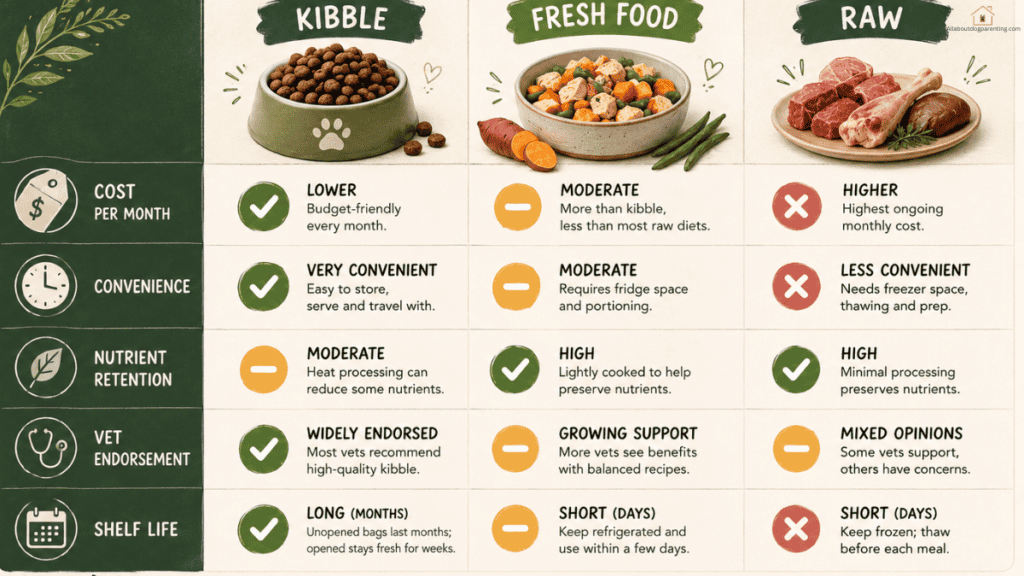
What Is Fresh Dog Food? (And How It Differs from Kibble and Raw)
Overview:
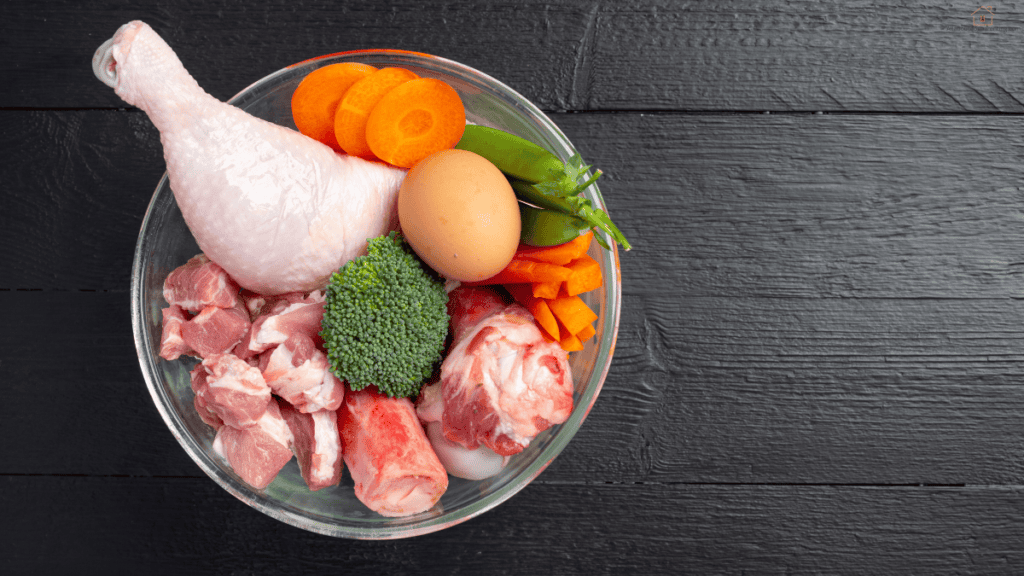
Fresh dog food is gently cooked, minimally processed food made from whole ingredients: real meat, vegetables, and grains. Unlike kibble, which is extruded at high heat, fresh food is lightly cooked to retain more nutrients while eliminating pathogens. It’s sold refrigerated or frozen, often via subscription.
The core difference between fresh dog food for puppies and conventional kibble is processing. Kibble is made by combining ingredients into a slurry, forcing it through an extruder at temperatures between 149 and 177 degrees Celsius, then spraying the finished pellets with synthetic nutrients, palatability enhancers, and preservatives to replace what the heat destroyed. Fresh food is cooked at lower temperatures from whole ingredients that retain their nutritional integrity without the synthetic reconstruction afterward.
Fresh food differs from raw in one critical way: it’s cooked. That eliminates the bacterial contamination risks that make raw feeding a harder sell for puppies with developing immune systems. If you want the full breakdown of that debate, our guide to raw food for puppies covers the risks and research in detail.
| Factor | Kibble | Fresh Food | Raw Food |
| Processing | High-heat extrusion | Gently cooked | Uncooked |
| Moisture | ~10% | ~60–70% | ~70–75% |
| Shelf life (opened) | 4–6 weeks | 4–7 days refrigerated | 3–5 days refrigerated |
| Pathogen risk | Very low | Very low | Meaningful |
| Cost (medium breed/month) | $35–60 | $150–300 | $90–180 |
| AAFCO-certified options | Widely available | Available from major brands | Limited |
| Delivery model | Store or online | Subscription delivery | Store or online |
Fresh food subscriptions like The Farmer’s Dog, Ollie, JustFoodForDogs, and Nom Nom prepare customized portions based on your puppy’s breed, weight, age, and activity level. In-store options like Freshpet offer a more accessible entry point without the subscription commitment. Both are genuinely different products from kibble, and the ingredient list alone makes that obvious.
The Real Cost of Fresh Puppy Food (The Numbers Nobody Shows You)
Overview:
Fresh puppy food costs roughly $80 to $550 per month, depending on breed size and brand. A medium-breed puppy on a full fresh plan runs $150 to $300 monthly. A large-breed puppy can exceed $350 monthly, compared to $50 to $80 for quality kibble.
Fresh puppy food cost is where the conversation gets real for most owners. The fresh food subscription puppy plans are calibrated to your dog’s calorie needs, which means large and giant breed puppies get the largest bills at exactly the time when veterinary costs are also at their highest.
| Breed Size | Quality Kibble | Fresh Food (Full Plan) | Fresh Food (Half Plan or Topper) | Annual Difference (Full vs Kibble) |
| Toy or Small (under 10 kg) | $25–40/mo | $80–180/mo | $40–90/mo | $660–1,680 |
| Medium (10–25 kg) | $35–60/mo | $150–300/mo | $75–150/mo | $1,080–2,880 |
| Large (25–40 kg) | $50–80/mo | $250–400/mo | $125–200/mo | $2,040–3,840 |
| Giant (40 kg and above) | $65–100/mo | $350–550+/mo | $175–275/mo | $3,000–5,400+ |
Puppy plans cost more than adult plans because growing dogs eat more calories per kilogram of body weight than adults. A large-breed puppy on a full fresh food plan for 14 to 18 months of puppyhood could cost $4,000 to $6,000 in food alone before the switch to adult formula.
I priced out a fresh food subscription for my GSD when he was around four months old, eating roughly 1,100 calories daily. The quote came back at approximately $280 per month. Over the remaining ten months of puppyhood, that would have been close to $2,800. Quality kibble over the same period cost around $700. That $2,100 difference covered his full vaccination series, neutering, a puppy training course, and a year of pet insurance. I made the call to use balanced home-cooked food instead, which let me control every ingredient while keeping costs manageable. That option requires commitment and knowledge, but it’s the one I’ve trusted with every GSD I’ve raised.
Fresh food subscription puppy plans scale upward as your puppy grows and their calorie needs peak. A 10-week GSD’s subscription might start at $180 monthly and climb past $350 by eight months. Budget accordingly if this is the route you’re choosing.
What the Science Actually Shows
Overview:
Research suggests fresh food improves digestibility, supports a healthier gut microbiome, and may contribute to better long-term health markers. Most studies are small or short-term, but the mechanisms are sound. Fresh food’s advantages over kibble are real even if the magnitude of benefit isn’t yet fully quantified.
The research on fresh dog food for puppies is genuinely interesting, and the picture emerging is more positive than commercial pet food companies would prefer to acknowledge.
| Claimed Benefit | Evidence Level | Key Source | Notes |
| Higher digestibility | Moderate | Multiple comparative studies | Consistent finding across controlled settings |
| Smaller, firmer stools | Moderate | Owner-reported and study data | Reflects higher digestibility and less filler |
| Healthier gut microbiome | Emerging | University of Illinois, 2021 | Small sample; long-term implications promising |
| Shinier coat, healthier skin | Anecdotal | Widespread owner reports | Plausible mechanism via higher omega content |
| Improved energy | Anecdotal | Owner reports | Could reflect better nutrient bioavailability |
| Longevity | Early | Dog Aging Project, ongoing | No conclusive data yet |
The digestibility advantage is the most consistently supported finding, and it matters specifically for puppies. A highly digestible diet means your puppy is actually absorbing and using what you’re feeding them, rather than passing a significant portion through. Kibble’s high-heat processing degrades proteins and destroys heat-sensitive nutrients, which are then replaced with synthetic equivalents. How well those synthetic additions are absorbed compared to naturally occurring nutrients in whole food remains an open question that the pet food industry has little financial incentive to fund research into.
I have seen the difference firsthand. Every GSD I’ve raised on balanced fresh or home-cooked food has had noticeably better coat quality, more consistent digestion, and smaller stools than dogs I’ve known on comparable-price kibble. That’s anecdotal, but it’s fifteen years of anecdotal evidence across multiple dogs, and it tracks with what the emerging research shows.
What the research doesn’t yet show is definitive proof that fresh-fed puppies develop better than kibble-fed puppies when both diets meet AAFCO standards. That research is hard to conduct over the timeframes needed. But absence of proof is not proof of absence, and the mechanisms behind fresh food’s advantages are biologically coherent.
When Fresh Food Is Worth the Full Cost
Overview:
Fresh food is unambiguously worth the premium for puppies with chronic digestive issues unresponsive to kibble changes, puppies with multiple confirmed food allergies, small breed owners for whom the cost is manageable, and anyone who believes in feeding real food and can absorb the expense.
The “is fresh dog food worth it” question doesn’t have a single answer. It depends on your puppy, your budget, and what you value.
| Your Situation | Worth It? | Why |
| Healthy puppy, no issues, budget matters | Consider partial plan | Quality kibble works; fresh as topper adds real benefit at lower cost |
| Puppy with chronic digestive issues | Yes | Higher digestibility genuinely helps where kibble hasn’t |
| Puppy with multiple confirmed food allergies | Yes | Better ingredient control than most kibble formulations |
| Picky eater refusing kibble | Try as topper first | Solves most refusal cases without full subscription cost |
| Large or giant breed puppy, tight budget | Partial plan or home cook | $250 to $550 monthly for 18 months is hard to justify |
| Small breed, comfortable budget | Yes | $80 to $180 monthly is manageable and the quality is real |
| You want to feed real food regardless of cost | Yes | Fresh food IS what dogs should eat; the question is only whether your budget allows it |
| Recovery from illness or surgery | Yes, short-term | High palatability and digestibility aid recovery |
My honest position: if the budget allows, fresh food is the better choice. Dogs evolved eating whole food, not extruded pellets sprayed with synthetic nutrients. The closer their diet is to whole, recognisable ingredients, the more sense it makes nutritionally. The caveat is that cost is real, a balanced approach matters, and throwing money at a fresh food subscription without understanding the nutritional profile doesn’t automatically make it better than a carefully chosen, properly formulated alternative.
The Smarter Middle Ground: Fresh Food as a Topper
Overview:
Adding fresh food as a topper to quality kibble, covering 20 to 25% of daily calories, delivers real nutritional benefits at a fraction of the full subscription cost. This is the most practical approach for most puppy owners who want the benefits of fresh food without the full price tag.
The fresh vs kibble puppy debate is often presented as binary. It doesn’t need to be. A partial approach gives your puppy genuinely better food than kibble alone at a cost most budgets can absorb.
How the topper approach works
Feed 75 to 80% of daily calories from quality kibble. Top each meal with 20 to 25% fresh food from either a subscription half-plan or in-store Freshpet. This adds moisture, whole protein, and ingredient quality without replacing the entire diet’s calorie base.
| Approach | Monthly Cost (Medium Breed) | Compared to Kibble Only |
| Kibble only | $35–60 | Baseline |
| Kibble plus fresh topper (20–25%) | $65–120 | +$30–60/month |
| Half fresh, half kibble | $100–180 | +$65–120/month |
| Full fresh plan | $150–300 | +$115–240/month |
For puppies going through teething between three and six months, adding fresh food to kibble often solves the appetite dip that hard kibble causes when gums are sore. It also introduces variety in protein sources during puppyhood, which may reduce the chance of developing food sensitivities later. Our puppy feeding chart covers how to calculate total daily calories across mixed food sources so you maintain accurate portions when combining formats.
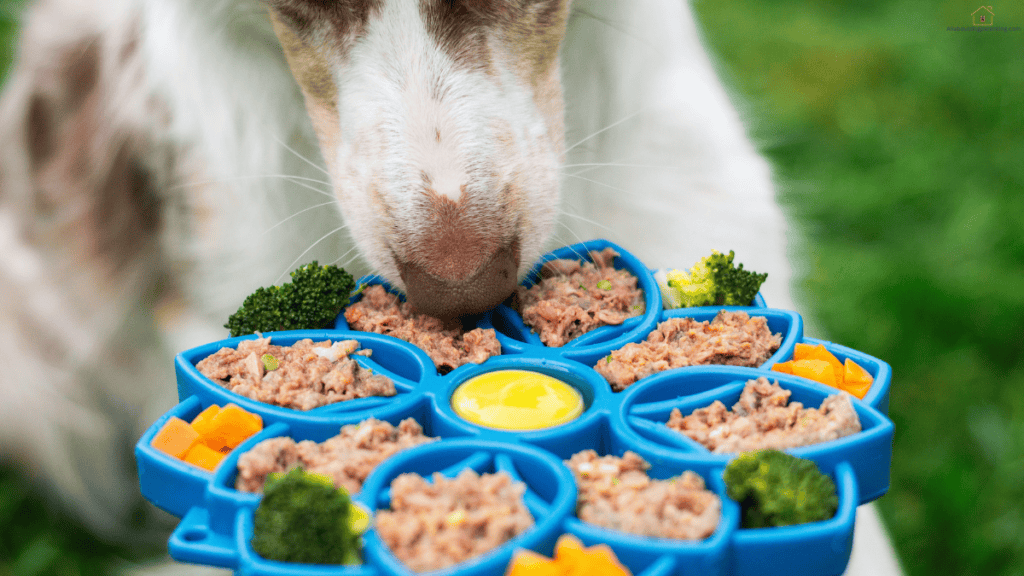
JustFoodForDogs sells individual fresh packs in-store at PetSmart without a subscription commitment, which makes topper-level use genuinely accessible. A roll of Freshpet from most pet retailers costs between $5 and $24, depending on size. Starting there lets you see how your puppy responds to fresh food before committing to a monthly subscription plan.
The Home-Cooked Alternative (What I Actually Do)
Overview:
A balanced home-cooked diet sits between fresh food subscriptions and kibble in both cost and nutritional control. Done correctly with veterinary nutritionist guidance, it delivers the same whole-food benefits as commercial fresh food at a lower monthly cost and with full ingredient visibility.
This is the approach I’ve taken with all my German Shepherds, and it’s worth addressing directly because many fresh food advocates overlook it.
Home-cooked food gives you everything commercial fresh food offers: whole ingredients, minimal processing, real meat and vegetables, and no synthetic preservatives. What it requires is knowledge, consistency, and professional formulation to make sure the diet is nutritionally complete. That last part is non-negotiable.
A board-certified veterinary nutritionist can formulate a balanced home-cooked recipe for your puppy’s breed, size, and growth stage. The consultation costs $200 to $400, and the resulting recipe, followed correctly with appropriate supplements, provides genuinely excellent nutrition. Monthly ingredient costs for a large breed typically run $100 to $150, which sits between kibble and a full fresh subscription.
The risk of home cooking without professional formulation is nutritional imbalance, particularly around calcium and phosphorus in large-breed puppies. Done right, it’s arguably the best feeding option available. Done without proper formulation, it can cause serious developmental harm. There’s no middle ground on that.
If home cooking appeals to you but feels overwhelming, commercial fresh food subscriptions are the next best thing. They do the formulation work for you.
Where the Saved Money Goes
Overview:
The $1,000 to $5,000-plus annual savings from choosing kibble or a partial fresh plan over a full subscription is better invested in veterinary care, training, socialisation, and pet insurance—all of which have a larger proven impact on your puppy’s long-term health than any diet upgrade alone.
Even as someone who prioritises food quality, I recognise that food is one factor among many in a puppy’s health. The savings from not running a full fresh subscription during puppyhood can cover every major health investment your puppy needs.
| Expense | Typical Cost | Impact on Puppy’s Life |
| Full puppy vaccination series | $200–400 | Prevents fatal diseases |
| Spay or neuter | $200–500 | Health and behaviour benefits |
| Puppy training course (group) | $150–300 | Socialisation, obedience, bonding |
| Annual vet checkup plus bloodwork | $200–400 | Early detection of health issues |
| Pet insurance (annual) | $400–800 | Covers emergency and illness costs |
| Dental cleaning | $200–500 | Prevents periodontal disease |
| Total | $1,350–2,900 | Covers every major puppy health milestone |
A delayed diagnosis on a treatable condition does more damage than a year of kibble. Pet insurance and regular vet care prevent that. Fresh food does not. So if the budget genuinely forces a choice, the vet care wins. If the budget allows both, great. That’s the honest version of this.
FAQs
1. Is fresh dog food better than kibble for puppies?
In terms of ingredient quality and minimal processing, yes. Whole, gently cooked food is nutritionally superior to highly processed extruded kibble in ways that matter: better digestibility, better moisture content, better bioavailability of heat-sensitive nutrients. Whether that difference produces measurably better health outcomes in puppies eating AAFCO-complete versions of both diets is what the research hasn’t yet fully quantified. But the mechanism for fresh food’s advantage is biologically sound.
2. How much does fresh puppy food cost per month?
Fresh puppy food cost runs $80 to $180 monthly for small breeds, $150 to $300 for medium breeds, and $250 to $550 or more for large and giant breeds on a full fresh subscription plan. Half-plans and toppers cut these figures significantly. Quality kibble covers the same breeds for $25 to $100 monthly.
3. Can I feed my puppy both fresh and kibble?
Yes, this can be a practical approach. Feed kibble as the calorie base and add fresh food as a topper covering 20 to 25% of daily calories. Calculate total daily calories from both sources to avoid overfeeding. Most puppies take to mixed meals readily. See our 10-day transition guide if you’re introducing fresh food to a puppy currently on full kibble.
4. Is a fresh dog food subscription worth it for a puppy?
For small breed owners, where the cost is manageable, yes. For large and giant breed owners, a full fresh dog food subscription puppy plan during the 14 to 18 month growth phase is a significant financial commitment that a partial plan or home-cooked diet can replicate at a lower cost. The quality is real; the question is always whether the full subscription premium is the most effective use of your puppy budget.
5. Do vets recommend fresh dog food for puppies?
Most veterinary nutritionists call fresh food a high-quality option while noting it isn’t nutritionally necessary if a quality AAFCO-complete kibble meets the same standards. That framing tends to underweight the ingredient quality difference between whole food and extruded kibble. If your vet specifically recommends fresh food for your puppy’s health situation, that recommendation carries weight worth following.
The Bottom Line
Fresh dog food for puppies is genuinely better food. The ingredients are more recognizable, the processing is less destructive, and the digestibility advantage is real. For anyone who can absorb the cost, it’s a legitimate choice backed by sound reasoning.
For everyone else, a partial approach works: quality kibble as the base, fresh food as a topper, and the significant cost difference redirected toward the vet care, training, and preventive health investments that make a measurable difference in your puppy’s life. Home cooking, done with proper formulation guidance, is the option I’ve trusted for fifteen years with my own dogs because it delivers real-food quality with full ingredient control at a more sustainable cost than a full subscription.
The worst outcome is a puppy whose owner goes all-in on fresh food for three months, finds the cost unsustainable, and switches abruptly. Pick an approach that works for your budget over the full 14 to 18 months of puppyhood and stick to it. Consistency matters as much as quality during the growth phase.