Best Puppy Treats for Training: 7 Safe, Low-Calorie Picks (2026)
Overview:
The best puppy treats for training are soft, pea-sized, under 5 calories each, and eaten in under two seconds. Top picks: Zuke’s Mini Naturals, Pet Botanics Training Rewards, and Bocce’s Bakery Training Bites. Your puppy’s own kibble is your best first option.
Most puppy owners head straight to the treats aisle when they start training. Before you go splurging on the best puppy treats for training, hear this: the best training rewards puppy needs for basic commands are probably already sitting in the bag of food you bought last week. In this article, which is part of our Complete Guide to Puppy Nutrition, we cover everything from that zero-cost starting point to the commercial options worth buying and the high-value rewards worth keeping in reserve for genuinely difficult moments.
What Makes a Good Training Treat (It’s Not What Makes a Good Snack)
Overview:
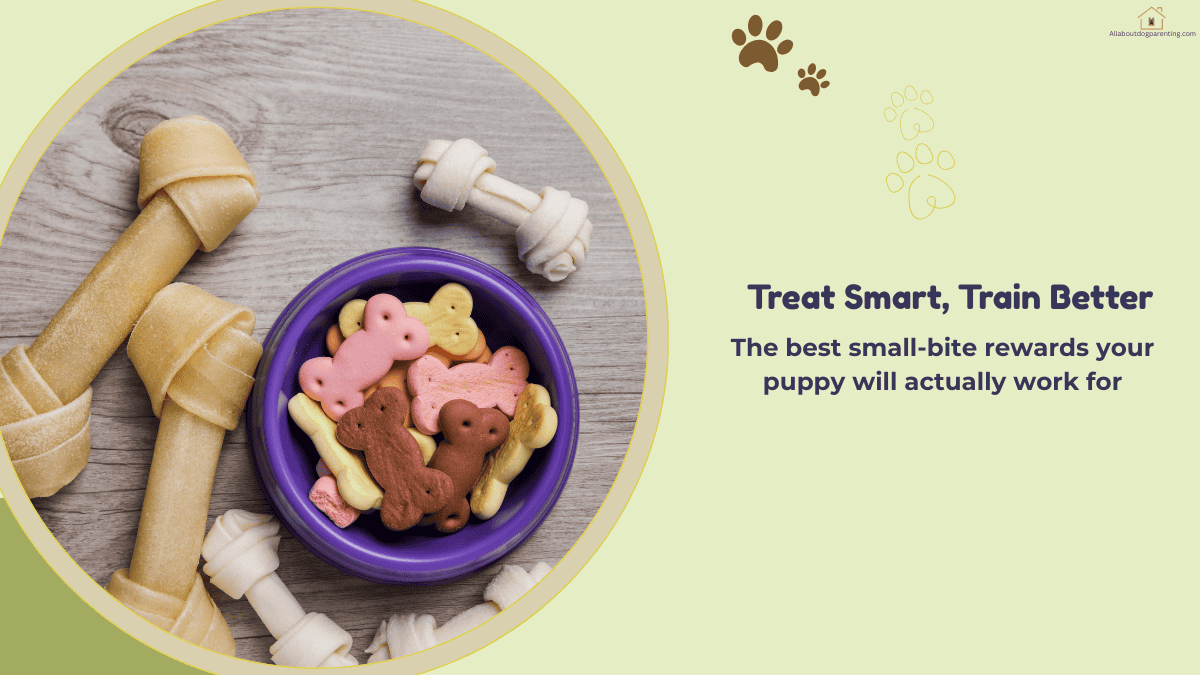
A good training treat is pea-sized or smaller, soft enough to eat in under two seconds, under 5 calories, and strongly aromatic. Hard biscuits, large chews, and dental sticks are snacks. They interrupt the training flow and teach your puppy that reward time means break time.
Professional dog trainers don’t use the fancy treats from the bakery section of the pet store. They use the smallest, smelliest, fastest-to-consume thing available. The goal isn’t to give your puppy a dining experience. It’s to mark and reinforce behaviour in under a second. Those are completely different requirements from a treat you’d give for an evening chew.
| Criteria | Why It Matters | What to Look For |
| Size: pea-sized or smaller | Training involves 30 to 100 rewards per session. Big treats fill a puppy up fast and slow the session. | Treats you can break into 3 to 4 pieces, or that come pre-sized under 1 cm |
| Texture: soft and chewy | The puppy needs to eat it in 1 to 2 seconds and refocus on you. Crunchy treats take 5 to 10 seconds. | Soft, semi-moist, or freeze-dried treats that dissolve quickly |
| Calories: under 5 per treat | A 15-minute session with 60 treats at 10 calories each adds 600 extra calories. At 3 calories each: 180. | Check the package. Aim for 1 to 5 calories per treat. |
| Smell: strong aroma | Dogs are motivated by smell more than taste. Stinkier treats get more focus outdoors. | Freeze-dried liver, fish-based treats, or meat-forward formulas |
| Ingredients: simple and safe | Puppies have developing digestive systems. Complex ingredient lists increase upset risk. | Short ingredient list, named protein first, no artificial colours or preservatives |
The Best Training Treat Is Already in Your Pantry
Overview:
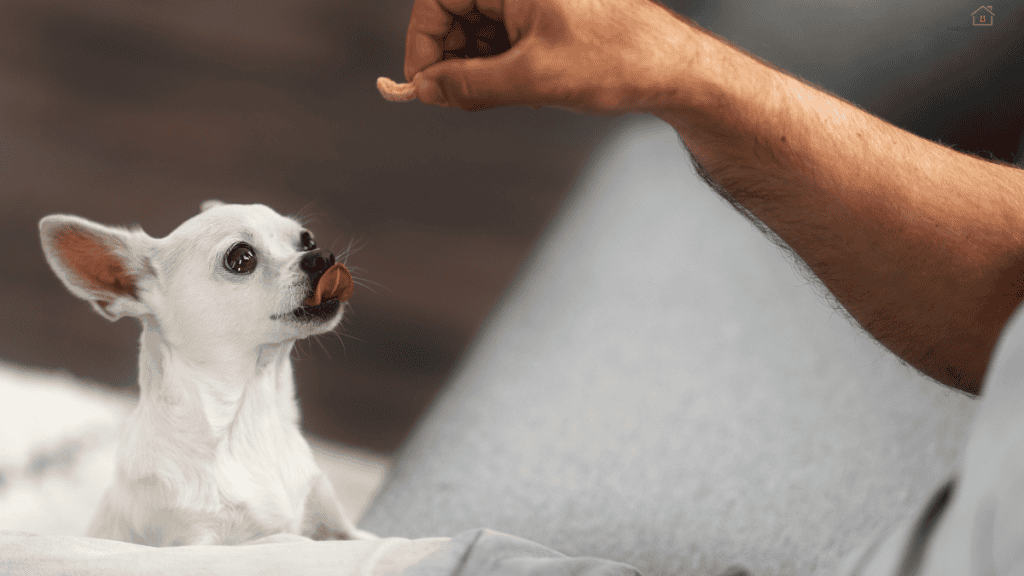
Your puppy’s regular kibble is the most underrated training treat available. It adds zero extra calories, costs nothing additional, and works well for basic indoor commands. Save the best puppy treats for training in distracting environments where motivation needs to be higher.
Here is how to use kibble as puppy training treats in practice. In the morning, measure your puppy’s full daily food portion. Set aside one-quarter to one-third of it in a treat pouch or zip-lock bag. Use those pieces as rewards throughout the day’s training sessions. Feed whatever remains in the pouch at the next scheduled meal. Net extra calories: zero.
When kibble works well
- Indoor training for sit, down, stay, and name recognition
- Low-distraction environments where your puppy’s focus is already good
- Puppies under six months who are naturally food-motivated
When kibble isn’t enough
- Outdoor training with distractions like other dogs, squirrels, or traffic
- Teaching difficult commands like recall, leave it, and heel
- Puppies going through the adolescent phase between five and eight months where focus drops
- Breeds with lower food drive
I used kibble for around 80% of my GSD’s early training. Sit, down, watch me, and touch were all taught with his regular breakfast diverted into a treat pouch. The first time we trained at a park with other dogs nearby, kibble stopped working. He couldn’t have cared less. That’s when I brought out the freeze-dried liver, and he locked in immediately. The lesson: match the treat value to the difficulty of the task.
The Treat Value Hierarchy (What Trainers Actually Use)
Overview:
Professional trainers use a three-tier system: low-value (kibble) for easy indoor commands, medium-value (commercial training treats) for moderate challenges, and high-value (real meat, freeze-dried liver) for difficult commands and distracting environments. Matching treat value to task difficulty maintains motivation without overfeeding.
Think of it like a pay structure. You don’t give someone a bonus for showing up on time. That’s the baseline. But you pay well for exceptional performance under difficult conditions. The same logic applies to puppy training treats: kibble for the basics, boiled chicken or freeze-dried liver for the hard stuff.
| Tier | Examples | Calories | Use For | When to Use |
| Low value | Regular kibble, plain Cheerios | 1 to 4 per piece | Sit, down, stay, name recognition | Indoor, low distraction, easy commands |
| Medium value | Zuke’s Mini Naturals, Pet Botanics, Bocce’s Training Bites | 2 to 5 per treat | Loose leash walking, place, drop it | Indoor or outdoor, moderate distraction |
| High value | Freeze-dried liver, boiled chicken, string cheese bits | 5 to 15 per piece | Recall, leave it, heel, emergency commands | Outdoor, high distraction, difficult commands |
The 7 Best Puppy Treats for Training (2026)
Overview:
Top 7: your puppy’s own kibble (best zero-cost), Zuke’s Mini Naturals (best overall), Pet Botanics Training Rewards (best value), Bocce’s Bakery Training Bites (best ingredients), Fruitables Skinny Minis (best low-calorie), Stewart Freeze-Dried Liver (best high-value), plain boiled chicken (best DIY).
Pick 1: Your Puppy’s Own Kibble — Best Zero-Cost Option
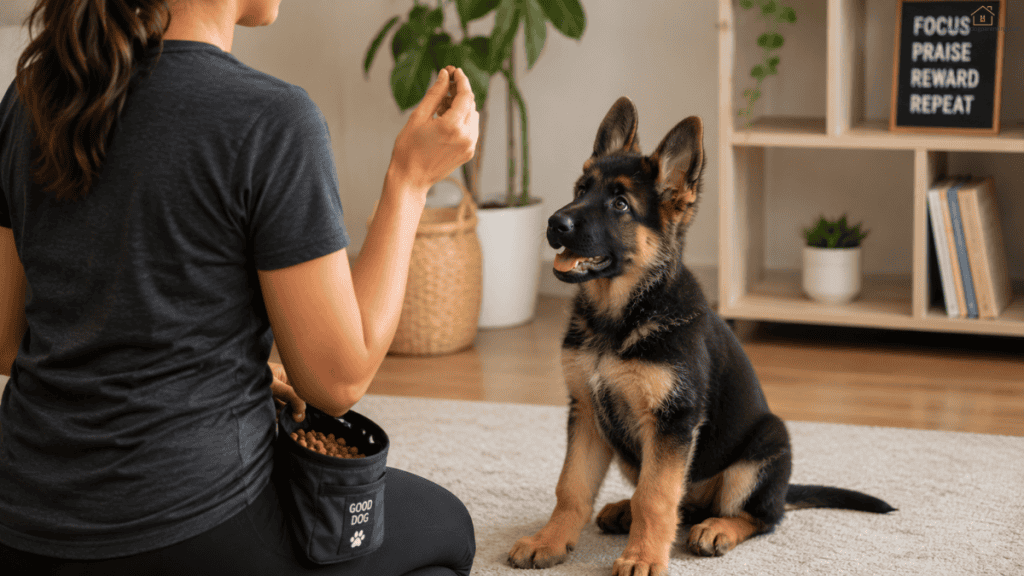
Zero extra calories, zero extra cost, and already proven digestible for your specific puppy. Professional trainers reach for kibble first as their primary low-calorie puppy treats for basic and intermediate commands. There is no cheaper or simpler starting point.
| Spec | Value |
| Calories per piece | 1 to 4 (varies by brand and kibble size) |
| Cost | $0 (already purchased) |
| Texture | Crunchy (soak briefly for puppies under 10 weeks) |
| Best for | Indoor training, easy commands, food-motivated puppies |
Best for: Every training session as your default before reaching for anything else.
Limitation: Not motivating enough for outdoor distractions or difficult commands. Some puppies consider it unremarkable once they’ve experienced higher-value options.
Pick 2: Zuke’s Mini Naturals — Best Overall Training Treat
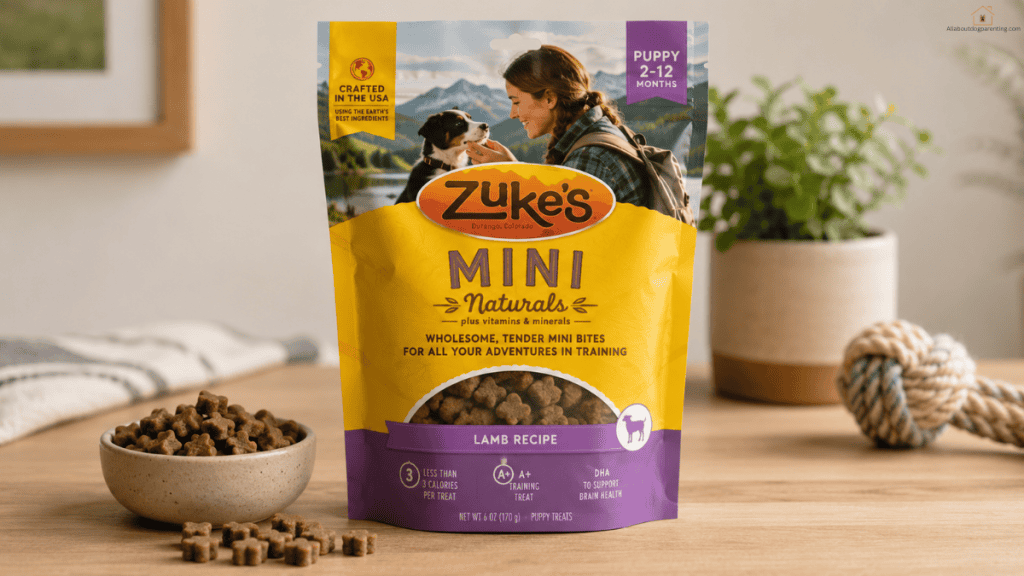
The standard that most professional trainers reach for first when kibble isn’t cutting it. Pea-sized, soft, approximately 3 calories each, and available in multiple protein flavours including chicken, salmon, peanut butter, and rabbit. Real meat is the first ingredient. No corn, wheat, or soy. Small enough that a puppy consumes it instantly without breaking focus on the handler.
| Spec | Value |
| Calories per treat | ~3 |
| Size | Pea-sized (~1 cm) |
| Texture | Soft, chewy |
| Primary protein | Chicken, salmon, rabbit (varies by flavour) |
| Price estimate | ~$8–10 per 6 oz bag (~150 treats) |
| Made in | USA |
Best for: The all-around medium-value option for most puppies. Strong balance of motivation, low calories, and convenience. Among the most reliable best treats for puppy training in the commercial category.
Drawback: Some flavours contain chicken. Use the salmon or rabbit variety if your puppy has a known chicken sensitivity.
Pick 3: Pet Botanics Training Rewards — Best Value
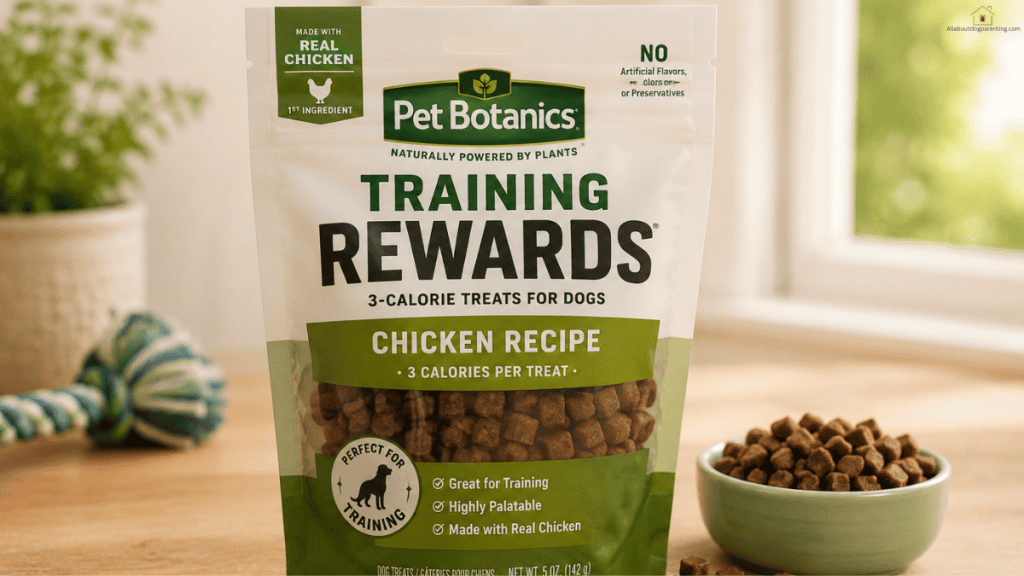
Approximately 3 calories per treat with around 500 treats per bag, making these the most cost-effective commercial training treats available. Soft, small, and strongly aromatic. A single bag typically lasts weeks of daily training. The bacon and pork liver flavour in particular produces a strong response in most puppies.
| Spec | Value |
| Calories per treat | ~3 |
| Size | Small (~1 cm) |
| Texture | Soft, moist |
| Primary protein | Pork liver |
| Price estimate | ~$6–8 per 20 oz bag (~500 treats) |
| Made in | USA |
Best for: Owners who train daily and go through treats quickly. The most economical option among the low-calorie puppy treats on this list.
Drawback: Higher moisture content means they can become sticky in warm weather. Seal the bag between sessions.
Pick 4: Bocce’s Bakery Training Bites — Best Ingredients
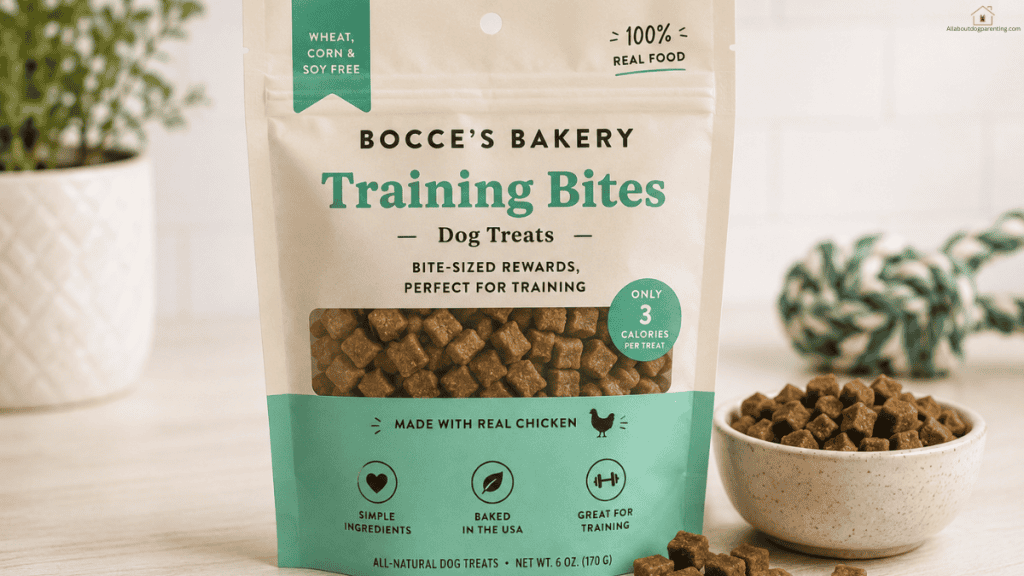
Four to five recognisable, whole-food ingredients per flavour. Roughly 3 to 4 calories per treat. Small-batch baked in the USA. The short ingredient list makes these suitable for puppies with digestive sensitivities where most commercial training treats have too many unknowns. No artificial anything.
| Spec | Value |
| Calories per treat | ~3–4 |
| Size | Small, breakable |
| Texture | Soft-baked |
| Primary ingredients | Real protein, oat flour, pumpkin or sweet potato |
| Price estimate | ~$8–10 per 6 oz bag |
| Made in | USA |
Best for: Owners who prioritise ingredient quality alongside training function. Good choice for puppies with sensitive stomachs who react to longer ingredient lists.
Drawback: Slightly more crumbly than Zuke’s. Fewer flavour options than some competitors.
Pick 5: Fruitables Skinny Minis — Best Low-Calorie
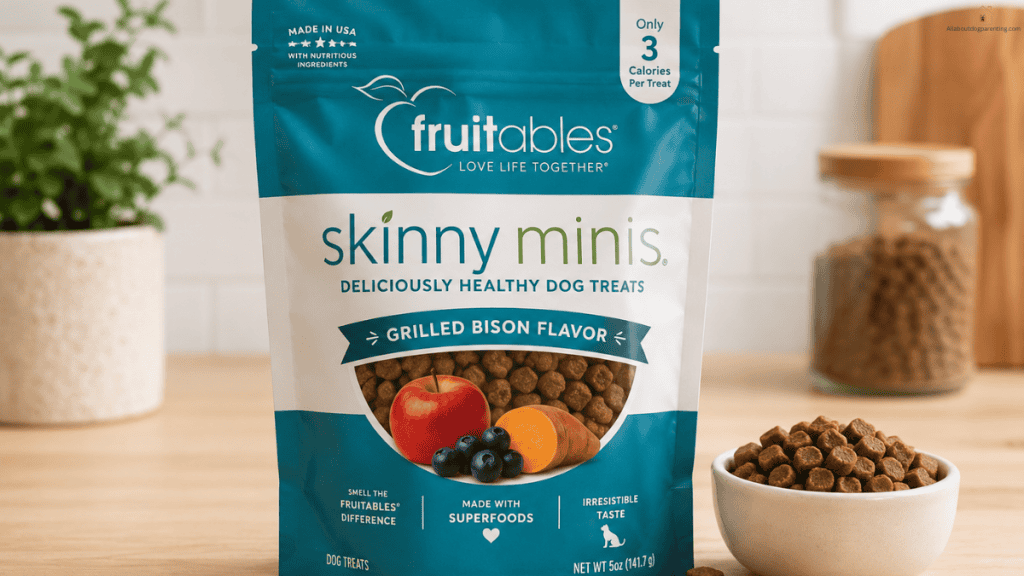
Under 3 calories per treat, the lowest calorie count on this list. Made with real fruit and vegetable ingredients. Grain-free, gluten-free, and no artificial additives. The best puppy treats for training situations where you’re doing intensive sessions with 80 or more treats per session and calorie management is a priority.
| Spec | Value |
| Calories per treat | ~2.5 |
| Size | Small sticks, breakable |
| Texture | Soft, chewy |
| Primary ingredients | Sweet potato, pumpkin, apple (varies by flavour) |
| Price estimate | ~$6–8 per 5 oz bag |
| Made in | USA |
Best for: Toy and small-breed puppies where calorie budgets are tight. Owners doing intensive training with many repetitions per session.
Drawback: Lower protein content and less aromatic than meat-based options. Potentially less motivating for dogs with lower food drive or in high-distraction environments.
Pick 6: Stewart Pro-Treat Freeze-Dried Liver — Best High-Value
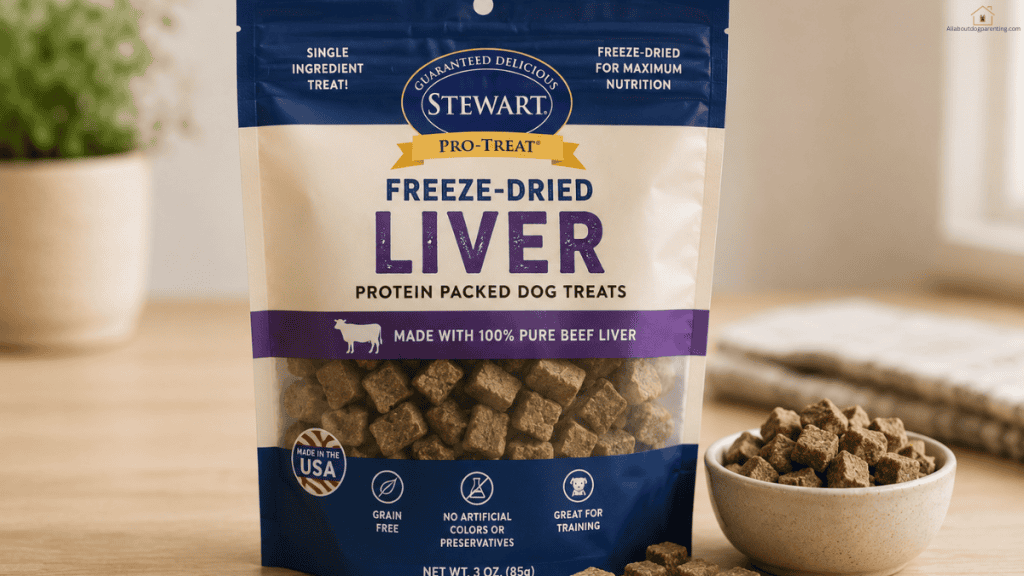
Single ingredient, freeze-dried to preserve maximum aroma. The smell is genuinely overwhelming to dogs, which is precisely the point. This is the treat that gets a distracted puppy’s attention back at the park when nothing else has worked. Break into the smallest pieces possible before any training session.
| Spec | Value |
| Calories per piece | ~5–10 (depends on size broken) |
| Size | Variable: break into pea-sized pieces |
| Texture | Dry, crumbly, intensely aromatic |
| Ingredients | Single ingredient: beef liver or chicken liver |
| Price estimate | ~$10–14 per 4 oz tub |
| Made in | USA |
Best for: High-distraction environments. Teaching recall, leave it, and heel. The nuclear option in the training rewards puppy hierarchy when motivation has dropped.
Drawback: Calorie-dense if pieces are broken too large. Crumbly and messy. The smell stays on your hands. Keep this as a high-value reserve rather than an everyday option.
Pick 7: Plain Boiled Chicken — Best DIY Option
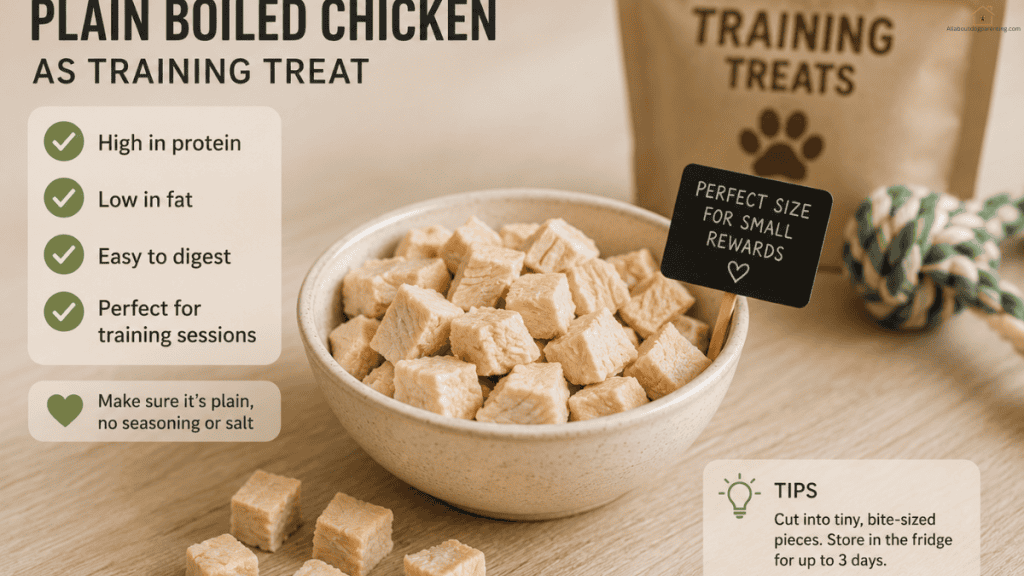
Single ingredient, extremely high value to most dogs, cheap, and portion size is entirely in your hands. Boil a chicken breast, cool, cut into 1 cm cubes, and store in the fridge for up to four days or freeze in weekly batches. Hundreds of training rewards from one $5 purchase.
| Spec | Value |
| Calories per piece | ~3–8 (depending on cube size) |
| Size | Cut to whatever size you need |
| Texture | Soft, moist, instant to eat |
| Ingredients | Chicken |
| Price estimate | ~$3–5 per pound of chicken breast |
| Prep needed | Boil, cool, cube, refrigerate |
Best for: High-value reward at the lowest possible cost. Full ingredient control. For puppies with known chicken sensitivity, boiled turkey or salmon works identically well.
Drawback: Requires prep time and refrigeration. Spoils within 4 to 5 days unfrozen. Can be messy in a pocket. Carry in a sealed container or silicone pouch.
Side-by-Side Comparison Table
All seven picks compared on calories per treat, size, texture, protein source, price, treats per bag, value tier, and best training use.
| Treat | Cal/Treat | Size | Texture | Protein | Price | Treats Per Bag | Tier | Best For |
| Puppy’s kibble | 1 to 4 | Varies | Crunchy | Varies | $0 | Full bag | Low | Basic training |
| Zuke’s Mini Naturals | ~3 | Pea-sized | Soft | Chicken/salmon/rabbit | ~$9 | ~150 | Medium | Best overall |
| Pet Botanics | ~3 | Small | Soft, moist | Pork liver | ~$7 | ~500 | Medium | Best value |
| Bocce’s Training Bites | ~3–4 | Small | Soft-baked | Various | ~$9 | ~130 | Medium | Best ingredients |
| Fruitables Skinny Minis | ~2.5 | Small sticks | Soft | Fruit and veg | ~$7 | ~120 | Low-Medium | Lowest calorie |
| Stewart Freeze-Dried Liver | ~5–10 | Break apart | Dry, crumbly | Beef/chicken liver | ~$12 | Varies | High | Hardest commands |
| Boiled chicken | ~3–8 | Custom cut | Soft | Chicken | ~$4/lb | Hundreds | High | Best DIY |
The Calorie Budget: How Many Treats Can Your Puppy Have Per Day?
Overview:
Training treats should make up no more than 10% of your puppy’s daily calorie intake. For a medium-breed puppy eating 900 calories per day, that’s 90 calories from treats, roughly 30 treats at 3 calories each. Reduce meal portions on heavy training days.
This is the section most puppy treat guides skip entirely, and it’s the most practically important one. A training session where you dispense 80 treats at 5 calories each adds 400 calories. For a small breed puppy eating 500 calories per day, that’s nearly a full extra day’s nutrition in one training session.
To find your puppy’s daily calorie target, see our puppy feeding chart by age and weight.
| Breed Size | Daily Calories (approx.) | 10% Treat Budget | Treats at 3 cal each | Treats at 5 cal each |
| Toy (under 5 kg adult) | 250 to 400 kcal | 25 to 40 kcal | 8 to 13 treats | 5 to 8 treats |
| Small (5 to 10 kg) | 400 to 650 kcal | 40 to 65 kcal | 13 to 22 treats | 8 to 13 treats |
| Medium (10 to 25 kg) | 650 to 1,100 kcal | 65 to 110 kcal | 22 to 37 treats | 13 to 22 treats |
| Large (25 to 40 kg) | 1,000 to 1,500 kcal | 100 to 150 kcal | 33 to 50 treats | 20 to 30 treats |
| Giant (40 kg and above) | 1,400 to 2,000 kcal | 140 to 200 kcal | 47 to 67 treats | 28 to 40 treats |
The meal adjustment rule: On heavy training days, reduce your puppy’s next meal by the approximate calorie value of treats given. If you used 30 treats at 3 calories each (90 kcal total), that’s roughly a quarter cup less kibble at dinner. The goal is to prevent the gradual weight creep that happens when training treats become a calorie supplement rather than a calorie substitute. Our puppy feeding schedule guide covers how to fit treat calories into a consistent daily meal structure.
With my GSD, I tracked treat calories loosely during his first month of training. I noticed he was gaining faster than the growth chart predicted. The cause turned out to be 60 to 80 treats per session without any reduction in meals. Once I switched to kibble for indoor training and cut dinner by a quarter cup on heavy training days, his growth rate stabilised and stayed in the right range.
Treats to Avoid for Puppies
Overview:
Avoid rawhide (choking and blockage risk), cooked bones (splintering), large hard biscuits (too slow for training, dental fracture risk), anything with xylitol (toxic), adult-sized treats too large for puppy mouths, and any treat your puppy cannot eat in under three seconds.
| Avoid | Why | Use Instead |
| Rawhide chews | Choking risk, intestinal blockage, chemical processing | Bully sticks (supervised), frozen Kongs |
| Cooked bones | Splinter into sharp fragments | Raw recreational bones supervised, or rubber chew toys |
| Large hard biscuits | Too slow for training, dental fracture risk on baby teeth | Soft, pea-sized training treats |
| Anything with xylitol | Extremely toxic: even small amounts can be fatal | Check ingredient lists for “xylitol” or “birch sugar” |
| Adult-sized treats | Too many calories, too large for puppy mouths | Puppy-specific treats or break adult treats into quarters |
| Jerky from unknown sources | FDA has investigated illness reports linked to imported jerky | US-made, single-ingredient freeze-dried options |
| Grapes, raisins, chocolate, onion | Toxic to dogs | Dog-safe whole foods like blueberries, carrot, or cucumber |
For a comprehensive list of foods and treats that are toxic to puppies, see our best puppy food for allergies guide, which covers common ingredient dangers alongside dietary management.
Safe DIY Training Treats From Your Kitchen
Whole foods make excellent low-cost training treats: plain boiled chicken cubes, blueberries, small carrot pieces, plain cooked sweet potato, and thin banana slices. All are low-calorie, single-ingredient, and safe for puppies from 8 weeks onward.
| Food | Calories Per Piece | Prep Needed | Shelf Life | Notes |
| Boiled chicken (1 cm cubes) | ~3–8 | Boil, cool, cube | 4 days fridge, 2 months frozen | The gold standard DIY option |
| Blueberries | ~1 | Wash only | 1 week fridge | Perfect size, antioxidant-rich, most puppies love them |
| Carrot pieces (small) | ~2–3 | Peel, dice small | 1 week fridge | Low calorie, good texture for teething puppies |
| Cooked sweet potato cubes | ~4–5 | Bake, cool, cube | 4 days fridge | Soft, easy to eat, nutrient-dense |
| Banana slices (thin) | ~5 | Slice thin | Use immediately | High value and very sweet, so use sparingly |
| String cheese (tiny pieces) | ~5–8 | Tear into small pieces | Days in fridge | Very motivating, but dairy can cause upset in sensitive puppies |
You don’t need to buy specialised training treats for every session. A $5 chicken breast produces hundreds of training rewards. Blueberries cost almost nothing and work as perfectly sized individual treats. Save the commercial options for convenience on busy days or outdoor sessions where you need something that won’t spoil in your pocket.
FAQs
1. How many training treats can I give my puppy per day?
Keep treats to 10% or less of your puppy’s daily calorie intake. For a medium-breed puppy eating 900 kcal per day, that’s approximately 90 calories from treats, or around 30 treats at 3 calories each. On heavy training days, reduce the next meal by the approximate calorie value of treats given to avoid gradual weight gain.
2. Can I use my puppy’s regular kibble as training treats?
Yes, and most professional trainers recommend it as the starting point for basic indoor commands. Set aside a portion of your puppy’s daily kibble in the morning and use those pieces as rewards through the day’s training sessions. This approach adds zero extra calories and works well until you need higher motivation for more challenging tasks.
3. What treats are safest for puppies under 12 weeks?
Use soft, tiny treats that dissolve or chew down quickly. A puppy under 12 weeks has baby teeth and a proportionally small throat. Zuke’s Mini Naturals broken in half, individual blueberries, and small boiled chicken pieces are all safe options. Avoid anything hard, crunchy, or large enough to present a choking risk at this age.
4. Are freeze-dried liver treats safe for puppies?
Yes, freeze-dried liver is safe and highly motivating for puppies. Break pieces into the smallest possible size before any training session, as they are calorie-dense compared to standard training treats. Use them as high-value rewards for difficult commands or high-distraction environments rather than as everyday treats. Single-ingredient freeze-dried liver from US manufacturers is the safest option.
5. Should I stop giving treats once my puppy knows a command?
Gradually reduce treat frequency rather than stopping completely. Intermittent reinforcement, treating every third or fifth correct response rather than every time, actually maintains trained behaviours more reliably than consistent treating. As your puppy matures, verbal praise and play can become primary rewards while treats shift to occasional reinforcement for known commands.
The Bottom Line
The best puppy treats for training aren’t necessarily the ones with the most impressive packaging or the most ingredients. They’re the ones that are small enough to eat instantly, soft enough not to slow the session, low enough in calories to use freely without disrupting daily nutrition, and matched in value to the difficulty of the task.
Start with kibble. Graduate to commercial training treats for moderate challenges. Reserve freeze-dried liver or boiled chicken for the moments when you genuinely need maximum focus. Track your treat calories loosely and reduce meal portions on heavy training days. These four habits cover the nutritional side of training completely, leaving you free to focus on what actually matters: building a relationship with your puppy through consistent, rewarding sessions.