Puppy Potty Training Schedule: Exactly When to Take Your Puppy Outside
🐾 Overview
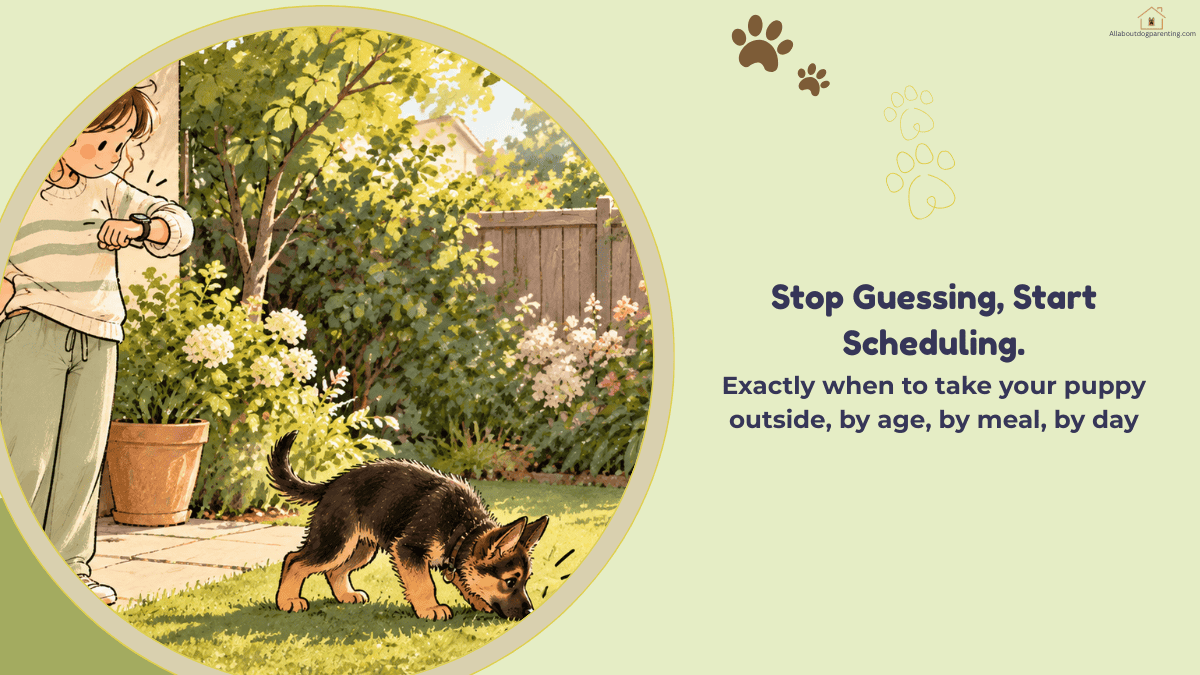
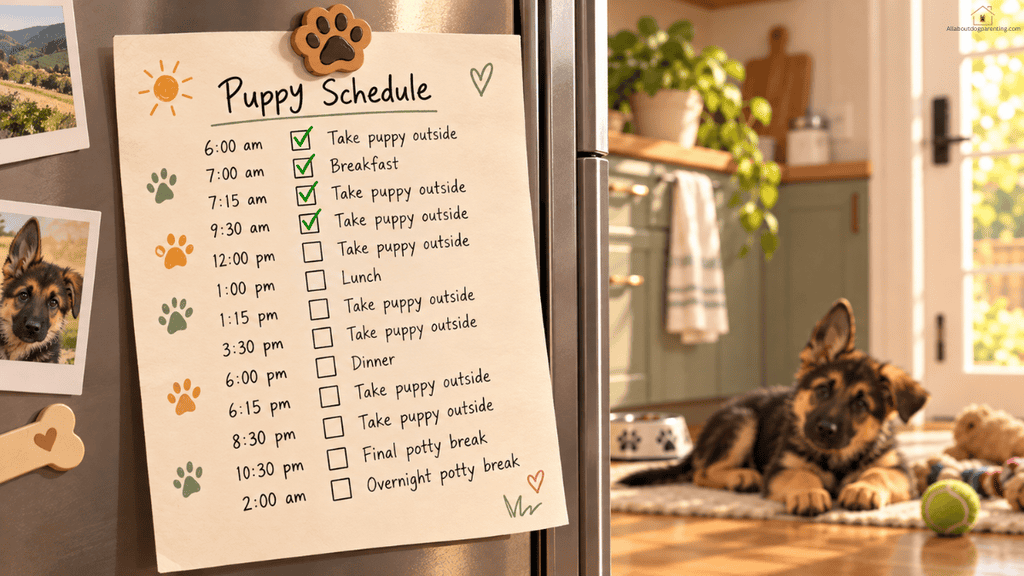
Take an 8-week-old puppy out every 30–60 minutes while awake and active, plus after every meal, nap, drink and play session. Intervals stretch as they grow. Build every schedule around fixed mealtimes, your most reliable potty predictor.
A puppy potty training schedule works best when it’s written in clock times, built around meals, and matched to your puppy’s age, so that’s what you’ll find below: a full puppy potty schedule by age, from the 8-week intensive phase to the 6-month maintenance routine. Find the one that matches your puppy, set your alarms, and stick it on the fridge.
This article, part of our Complete Guide to Puppy Training, is the companion to our day-by-day potty training guide. That one explains the method; this puppy potty training schedule is the timetable you’ll check every morning until you no longer need to.
Most schedules online say “every one to two hours” and leave the rest to you, which falls apart at 7 a.m. with a puppy squatting on the rug. What made house-training click with my German Shepherd boy was tying every trip to his meals. Once breakfast was always at 7, I knew when the next trip was due, and so did he.
At a glance, here’s how often puppy potty break trips happen at each age:
| Age | Meals a day | Awake interval | Trips a day | Overnight |
|---|---|---|---|---|
| 8–10 weeks | 4 | 30–60 minutes | 12–15 | One alarm break |
| 12–16 weeks | 3 | 1–2 hours | 8–10 | Alarm pushed later, dropped around 16 weeks |
| 4–6 months | 3, moving to 2 | Signal-led, roughly 3–4 hours | 5–7 | Usually sleeping through |
| 6–12 months | 2 | Signal-led | 3–5 | Sleeping through |
How to Read These Schedules
🐾 Overview
Every schedule is built around fixed mealtimes. Post-meal trips, marked 🍽️ and in bold, are your highest-success trips because most puppies need to go 15–20 minutes after eating. The rest are interval or signal trips.
Knowing when to take puppy outside to pee comes down to three kinds of trips, and each puppy bathroom schedule below mixes all three.
Trigger trips
These come first in priority: straight after waking, 15–20 minutes after a meal, 10–15 minutes after a good drink, and after play or excitement. The AKC says puppies may need to go anywhere from 5 to 30 minutes after eating, and recommends treating drinking the same way. In my experience, 15–20 minutes catches most puppies, the same window vets quoted by Petco give for puppy potty after eating.
Interval trips
These fill the gaps, timed to your puppy’s age.
Signal trips
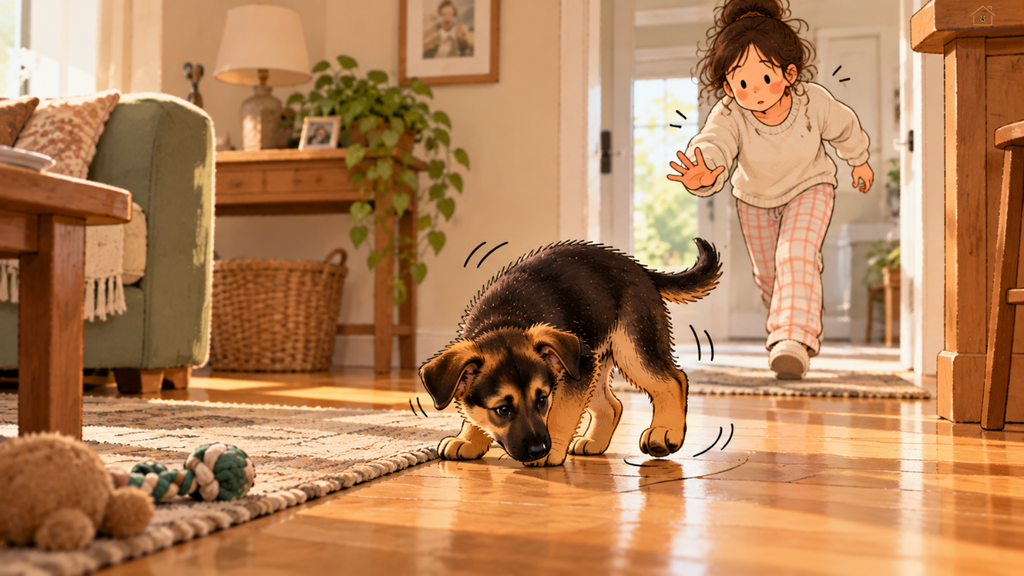
These happen when your puppy circles, freezes, heads for a corner or drifts to the door. These usually appear in weeks two to four and gradually replace interval trips.
The key for every table:
- 🍽️ Post-meal trip
- 💧 Post-water trip
- 😴 Post-nap or wake-up trip
- 🎾 Post-play trip
- ⏰ Interval trip
- 🌙 Bedtime or overnight trip
Mealtimes are the backbone of every puppy potty training schedule here, so if you haven’t settled yours yet, start with our puppy feeding schedule by age.
8–10 Week Puppy Potty Schedule (The Intensive Phase)
🐾 Overview
At 8–10 weeks, take your puppy out every 30–60 minutes while awake, for 12–15 trips a day. They’ll hold it for 1–2 hours during crate naps and need one overnight alarm. This phase usually lasts about two weeks.
This 8-week puppy potty schedule assumes four meals at 7 a.m., 11 a.m., 3 p.m., and 7 p.m., a 6:30 a.m. wake-up and a 9:30 p.m. bedtime. Puppies this age sleep a lot, usually 18 to 20 hours a day, according to the AKC, so the naps are built in.
| Time | Trip | What’s happening |
|---|---|---|
| 6:30 a.m. | 😴 Wake-up | Carry them straight to the potty spot before they can squat on the way |
| 7:00 a.m. | Breakfast | |
| 7:15–7:20 a.m. | 🍽️ Post-meal | Expect a pee and a poop |
| 7:30–8:30 a.m. | ⏰ 🎾 Play | Out at 7:30 and 8:00 during play |
| 8:30–10:00 a.m. | Crate nap | |
| 10:00 a.m. | 😴 Post-nap | Straight outside |
| 10:15 a.m. | Water offered | |
| 10:30 a.m. | 💧 Post-water | Out 10–15 minutes after drinking |
| 11:00 a.m. | Lunch | |
| 11:15–11:20 a.m. | 🍽️ Post-meal | Second post-meal trip |
| 11:30 a.m.–12:00 p.m. | ⏰ 🎾 Play | One trip during play, plus after any excitement |
| 12:00–2:00 p.m. | Crate nap | |
| 2:00 p.m. | 😴 Post-nap | Straight outside |
| 2:15 p.m. | Water offered | |
| 2:30 p.m. | 💧 Post-water | Out 10–15 minutes after drinking |
| 3:00 p.m. | Afternoon meal | |
| 3:15–3:20 p.m. | 🍽️ Post-meal | Third post-meal trip |
| 3:30–4:30 p.m. | ⏰ 🎾 Play | Out every 30 minutes during active play |
| 4:30–6:00 p.m. | Crate nap | |
| 6:00 p.m. | 😴 Post-nap | Straight outside |
| 6:15 p.m. | 💧 Post-water | Water, then out 10–15 minutes later |
| 7:00 p.m. | Dinner | |
| 7:15–7:20 p.m. | 🍽️ Post-meal | Fourth post-meal trip |
| 7:30 p.m. | Water bowl lifted for the night | |
| 7:30–9:00 p.m. | ⏰ | Calm evening play; out at 8:00 and 8:30 |
| 9:30 p.m. | 🌙 Bedtime | Last trip, then crate |
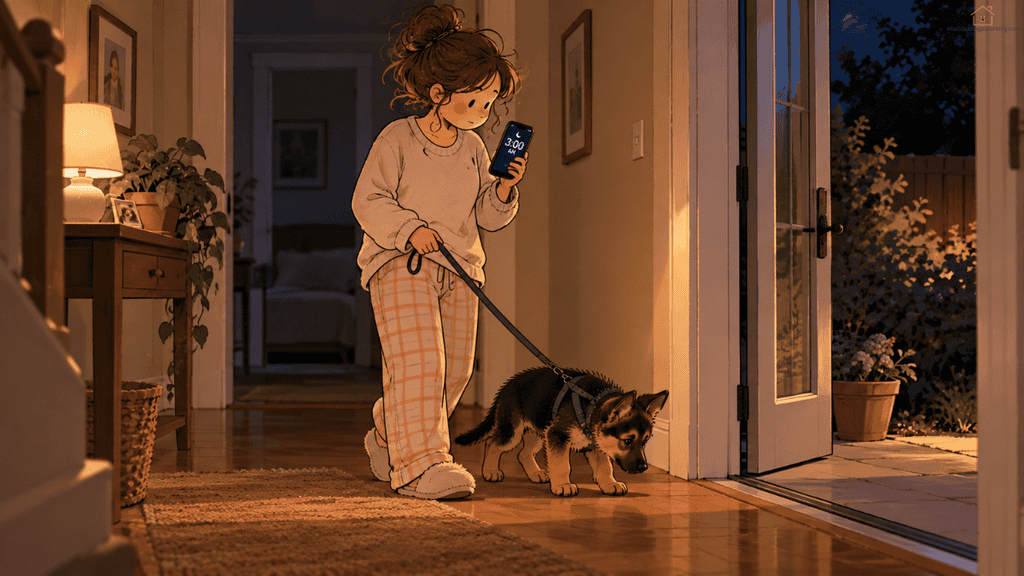
| 2:00–3:00 a.m. | 🌙 Overnight | Alarm, carry out, no play, lights low, back to bed |
That adds up to 12–15 trips and, realistically, two to five accidents a day, falling over the fortnight. Lifting the water bowl two hours before bed is a common trainer’s habit; keep it down longer in hot weather, and check with your vet if your puppy seems unusually thirsty.
Keep every trip boring: on leash, same spot, no games until they’ve gone. If nothing happens within five minutes, bring your puppy in, crate them for ten minutes, then try again. Our guide to choosing a crate for your puppy covers sizing. The AKC’s “months plus one” rule explains why the overnight alarm is still needed, and our piece on how long puppies can hold their pee covers the bladder biology.
12–16 Week Puppy Potty Schedule (Building Reliability)
🐾 Overview
At 12–16 weeks, awake intervals stretch to 1–2 hours. You’re down to three meals and 8–10 trips a day. Most puppies still need an overnight break at the start of this stage and drop it around 16 weeks.
This 12 week puppy potty schedule assumes three meals at 7 a.m., 12 p.m. and 5:30 p.m., a 6:30 a.m. wake-up and a 9:30 p.m. bedtime.
| Time | Trip | What’s happening |
|---|---|---|
| 6:30 a.m. | 😴 Wake-up | Straight outside |
| 7:00 a.m. | Breakfast | |
| 7:15–7:20 a.m. | 🍽️ Post-meal | Post-breakfast trip |
| 8:30 a.m. | ⏰ 🎾 Play | 1–1.5 hours after the last trip |
| 9:00–11:00 a.m. | Crate nap or calm time | |
| 11:00 a.m. | 😴 Post-nap | Straight outside |
| 12:00 p.m. | Lunch | |
| 12:15–12:20 p.m. | 🍽️ Post-meal | Post-lunch trip |
| 1:30 p.m. | ⏰ 🎾 Play | During afternoon play |
| 2:00–4:00 p.m. | Crate nap | |
| 4:00 p.m. | 😴 Post-nap | Straight outside |
| 5:30 p.m. | Dinner | |
| 5:45–5:50 p.m. | 🍽️ Post-meal | Post-dinner trip |
| 7:00 p.m. | ⏰ | During evening play |
| 7:30 p.m. | Water bowl lifted for the night | |
| 9:30 p.m. | 🌙 Bedtime | Last trip, then crate |
| 3:00–4:00 a.m. | 🌙 Overnight | Alarm, pushed later every few nights |
Add a 💧 trip 10–15 minutes after any big drink between those rows. Expect 8–10 trips and zero to two accidents a day.
The overnight puppy potty schedule is where this bracket differs from what you’ll often read. A 3-month-old can hold it for about four hours under the months-plus-one rule, which is short of a full night. VCA’s veterinary behaviour team recommends overnight breaks until around five months, and many puppies manage without one from about 16 weeks. Push the alarm 30 minutes later every two or three nights. If your puppy is dry when it rings, push again. If they’re crying or wet before it, hold that time for another week.
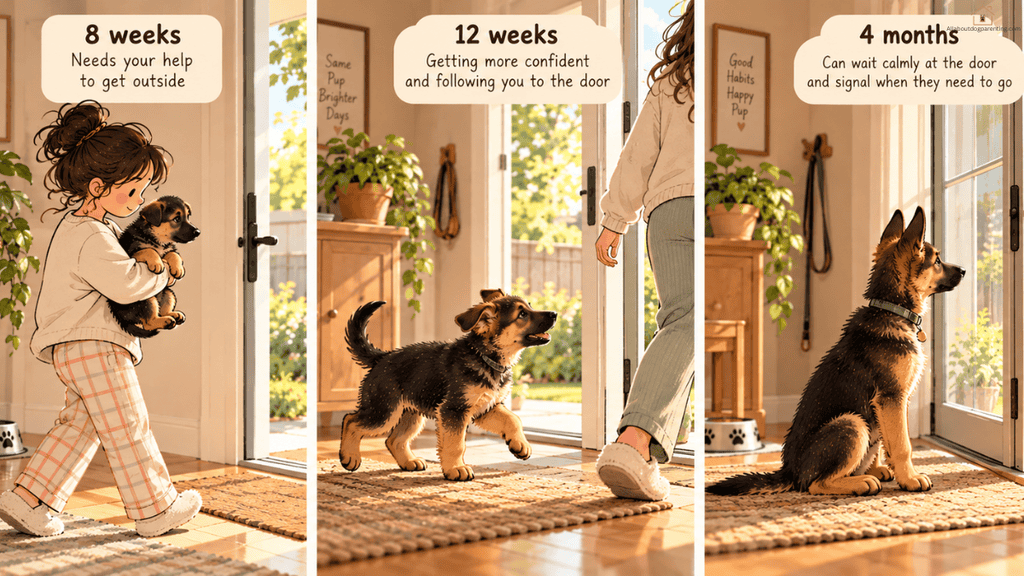
Many puppies start signalling at the door now. Reward it every time, because it’s the start of signals taking over from the clock. If accidents spike, check what changed in the routine and go back to the previous week’s intervals for two or three days. Our puppy sleep schedule by age shows how naps and night-time sleep shift through this stage.
4–6 Month Puppy Potty Schedule (Approaching Reliability)
🐾 Overview
At 4–6 months, most puppies hold it 3–5 hours in the day and sleep through the night. You’re down to 5–7 trips a day. Post-meal trips stay the anchor while your puppy’s signals replace most interval trips.
This schedule assumes three meals at 7 a.m., 12 p.m. and 5:30 p.m., dropping to two by about six months, with a 6:30 a.m. wake-up and a 10 p.m. bedtime.
| Time | Trip | What’s happening |
|---|---|---|
| 6:30 a.m. | 😴 Wake-up | Straight outside |
| 7:00 a.m. | Breakfast | |
| 7:15–7:20 a.m. | 🍽️ Post-meal | Still your most reliable trip of the day |
| 12:00 p.m. | Lunch, becoming optional toward six months | |
| 12:15–12:20 p.m. | 🍽️ Post-meal | Post-lunch trip |
| 3:00–3:30 p.m. | ⏰ or signal | Mid-afternoon, often prompted by your puppy |
| 5:30 p.m. | Dinner | |
| 5:45–5:50 p.m. | 🍽️ Post-meal | Post-dinner trip |
| 8:00–8:30 p.m. | ⏰ or signal | Evening trip |
| 10:00 p.m. | 🌙 Bedtime | Last trip before bed |
Your puppy’s signals should now do most of the work, with the clock as backup. Accidents should be rare, at most one a week.
Puppy size matters at this stage. In a survey of more than 700 dogs, researchers found that only 67% of small dogs were considered fully house-trained, against 95% of large dogs, so if you have a toy breed, expect a longer potty training timeline and keep the puppy potty training schedule tight for longer. Adolescence can also bring a wobble from around six months, with accidents reappearing after weeks of a clean record. Tighten the schedule for a few days and it usually settles. Our guide to puppy development stages explains what’s shifting in your puppy at this age.
6–12 Month Puppy Potty Schedule (Maintenance)
🐾 Overview
From 6–12 months, the answer to how often should puppy go outside is three to five trips a day: after waking, after meals and before bed. Their signals now run the schedule more than your clock.
| Time | Trip |
|---|---|
| 6:30–7:00 a.m. | 😴 After waking |
| 7:15–7:20 a.m. | 🍽️ Post-breakfast |
| Midday | ⏰ or signal, especially if you’re home |
| 5:45–5:50 p.m. | 🍽️ Post-dinner |
| 9:30–10:00 p.m. | 🌙 Before bed |
Add any trips your puppy asks for; a puppy bathroom schedule this simple is the payoff for the early weeks. The AKC’s chief veterinarian notes that a 6-month-old puppy can usually be depended on most of the time to go outside, which is the reliability this schedule assumes. The months-plus-one rule puts the upper limit at around seven to eight hours by now, but that’s a ceiling. If you’re out for a full working day, arrange a midday break.
When your puppy moves from three meals to two, usually around six months, one post-meal trip disappears with it and the schedule simplifies on its own. Our guide on when to switch your puppy to adult food covers the change in meal frequency that comes next.
Build Your Puppy’s Custom Potty Schedule
Every puppy’s schedule is different because every household runs on different meal times, wake-up routines, and living situations. If generic schedules don’t fit your lifestyle, build your own. Plug in your puppy’s age and your actual daily routine below and our generator builds a clock-time schedule you can follow starting today. It factors in the gastrocolic reflex (your puppy’s 15–20 minute post-meal potty window), age-appropriate bladder capacity, and all seven reliable potty triggers.
Puppy Potty Training Schedule Generator
Enter your puppy's details to get a personalised daily potty schedule
| Time | Type | What to Do |
|---|
This schedule is built around your feeding times. For complete age-specific portion sizes and meal guidance:
Need a ready reference you can glance at during the day? Download the printable schedule below and stick it on the fridge. It has all four age brackets on one page so every family member follows the same routine.
How to Transition Between Schedules
🐾 Overview
Move to the next schedule after 5–7 days without accidents. Stretch intervals by 15–30 minutes at a time, and step back for a few days if accidents return. Stepping back is part of the process.
Most guides stop at the timetables. The harder question is when to move from one puppy potty training schedule to the next, which is where most puppy house training timetable mistakes happen. Deciding how long between potty breaks puppy bladders can cope with comes down to evidence, and your puppy supplies it.
How do you know your puppy is ready?
Move up only when all of these are true:
- No accidents for 5–7 days in a row
- Your puppy signals to go out at least some of the time
- No whining or pacing between scheduled trips, which would mean they need to go sooner
- Naps and nights are consistently dry
How do you stretch the gaps safely?
One trip at a time. Add 15 minutes to a single interval trip each day for three days. If there are no accidents, add 15 minutes to another. Leave post-meal trips where they are, since they stay your most productive trips at every age. Once interval trips are two hours or more apart without accidents, you can start leaning on your puppy’s signals.
When should you step back?
Two or more accidents in a day means going back to the previous schedule for three days. The same goes after a house move or visitors staying. If your puppy is unwell, accidents are expected and have nothing to do with training. VCA notes that illness and some medications can increase urination, so let them recover before you judge progress, and see your vet if accidents continue.
Weekends, Travel and Schedule Disruptions
🐾 Overview
Keep mealtimes within 30 minutes of your weekday schedule, even on weekends, because your puppy’s digestion runs on the clock. When travelling, drop back one age bracket and pack enzymatic cleaner.
Life doesn’t get put on hold just because you’re potty training. There will be weekends when you want to sleep in, trips you will have to take, and socialising with other people. Let’s see how you can stick to the schedule even with all of this happening:
Weekends
The classic way to derail a puppy potty training schedule is the lie-in. If your weekday alarm is 6:30, your puppy’s bladder will still be ready at 6:30 on Sunday, so 7:00 is fine and 9:00 isn’t. Meals can shift by up to 30 minutes; much more than that throws off every post-meal trip that follows.
Travel
New places bring unfamiliar smells and no familiar potty spot, and VCA points out that a puppy unsettled by its surroundings may be too distracted to go at all. Use the previous bracket from your puppy potty schedule by age while you’re away, so a 4-month-old goes back to the 12–16 week schedule. If you’re staying somewhere without easy outdoor access, a pad or grass patch helps. Our round-up of puppy training pads covers the ones I’d trust.
Visitors
Excitement peeing during greetings is common in young puppies, and VCA notes that many grow out of it as they become less excitable and gain bladder control. Take your puppy out before guests arrive, keep greetings calm, and if it happens anyway, clean up quietly.
FAQs
1. How often should puppy go outside at 8 weeks?
Every 30–60 minutes while awake and active is when to take puppy outside to pee at this age, plus straight after every nap, 15–20 minutes after meals, 10–15 minutes after drinking and after play. That’s 12–15 trips a day. By 12 weeks you’ll usually be down to 8–10, and you can keep one overnight alarm until your puppy stays dry through the night.
2. What time should the last potty break be before bed?
Right before crate time, so 9:15–9:30 p.m. for a 9:30 bedtime. Lift the water bowl around two hours earlier, about 7:30 p.m. in that example. Your puppy has been drinking all day, so they won’t go short, though in hot weather it’s worth leaving water down longer.
3. When can I stop the overnight potty alarm?
Many puppies sleep through around 16 weeks, though some need a night-time break until about five months, and small breeds often take longer. Push the alarm 30 minutes later every two or three nights. If your puppy is dry when it rings, push again; if they’re wet or crying first, stay at that time for another week.
4. How do I know when to extend the time between potty breaks?
When your puppy has gone 5–7 days without an accident on the current schedule. Extend one interval by 15 minutes, never all of them at once, and keep post-meal trips where they are. If accidents return, go back to the previous timing for three to five days before trying again.
5. Why does my puppy pee inside right after coming in from outside?
Usually because they didn’t fully empty their bladder, got distracted by smells outside, or got excited coming back in. Stay out for 5–10 minutes, keep them on leash at the spot, and wait for both a pee and a poop. If it keeps happening, crate them for ten minutes after coming in, then take them out again.
Bottom Line
Pick the table that matches your puppy’s age, set alarms for the first few days, and let mealtimes do the heavy lifting. Treat it as your puppy house training timetable, adjusted to the dog in front of you. A puppy potty training schedule feels relentless in the first fortnight and almost invisible by month six. If tomorrow goes badly, that tells you nothing about how next week will go. Keep the meals fixed, keep the trips boring, and move up a bracket only when your puppy shows you they’re ready.