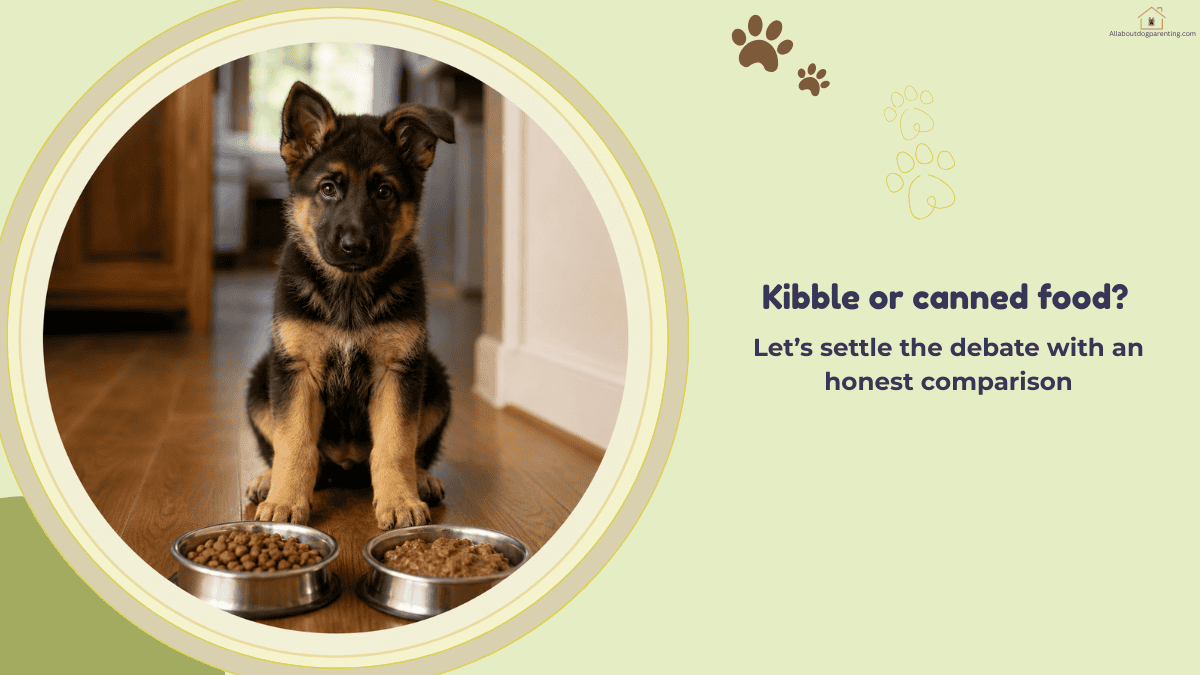
Wet vs Dry Puppy Food: Which Is Better for Your Puppy?
Overview:
For most puppies, dry kibble is the most practical and affordable everyday food. Wet food is better for very young puppies, picky eaters, and puppies who need extra hydration. Many owners mix both, and that works well as long as total daily calories stay balanced.
The wet vs dry puppy food question comes up in almost every new owner’s first week. You’re standing in the pet food aisle trying to figure out whether canned food or a bag of kibble is going to serve your puppy better. Both can work. They just don’t work equally well in every situation. Knowing which one fits your puppy’s age, eating habits, and your budget makes the decision considerably simpler. So, which is right for your puppy? This article, part of our Complete Guide to Puppy Nutrition, answers that unambiguously.
Wet vs Dry Puppy Food: The Side-by-Side Comparison
Dry food wins on cost, convenience, and portioning. Wet food wins on palatability, moisture content, and protein density. The right choice in the wet vs dry puppy food comparison depends on your puppy’s age, breed size, eating habits, and your budget.
| Factor | Dry Kibble | Wet or Canned Food | Winner |
| Cost per month (medium breed) | $35–60 | $80–140 | Dry |
| Protein content (dry matter basis) | 25–32% | 28–45% | Wet |
| Moisture content | ~10% | ~75–78% | Wet |
| Calorie density per cup | 300–500 kcal | 100–200 kcal | Dry |
| Shelf life unopened | 12–18 months | 2–5 years | Wet |
| Shelf life once opened | 4–6 weeks | 3–5 days refrigerated | Dry |
| Palatability | Moderate | High | Wet |
| Convenience | Easy | Messier | Dry |
| Dental impact | Minimal | None | Neither |
| Best for very young puppies (6–8 weeks) | Needs soaking | Ready to eat | Wet |
| Use in puzzle feeders or training | Easy | Impractical | Dry |
| AAFCO complete and balanced options | Widely available | Widely available | Tie |
When Dry Kibble Is the Better Choice
Overview:
Dry kibble is the better everyday food option for most puppies over 10 weeks old. It costs less per serving, portions easily, works in puzzle feeders, and makes calorie tracking straightforward during the growth phase.
When thinking about dry or wet food for your puppy, cost is usually the first factor that settles things. For a medium-breed puppy eating around 1,000 calories per day, kibble runs $35–60 per month. The same calorie intake from wet food costs $80–140. Over 12 months of puppyhood, that’s a difference of $500–1,000 before you’ve bought anything else. For large breeds, eating more calories, the gap widens considerably.
Portioning is also simpler with dry food. One cup of kibble delivers a consistent calorie count. Wet food calorie density varies significantly between brands and formats, from paté to chunks in gravy to shredded varieties. Keeping calorie intake accurate is harder when the density shifts every time you open a can. If you’re still working out how much your puppy should be eating at each stage, our puppy feeding chart by age and weight covers the calculations in full.
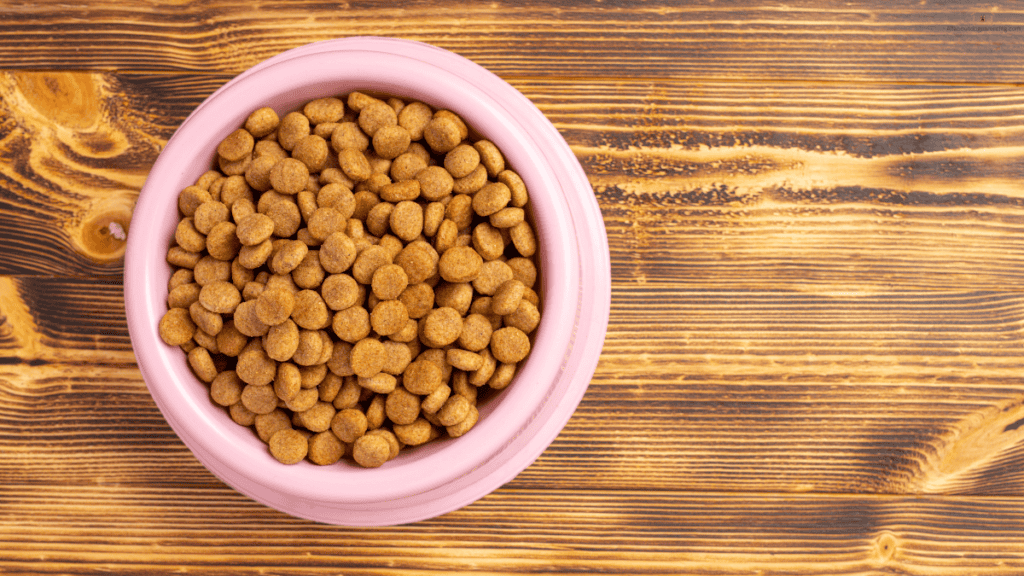
Kibble is also the practical choice for training. You can use a portion of your puppy’s daily ration as training rewards without adding extra calories to the day. Wet food doesn’t lend itself to this. It also fits into Kong toys, snuffle mats, and slow-feeder bowls, which provide mental stimulation and slow down fast eaters. During puppy growth spurts, when appetite can spike, and portion management matters most, kibble makes it straightforward to monitor exactly what your puppy is consuming.
Storage matters too. An open bag of kibble lasts 4 to 6 weeks in a sealed container. An open can lasts 3 to 5 days in the fridge. For a single-puppy household, wet food waste adds up.
When Wet Food Is the Better Choice
Overview:
So is wet food better for puppies in specific situations? Yes. It’s the better choice for puppies under 10 weeks whose teeth can’t handle kibble, for picky eaters who refuse dry food, for illness recovery, and for puppies who need extra hydration.
Canned vs kibble for puppies under 8 weeks isn’t really a contest. Puppies this age have small, developing teeth that can’t manage dry kibble without soaking it first. Wet food is already the right texture with no preparation needed. If your breeder fed wet food, continuing it for the first few weeks removes one variable during an already unsettled transition. You can read more about managing this period in our guide on what puppies need at different ages.
Picky eaters also respond better to wet food. The stronger aroma and richer flavour win over puppies who turn their noses up at kibble consistently. Wet food formulations tend to contain higher meat content with fewer carbohydrate fillers, which increases palatability for fussy dogs.
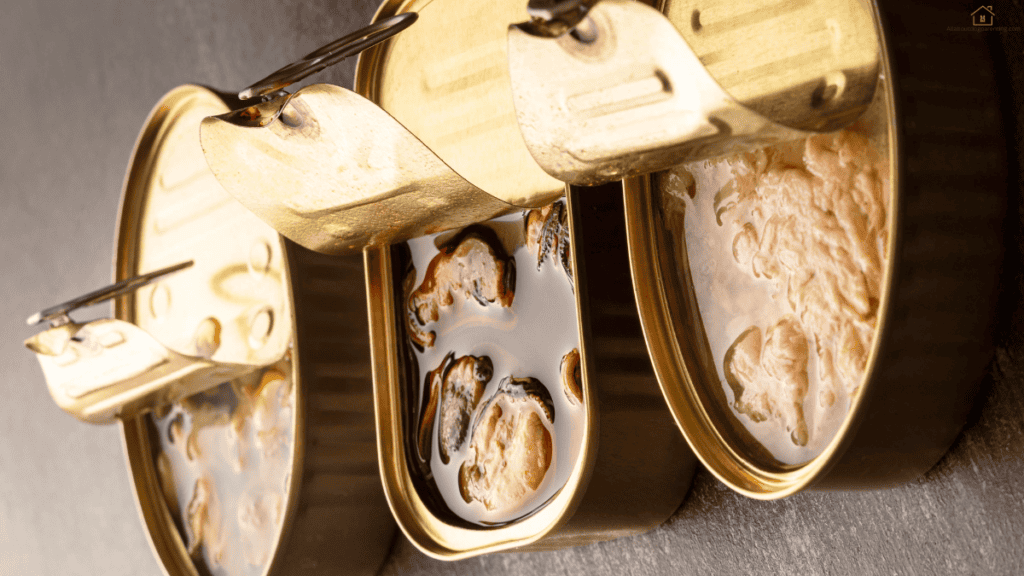
On a dry matter basis, wet food typically delivers 28–45% protein compared to kibble’s 25–32%. For puppies in rapid growth phases, particularly large and giant breeds, building significant muscle mass over an extended growth period, protein density supports development. Understanding how fast your puppy grows by breed size gives useful context for why nutritional density matters more during some months than others.
Hydration is another genuine advantage. Dry food sits at roughly 10% moisture, while wet food contains 75–78%. Puppies who don’t drink enough water independently get meaningful moisture from their food. This matters in hot climates and for brachycephalic breeds like French Bulldogs and Pugs, who may drink less than other dogs.
During illness recovery, wet food’s aroma and soft texture encourage eating when a puppy refuses everything else. Maintaining nutrition during recovery matters, and wet food’s palatability gives it a real edge in those situations.
The Dental Myth: Does Dry Food Really Clean Teeth?
Overview:
No, the idea that dry or wet food choice affects dental health is largely a myth for standard kibble. Most kibble crumbles on the first bite and provides no meaningful plaque removal. Brushing, dental chews, and vet cleanings are what prevent dental disease.
This misconception appears in almost every wet vs dry puppy food comparison online and is worth addressing directly. The logic sounds plausible: crunchy food creates a scrubbing action. In practice, most kibble shatters on first contact. There’s no sustained surface contact that would remove plaque.
Some prescription dental diets, such as Hill’s t/d, are specifically engineered with larger, fibrous kibble pieces requiring prolonged chewing. These are the exceptions, not the standard. Regular puppy kibble is not designed for dental benefit and should never be chosen on that basis.
The Veterinary Oral Health Council maintains a list of products clinically proven to reduce plaque and tartar. Very few standard kibbles appear on it. The products that earn that seal have demonstrated mechanical or chemical action against plaque, not just a crunchy texture.
Mixing Wet and Dry: How to Do It Right
Overview:
Feeding wet and dry puppy food mixed together gives the benefits of both formats. The key is calculating total daily calories from both sources so intake stays accurate, because mixing without the maths leads to unintentional overfeeding.
Many owners end up here. The wet and dry puppy food mixed approach combines kibble’s cost efficiency and convenience with wet food’s palatability and moisture. It works well, provided you do the calorie maths. If your puppy is already on a consistent puppy feeding schedule, adding wet food to the mix is straightforward once you’ve calculated the adjusted portion for each meal.
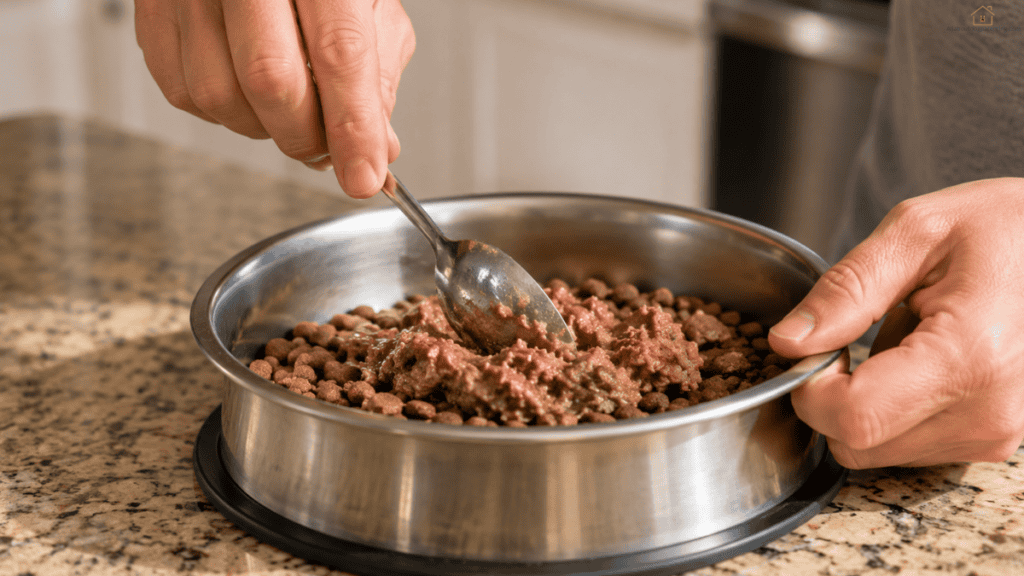
Step-by-step calorie calculation
Step 1: Determine your puppy’s daily calorie target. Our puppy feeding chart covers this by age, weight, and breed size.
Step 2: Decide your calorie split. A common approach is 75% of calories from dry food and 25% from wet food.
Step 3: Calculate each portion from the calorie density listed on both labels.
Example:
Your puppy needs 900 kcal per day. Kibble is 380 kcal per cup. Wet food is 400 kcal per can.
| Source | Calorie Target | Amount |
| Dry kibble (75%) | 675 kcal | ~1.8 cups per day |
| Wet food (25%) | 225 kcal | ~½ can per day |
| Total | 900 kcal | Split across 2 meals |
Each meal works out to approximately 0.9 cups of kibble plus a quarter can of wet food, mixed together in the same bowl. Mix wet and dry in the same bowl rather than feeding them separately at different meals. Offering wet food at breakfast and dry at dinner quickly creates preference and refusal patterns.
Refrigerate unused portions of any opened can and use within 3 days. When you first start mixing, reduce kibble slightly to account for the wet food addition rather than adding wet food on top of the existing portion. Adjust based on body condition alongside the numbers. If weight gain accelerates, reduce the wet food portion first.
Real Monthly Cost Comparison by Breed Size
Dry kibble costs $25–100 per month, depending on breed size. Wet food alone runs $60–250. A 75/25 mix falls between $35 and $130. These estimates are for mid-range AAFCO-compliant brands at standard retail prices.
| Breed Size | Dry Kibble Only | Wet Food Only | 75/25 Mix | Premium or Fresh |
| Toy or Small (under 10 kg) | $25–40/mo | $60–90/mo | $35–55/mo | $80–150/mo |
| Medium (10–25 kg) | $35–60/mo | $80–140/mo | $50–80/mo | $120–220/mo |
| Large (25–40 kg) | $50–80/mo | $120–200/mo | $65–100/mo | $180–300/mo |
| Giant (40+ kg) | $65–100/mo | $150–250/mo | $80–130/mo | $250–400/mo |
Buying in bulk through warehouse clubs or online subscriptions typically reduces these figures by 15 to 25%. The gap between dry and wet widens sharply as breed size increases. A Great Dane owner feeding wet food exclusively is looking at $150 to $250 per month on food alone. For more context on how feeding costs shift as your puppy grows and moves between stages, see our guide on when to switch from puppy food to adult food, where the cost implications of staying on puppy food too long are also covered.
Which Should You Choose? The Decision Framework
The wet vs dry puppy food decision comes down to your puppy’s age, budget, and individual eating habits. Here’s a clear framework to match your specific situation to the right choice.
| Your Situation | Best Choice | Why |
| Puppy under 8 weeks | Wet food or soaked kibble | Baby teeth can’t handle dry kibble |
| Puppy 10 weeks and older, no issues | Dry kibble | Practical, affordable, easy to portion |
| Picky eater refusing kibble | Wet food or mix | Wet food’s aroma resolves most refusals |
| Large or giant breed, budget matters | Dry kibble | Wet food at this volume is unsustainable |
| Sensitive stomach | Test both separately | Response varies by individual puppy |
| Hot climate or low water intake | Mix or wet food | Extra moisture supports hydration |
| Puppy recovering from illness | Wet food temporarily | Palatability encourages eating |
| You want the best of both | 75/25 dry to wet mix | Balances cost, nutrition, and taste |
The canned vs kibble for puppies question rarely has a wrong answer. What it has is a better answer for your specific circumstances. Use this table to find yours. If you’re switching between food formats, the 10-day transition guide walks you through the process step by step.
FAQ
1. Is wet food better for puppies than dry food overall?
The question of whether wet food is better for puppies doesn’t have a single answer that applies across the board. Both formats can be complete and balanced if they carry an AAFCO statement for “growth” or “all life stages.” Wet food offers higher protein on a dry matter basis and better hydration. Quality dry food meets all growth requirements at a lower cost. Neither format is universally superior, and the right answer depends on your puppy’s specific needs and your budget.
2. Can I feed my puppy only wet food?
Yes, if the wet food carries an AAFCO complete and balanced statement for growth and you’re feeding the correct amount for your puppy’s size and age. Wet food spoils faster once opened, costs significantly more over a full year of puppyhood, and doesn’t work in puzzle feeders. It’s a viable option, just a more expensive and less convenient one for most households.
3. How do I switch my puppy from wet food to dry?
Gradually, over 10 days. Start by mixing a small amount of dry kibble into the wet food and increase the kibble proportion every 2 days while reducing wet food. For very young puppies, soak the kibble in warm water during the transition to ease the texture change. Our full transition guide covers every stage with daily ratios and a troubleshooting guide for digestive issues.
4. Does dry food cause dehydration in puppies?
Not with constant access to fresh water. Dry food contains about 10% moisture, so puppies on kibble need to drink more than those eating wet food. Always keep a clean water bowl available. Adding a splash of water or low-sodium broth to kibble helps if your puppy drinks very little on their own.
5. Is mixing wet and dry food bad for puppies?
No, feeding wet and dry puppy food mixed together is perfectly fine, and many vets recommend it for the combined benefits. The only risk is overfeeding when you don’t account for total calories from both sources. Always calculate the combined daily intake rather than estimating by volume.
The Bottom Line
The wet vs dry puppy food debate doesn’t have a universal answer, but it does have a practical one for most situations. Dry kibble is the most affordable, convenient, and measurable option for the majority of puppies over 10 weeks old. Wet food earns its place for very young puppies, picky eaters, and specific health situations. A 75/25 combination of dry and wet food works well for owners who want the advantages of both formats, provided total daily calories are calculated across both sources rather than estimated by volume. Pick a format that matches your puppy’s current age and needs, check the AAFCO statement on whatever you choose, monitor body condition every two weeks, and adjust as your puppy grows. The right choice at 8 weeks isn’t necessarily the right choice at 6 months, and that’s completely fine.